Reader-supported: when you buy through links on our site, we may earn an affiliate commission. Learn more

Cover of Roll of Thunder, Hear My Cry (Puffin Modern Classics)
Buy on AmazonBuy on Bookshop.orgListen on Audible

We earn a commission if you buy through these links. Learn more

Find Similar Books

Roll of Thunder, Hear My Cry (Puffin Modern Classics)

by Mildred D. Taylor

Children's Books
★★★★☆3.5 (8)

Guide by the Books of the Day editors · Updated · How we write our guides

A Newbery Medal novel that shows, through nine-year-old Cassie Logan's eyes, what a Black family in 1930s Mississippi risks to keep their land and their dignity intact.

What Creators Say About Roll of Thunder, Hear My Cry (Puffin Modern Classics)

2 creators reviewed Roll of Thunder, Hear My Cry (Puffin Modern Classics) on YouTube between 2017 and 2023, with 14.5K views between them. Their opinions are their own; we picked these reviews, we didn't write them.

Book Review: Roll of Thunder Hear My Cry by Mildred D. TaylorThisAfropolitanLife on YouTube9.3K views · 2017
Plot Summary Of Roll Of Thunder, Hear My Cry By Mildred Taylor. - Roll Of Thunder Hear My CryASM - Literature and Poetry on YouTube5.2K views · 2023

What It's About

Roll of Thunder, Hear My Cry follows the Logan family, Black landowners in rural Mississippi during the Depression, through a year when money is short, the white community is hostile, and the family's hold on its land feels constantly under threat. The story is told through Cassie Logan, a proud, quick-tempered nine-year-old who sees injustice directly but only partly understands what it means. Her limited view drives the book, so the reader works out the larger picture alongside her.

Mildred D. Taylor writes in a close, unhurried voice rather than a fast adventure rhythm. Much of the book is made of ordinary days: school, chores, errands into town, family arguments, and the stories the adults tell. Tension builds in small increments and then breaks sharply in a few hard set pieces. Dialect appears in dialogue and gives the family's speech real texture without making it difficult to follow.

Reading it is emotionally heavy, and the book does not soften the violence and humiliation it portrays. What stays with readers is less the plot than the Logans' steady refusal to accept degradation as normal, and the way Cassie's sense of self is shaped by adults who will not bend. It works as a serious first encounter with American racial history for younger readers and still rewards adults who return to it.


Read this if you…

  • want a novel about racism told from the inside of a Black family rather than from a white outsider's view
  • are willing to read slowly and let a story build through ordinary days before its hardest moments arrive
  • want a children's classic that serious adult readers will still find worth revisiting

Skip it if you…

  • need a light or fast-paced read, since the emotional weight is sustained throughout
  • are looking for a book that softens or explains away the violence it depicts

Key Ideas

  1. 1

    Land as the basis of independence

    The Logans' farm is more than property. Owning it means they are not wholly dependent on white employers, creditors, or landlords, and the book makes clear how precarious that independence is. Much of the family's conflict flows from the struggle to keep that ground under their feet.

  2. 2

    Dignity held rather than granted

    The family does not wait for the surrounding society to recognize their worth. Their pride is practiced in daily choices, sometimes at real cost. Cassie absorbs this lesson gradually, and the book treats self-respect as something a person has to keep choosing.

  3. 3

    A child's partial view of injustice

    Cassie watches adults make hard decisions and sees cruelty she cannot always explain. Because she misreads some things, the reader is invited to notice what she misses. This gap between what she sees and what it means is one of the novel's most effective techniques.

  4. 4

    Community as practical resistance

    The Logans are part of a Black community whose members support one another through debt, danger, and shared decisions. The book presents solidarity not as sentiment but as a working strength that makes endurance possible.

  5. 5

    Schooling as hope and inequality

    Education appears as a source of pride and aspiration, yet the children's schooling is shaped by unequal treatment that they recognize even when adults try to shield them. The contrast gives the story some of its sharpest moments without requiring heavy-handed commentary.

Limitations

Some readers find the book's middle stretches episodic, since it moves from one incident to the next instead of building a single dominant plot. Its focus on Cassie means that adult characters and the wider history are seen only as far as a nine-year-old can perceive them, which can leave some context thin. The white characters are mostly drawn as antagonists, a choice some critics consider simplified. Its portrayal of the period is grounded in the author's family history, but it is a single family's story rather than a broad survey of the Depression South.

Questions Readers Ask

Is Roll of Thunder, Hear My Cry suitable for adults or only children?
It is written for middle-grade readers, roughly ten and up, but its emotional and historical content is serious enough that many adults read it too. Adults often find that the book's restraint and its child's-eye perspective open up layers they did not notice at a younger age. Parents may want to read it alongside younger children to talk through its violence.
How does it compare to To Kill a Mockingbird?
Both novels are told by a young narrator in the segregated South and both take racial injustice seriously. The key difference is perspective: Taylor centers a Black family and their agency, while Harper Lee's story is seen largely through a white family's eyes. Readers who liked one often find the other a meaningful counterpart.
Is the book still relevant today?
Yes. Its concerns about land ownership, economic dependence, and the cost of standing up to intimidation remain pressing, and it is widely taught for that reason. Some vocabulary and social details reflect the 1930s, so younger readers may need context to fully grasp the period.
Published
2004
ISBN
9781101657942
Difficulty
intermediate
Category
Children's Books

Book details and cover from Google Books.

Ready to read Roll of Thunder, Hear My Cry (Puffin Modern Classics)?

Get your copy on Amazon, or listen to it on Audible. We earn a commission if you buy through these links.

Books Like Roll of Thunder, Hear My Cry

View all →
Cover of The Watsons go to Birmingham--1963

The Watsons go to Birmingham--1963

Christopher Paul Curtis, Reginald André Jackson

Like the Logans, the Watson family is loving and funny, and their road trip south brings them face to face with the violence of the civil rights era, told through a sharp young narrator.

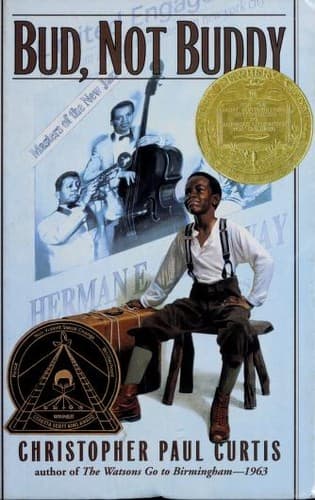
Cover of Bud, Not Buddy

Bud, Not Buddy

Christopher Paul Curtis, Reginald André Jackson

Another Depression-era story with a Black child at its heart. Bud's determination and humour as he searches for family will appeal to anyone who cheered for Cassie's spirit.

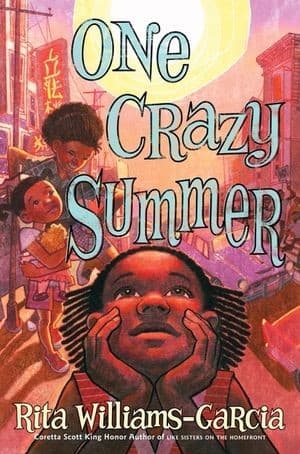
Cover of One crazy summer

One crazy summer

Rita Williams-Garcia

Delphine is a strong-willed, observant girl like Cassie, and her summer in 1968 Oakland mixes sibling squabbles and family tension with a growing awareness of injustice and pride.

Cover of To Kill a Mockingbird

To Kill a Mockingbird

Harper Lee

For older readers ready for a step up, Scout's childhood in a 1930s Southern town echoes Cassie's world, as she watches the adults around her confront racism in court.

Explore More