
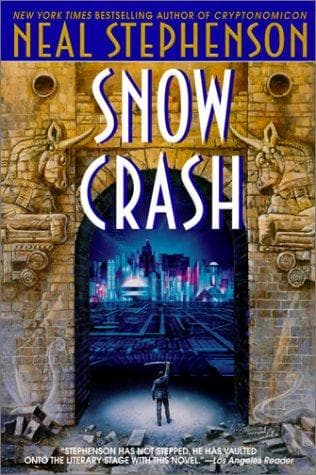
Snow Crash
Neal Stephenson
Like the OASIS, Stephenson's Metaverse is a vast online world that shapes everyday life, and its hacker-hero races through it with the same energy Wade brings to his hunt.
Reader-supported: when you buy through links on our site, we may earn an affiliate commission. Learn more
We earn a commission if you buy through these links. Learn more
Find Similar Booksby Ernest Cline
On screen: Ready Player One (film, 2018)
Ernest Cline's fast, affectionate treasure hunt uses a virtual world and 1980s pop culture to ask what a life spent online is worth, and it's a good pick for readers who love games and movies.
Ready Player One is a science-fiction adventure set in a near future where most people spend their free time in OASIS, a massive virtual world that has become the main escape from a crowded, struggling reality. The story follows a young player who gets pulled into a contest set up by the world's late creator, a man obsessed with the culture of his own youth. The plot runs on riddles, racing, and a lot of gaming logic, so the book reads more like a series of levels than a conventional novel.
What makes the book distinctive is how thickly it is layered with references. Cline fills nearly every scene with nods to video games, movies, music, and tabletop games from the 1980s. Some readers will find this delightful, like being handed a mixtape of their favorite decade. Others will feel the references do more of the work than the characters do. The prose is plain and quick, built for momentum rather than style.
Reading it feels like playing a well-designed game: easy to pick up, hard to put down, and more emotionally sincere than you might expect. The book is less interested in technology than in loneliness, friendship, and the question of whether people can find meaning in the worlds they build for themselves.
The OASIS is presented as a place people go to escape a bleak real world, and the book is sympathetic to that impulse. It also keeps asking whether retreating into a virtual life can become a substitute for living, a tension that gives the adventure its emotional weight beneath the action.
Pop culture from the 1980s works as a kind of common vocabulary in the story. Cline uses it to suggest that shared memories can connect strangers, while also showing how an obsession with the past can make a person unable to deal with the present.
The contest is built like a game, with clues, rules, and escalating stakes. The book takes seriously the idea that careful study, pattern recognition, and persistence can matter as much in life as they do in play, and it shows how gaming skills can be useful in unexpected ways.
Many of the most important relationships in the book form between people who have never met in person. The story treats these bonds as real, which makes its warmer scenes land better than its action set pieces for many readers.
The most common criticism is that the references can overwhelm the story, so that the book reads as a checklist of nostalgic items rather than a fully realized world. Many characters are sketched quickly, and the female characters in particular have been criticized for being underdeveloped. The prose is functional rather than memorable. Readers who did not grow up with the 1980s material may find large stretches of the book flat, and the book's view of gamer culture is often more celebratory than critical.
Reviews from readers on YouTube. Their opinions are their own.
Book details and cover from Google Books.
Ready to read Ready Player One?
Get your copy on Amazon, or listen to it on Audible. We earn a commission if you buy through these links.
Neal Stephenson
Like the OASIS, Stephenson's Metaverse is a vast online world that shapes everyday life, and its hacker-hero races through it with the same energy Wade brings to his hunt.
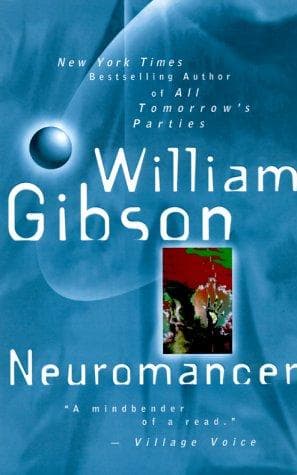
William Gibson
Gibson's cyberspace is the grittier ancestor of the OASIS, and readers who enjoyed Wade's escape from a dull real world will recognise the appeal of a hero who thrives online.
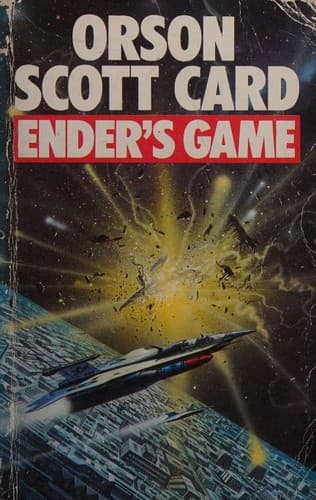
Orson Scott Card
Ender is a gifted young player whose skill in simulated battles is taken very seriously, which echoes Wade's gamer mindset and the way a game becomes life-or-death.
Rainbow Rowell
Cather's devotion to a fictional fandom, and her warm friendships built around shared obsessions, match the affection Ready Player One has for pop culture fans.