
Wherever You Go, There You Are
Jon Kabat-Zinn
Like Gunaratana's book, it offers plain, accessible instructions for everyday mindfulness practice, with short chapters you can apply straight away and no need for prior experience.
Reader-supported: when you buy through links on our site, we may earn an affiliate commission. Learn more
We earn a commission if you buy through these links. Learn more
Find Similar BooksGuide by the Books of the Day editors · Updated · How we write our guides
A short, jargon-free introduction to insight meditation from a Theravada monk, honest about the practical problems beginners hit and the reasons to keep sitting.
2 creators reviewed Mindfulness in Plain English on YouTube between 2015 and 2019, with 17.3K views between them. Their opinions are their own; we picked these reviews, we didn't write them.
Mindfulness in Plain English is a short, direct handbook on insight meditation written by a Theravada Buddhist monk for people who have never sat on a cushion or who tried and quit. Bhante Gunaratana's central move is to strip away the mystique: he treats meditation as a set of skills you can learn, check, and adjust, rather than a state reserved for the devout. Much of the early material clears up misconceptions about what meditation is for and what it isn't.
The book then moves into practice. He covers posture, using the breath as an anchor, and the ordinary problems that derail beginners, such as restlessness, sleepiness, and the feeling that the mind is hopeless. His tone is conversational and often wry, and he repeatedly tells the reader to be patient and to notice what is happening rather than fight it. Many sections read as instructions you could try the same day.
Reading it feels less like absorbing a theory than like sitting with a patient teacher who has seen every common mistake before. It is compact enough to finish in a few sittings, and it rewards returning to a section when your practice hits a wall. The expanded edition adds a chapter on loving-kindness practice, which gives the book a warmer close than many secular mindfulness guides offer.
Gunaratana presents meditation as something you do and refine, not a mood you wait for. The emphasis is on repeated, unglamorous practice, with the expectation that progress is gradual and uneven. This framing alone makes the book useful to readers who have assumed they are simply not the type to meditate.
The book explains how steadying attention on one object builds the stability needed to watch the mind clearly. Readers learn to see these as partners rather than competing methods. The distinction helps explain why a mind that wanders constantly can still be making real progress.
A large share of the practical value lies in how the author handles the obstacles everyone meets. Rather than treating them as failures, he describes them as predictable states to notice and work with. Readers who quit after a few frustrating sits will find this section especially helpful.
Because the book comes from a Buddhist tradition, it links meditation to how a person lives, including honesty, restraint, and kindness toward others. Some readers will find this grounding reassuring, while others may see it as more framing than they wanted. Either way, it shows that the practice is not meant to be isolated from ordinary life.
The expanded edition's new chapter introduces cultivating goodwill toward oneself and others. Gunaratana frames this as a balance to effortful attention, softening the practice and connecting it to relationships. It gives the book a humane final note that many concentration-focused guides lack.
The book was first written in 1991, so it predates most of the clinical research on mindfulness and reflects the cultural references of its era. Its Buddhist doctrinal framing is present throughout, even where the instructions are practical, and some readers will want more separation between the two. The breath-focused method may not suit everyone, and the book offers little guidance for people dealing with trauma or intense emotional difficulty. It is also a text rather than a guided course, so there is no audio or app support.
Book details and cover from Google Books.
Ready to read Mindfulness in Plain English?
Get your copy on Amazon, or listen to it on Audible. We earn a commission if you buy through these links.
Jon Kabat-Zinn
Like Gunaratana's book, it offers plain, accessible instructions for everyday mindfulness practice, with short chapters you can apply straight away and no need for prior experience.
Jack Kornfield
Kornfield, like Gunaratana, draws on Theravada teaching and explains the mental obstacles meditators meet, with gentle, realistic guidance on sustaining practice over years.
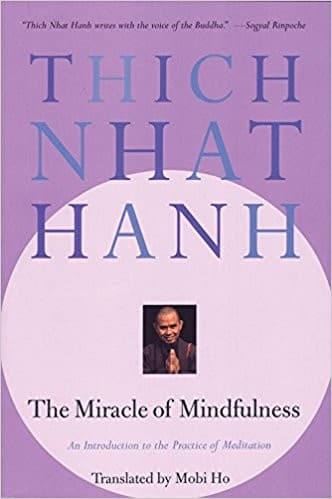
Thích Nhất Hạnh
A short, warm introduction to mindfulness in daily life. It is simple and clear in the way Gunaratana is, so it suits readers who want practical steps over theory.
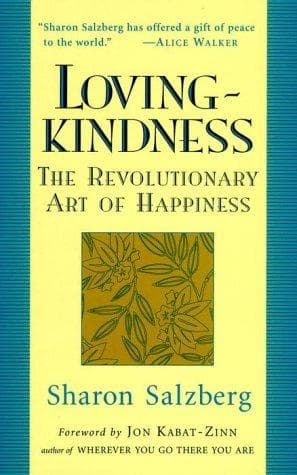
Sharon Salzberg
If the loving-kindness chapter in Gunaratana's book spoke to you, this is the classic book-length guide to metta practice, written with clarity and real warmth.