

Little Fires Everywhere
Celeste Ng
Like Keane's novel, it sets two households side by side in a comfortable town and shows how private lives, class and loyalty collide when one event exposes what lies behind the front doors.
Reader-supported: when you buy through links on our site, we may earn an affiliate commission. Learn more
We earn a commission if you buy through these links. Learn more
Find Similar BooksGuide by the Books of the Day editors · Updated · How we write our guides
Ask Again, Yes is a patient, emotionally precise novel about two neighboring families and a childhood friendship that survives decades of damage, showing how memory reshapes the people we thought we understood.
2 creators reviewed Ask Again, Yes on YouTube in 2019, with 58.1K views between them. Their opinions are their own; we picked these reviews, we didn't write them.
Ask Again, Yes follows two families who live next door to each other in a suburb outside New York City. The Gleesons and the Stanhopes are bound together by their husbands' work as young police officers and by the friendship that begins between their children, Kate and Peter, who are born months apart. One night splits loyalties between the households, and the rest of the novel traces how that rupture echoes across roughly four decades.
Keane's method is unhurried. She moves forward in time in long sections, and she gives the marriages of both parents as much weight as the children's story. Her prose is plain and observant rather than showy. She trusts small domestic moments, the things said in kitchens and the things left unsaid in bedrooms, to carry the emotional load.
Reading it feels like spending years in the company of people you come to know well. It is heavy in places but rarely bleak, and it is more interested in how memory revises itself with age than in handing down verdicts. Expect a deliberate pace and a payoff that rewards attention rather than suspense.
The novel's central interest is how the past looks different from adulthood. People who seemed menacing as children can later appear sympathetic, and those who seemed blameless can look more complicated. Keane lets the reader feel this shift rather than announcing it, so the same events carry new weight at different points in the story.
The book pays close attention to the private lives of the two wives, whose loneliness and instability shape the atmosphere long before the children's story takes center stage. Keane treats domestic life as a serious subject, showing how strain builds quietly within a marriage and how it spreads to the children who grow up nearby.
Kate and Peter's bond is the thread that holds the four decades together. It is tender without being sentimental, and it is tested repeatedly by loyalty, distance, and things neither of them can fully repair. Readers who care about long, imperfect friendships will find the relationship the most rewarding part of the book.
Forgiveness here is slow, partial, and often incomplete. Keane is more interested in what people choose to carry forward than in tidy reconciliations. The book suggests that grace can be real even when it does not erase what happened, which gives its ending a quiet, earned quality.
Some readers find the pace slow, especially in the early sections, which spend considerable time establishing two households before the central event arrives. The novel's sympathy for its characters can also feel generous to a fault, and readers who want harder moral edges may find the forgiveness theme too gentle. The suburban setting is rendered with care but is not the book's focus, so readers looking for a sharp social portrait of the era may want more.
Book details and cover from Google Books.
Ready to read Ask Again, Yes?
Get your copy on Amazon, or listen to it on Audible. We earn a commission if you buy through these links.
Celeste Ng
Like Keane's novel, it sets two households side by side in a comfortable town and shows how private lives, class and loyalty collide when one event exposes what lies behind the front doors.

Tom Perrotta
Perrotta follows restless suburban parents whose quiet lives are disrupted, mirroring the Gleeson and Stanhope marriages and the way domestic unhappiness shapes everyone around it.
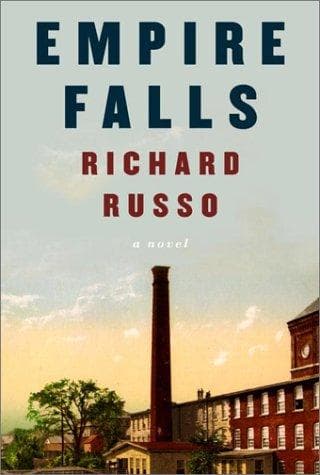
Richard Russo
A small town full of long-held grievances and tender old loyalties, with characters whose past choices keep returning, much as the families in Ask Again, Yes are bound by shared history.

Ann Patchett
Patchett moves back and forth across decades, following two families joined by one moment, much like Keane's novel, and she handles grief and forgiveness with the same warmth.