
We earn a commission if you buy through these links. Learn more
Empire Falls
Guide by the Books of the Day editors · Updated · How we write our guides
A sharp, warmly funny portrait of a dying Maine mill town and the decent, stuck man trying to keep his head above water in it.
What Creators Say About Empire Falls
2 creators reviewed Empire Falls on YouTube between 2015 and 2023, with 4K views between them. Their opinions are their own; we picked these reviews, we didn't write them.
What It's About
Empire Falls is a novel about a small Maine town that has been slowly emptying out for decades, its once-busy mills gone quiet and its economy hanging on by threads. Much of the story unfolds at the Empire Grill, a bar and diner where Miles Roby works as manager and where the town's gossip, grievances, and old loyalties collect. Miles is a divorced man who has spent years making small compromises: looking after a difficult mother, co-parenting with an ex-wife, and keeping the grill afloat under an owner who barely notices him. The book's central question is whether a decent life can be built in a place that seems to have given up.
Russo writes with a generous, almost conversational patience. He moves between characters, lets backstory unspool at length, and is willing to digress into a stranger's history before returning to the main line. The sentences are long and observant, and the humor is dry and frequent, which keeps the heavier material from becoming bleak. Reading it feels less like following a plot than spending time with a community, learning who owes whom and why, and noticing how private history shapes public life.
The pace is deliberate, and readers who want a tight, thriller-style structure may find the early chapters slow. The reward comes gradually, as small moments accumulate into a picture of class, memory, and the costs of staying put.
Read this if you…
- enjoy character-driven novels where the setting and the community are as important as the plot
- like comic, observant writing that still takes working-class lives seriously
- want a big, humane portrait of American small-town life and its quiet disappointments
Skip it if you…
- need fast pacing or a clear plot engine to keep you turning pages
- find long digressions and a crowded cast more frustrating than rewarding
Key Ideas
- 1
Decline as the backdrop for ordinary lives
The town's economic collapse shapes every character's choices, but the novel shows this through daily routines, money worries, and small humiliations rather than through speeches. Readers see how a place that has lost its purpose presses on people who have no obvious way out, and how that pressure looks from the inside.
- 2
Class, pride, and who gets to leave
Power in Empire Falls is concentrated in a few old families, and that imbalance runs through friendships, marriages, and jobs. Russo is interested in why some people stay out of loyalty, others out of fear, and how a town's social hierarchy decides whose ambitions are taken seriously.
- 3
Humor as a way of carrying grief
Much of the novel's warmth comes from its jokes, its characters' bickering, and its eye for absurd situations. The comedy is not a relief from the sadness so much as a way of living alongside it, and it gives the book much of its emotional texture.
- 4
Old wounds and the stories families tell
The past keeps resurfacing in Empire Falls, and characters remember the same events in different ways. Russo treats memory as unreliable and self-serving, and the reader is left to weigh competing versions of who did what to whom and why it still matters.
Limitations
The novel is long, and its wide cast and frequent detours can make the first stretch feel slow before the story gathers momentum. Some critics find its affection for the town and its residents sentimental, and the mood can tip toward nostalgia for a kind of working-class life that many readers will not have known. Its view is mostly that of men and older residents, so readers looking for a more varied range of voices may want to supplement it. It also offers no real blueprint for economic revival; it is more interested in endurance and character than in solutions.
Questions Readers Ask
- Is Empire Falls worth reading if I usually prefer shorter novels?
- It can be, but it asks for patience. The book is long and expansive, with many characters and detours into their histories. If you enjoy settling into a community and don't mind a slow build, the payoff is substantial. If you prefer tight plots that move quickly, you may find it tiresome until the threads start to connect.
- How does Empire Falls compare to Elizabeth Strout's Olive Kitteridge?
- Both portray small New England towns through interlocking lives and a patient, observant eye. Russo's book is more of a single sustained narrative centered on one man, with a broader comic streak and more plot momentum. Strout's work is closer to linked stories and is quieter and more clipped in tone. Readers who like one often enjoy the other.
- Published
- 2001
- ISBN
- 9783832198244
- Difficulty
- intermediate
- Category
- Fiction
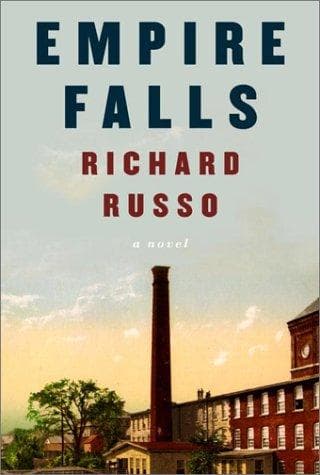
Book details and cover from Google Books.
Ready to read Empire Falls?
Get your copy on Amazon, or listen to it on Audible. We earn a commission if you buy through these links.