
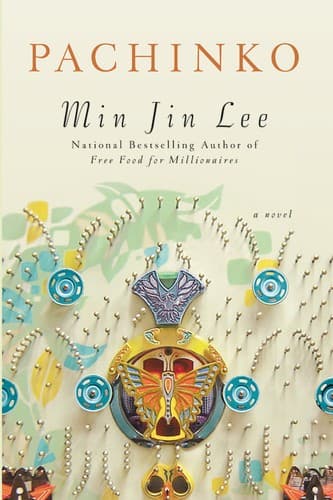
Pachinko
Min Jin Lee
Its sweeping, grounded treatment of Korean identity in Japan echoes the way American Born Chinese examines belonging, assimilation, and the cost of being seen as an outsider.
Reader-supported: when you buy through links on our site, we may earn an affiliate commission. Learn more
We earn a commission if you buy through these links. Learn more
Find Similar BooksGuide by the Books of the Day editors · Updated · How we write our guides
A sharp, funny, painful graphic novel that braids three stories about being Chinese American and wanting to belong, rewarding both first-time comics readers and seasoned ones.
2 creators reviewed American Born Chinese on YouTube between 2017 and 2023, with 63K views between them. Their opinions are their own; we picked these reviews, we didn't write them.
American Born Chinese is a 2006 graphic novel by Gene Luen Yang, later a National Book Award finalist. It runs three threads that seem unrelated at first. One is a retelling of the Monkey King, a figure from Chinese folklore who wants to be accepted as an equal by the gods. Another follows Jin Wang, a boy who moves to a mostly white school and befriends a newcomer from Taiwan. The third is a sitcom-style story about a popular teen named Danny and a visiting cousin, Chin-Kee, who is a grotesque caricature of Chinese stereotypes. The threads gradually move toward each other, and the way they connect is the real payoff of the book.
Yang uses the comics form itself as part of the argument. Each thread has its own visual language: the myth is bold and theatrical, Jin's story is plainer and more realistic, and the sitcom panels are bright and exaggerated. Shifts in style, panel layout, and color carry meaning as much as the dialogue does, so pay attention to how the pages look, not just what they say.
The experience is quick, often a single sitting, but it lingers. The humor is sharp, and some jokes are meant to land uncomfortably. The book is shelved as young adult, yet adults read it widely, and its questions about identity and assimilation hold up at any age.
Jin's central struggle is a wish to shed anything that marks him as different so he can fit in with his peers. The book shows what that bargain costs: the tension between who you are at home and who you perform at school. Yang doesn't present fitting in as simply wrong or simply right. He keeps the pressure on the reader and lets the character's choices carry the emotional weight.
Chin-Kee is drawn as an exaggerated caricature of Asian stereotypes, and the book forces readers to sit with him. The point is not only that outsiders hold these images but that minority characters can absorb and act them out too. The question the book asks is who gets to tell the joke and who pays for it, and it makes readers feel that discomfort rather than explaining it away.
The Monkey King thread draws on a familiar folk tradition about a powerful figure who longs for recognition from a dominant order. Yang reshapes the myth so it speaks to questions about self-acceptance and what it means to be made to feel lesser. The mythic register gives the book a broader sense of history than its contemporary settings alone could provide.
Yang treats panel design, art style, and color as storytelling tools, not decoration. Because each thread looks different, the reader feels the gap between the characters' inner lives and the images others project onto them. Reading the book closely means reading the pictures, and that is a large part of what makes it distinctive as a graphic novel.
The three threads converge in a way that reframes what came before. Without spoiling how the connection works, the book is built so that earlier pages gain new meaning once the pieces click into place. Many readers find a second pass more rewarding than the first, because they notice how the early setup was deliberately arranged.
Some critics find the three-thread structure schematic, and the tone shifts between the myth, Jin's story, and the sitcom are sharp enough that the book can feel like three separate works stitched together. Chin-Kee is intentionally offensive, and some readers find him hard to take or worry that less careful readers will take him at face value. The emotional arcs are compact because of the form and the young-adult framing, so adult readers looking for depth may find some characters thinner than they would like. The book is also a view from one kind of suburban second-generation experience and is not a broad survey of Chinese American life.
Book details and cover from Google Books.
Ready to read American Born Chinese?
Get your copy on Amazon, or listen to it on Audible. We earn a commission if you buy through these links.
Min Jin Lee
Its sweeping, grounded treatment of Korean identity in Japan echoes the way American Born Chinese examines belonging, assimilation, and the cost of being seen as an outsider.
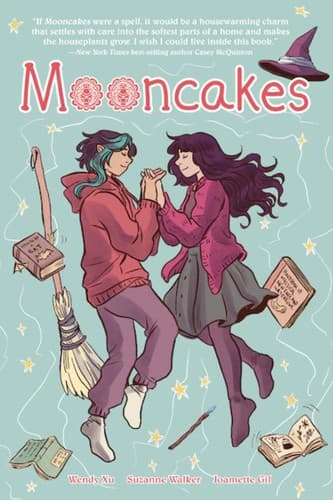
Suzanne Walker, Wendy Xu
A warm, funny graphic novel about cultural heritage and magic that shares American Born Chinese's blend of folklore and everyday teenage life.
Cece Bell
A memoir in comic form about feeling different at school, handled with humor and honesty, much like the everyday struggles at the heart of American Born Chinese.
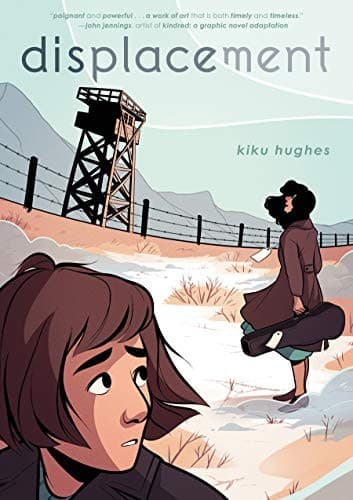
Kiku Hughes
A graphic novel that moves between time and place to explore family history and identity, using the comics form to make its personal themes vivid.