
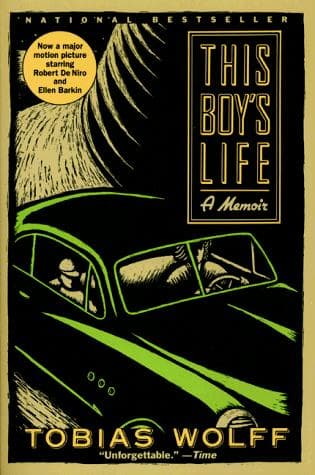
This Boy's Life
Tobias Wolff
Like Maclean, Wolff looks back on a boyhood in the rugged Northwest with unsentimental clarity, capturing a difficult family bond and the ways a young man tries to become himself.
Reader-supported: when you buy through links on our site, we may earn an affiliate commission. Learn more
We earn a commission if you buy through these links. Learn more
Find Similar BooksGuide by the Books of the Day editors · Updated · How we write our guides
A short, luminous novella about fly fishing, a minister father, and a gifted brother, showing how love and loss can be said indirectly, in the rhythm of a river.
2 creators reviewed A River Runs Through It on YouTube between 2013 and 2015, with 186K views between them. Their opinions are their own; we picked these reviews, we didn't write them.
A River Runs Through It is a short book, really a novella, in which Norman Maclean looks back at his boyhood in Missoula, Montana. The narrator grows up in a household where his Presbyterian minister father believes fly fishing and religion are two ways of paying attention to the same thing, and where his younger brother Paul is the family's most gifted fisherman and its most troubled son. The Blackfoot River is more than a backdrop. Maclean renders its water, rocks, and light with enough precision that you can feel the cold and the pull of the line.
Maclean writes in a plain, unhurried voice, moving back and forth in time and circling his subjects rather than marching through them. The result feels less like a plot than like a family remembered by someone who loved them and could never quite explain them. Humor runs alongside the grief, and the dialogue, especially the father's dry remarks on the riverbank, carries much of the weight. Fly fishing gives the author a vocabulary for talking about patience, skill, and feelings that cannot be stated directly.
Reading it is a slow, quiet experience. It takes an evening or two, but it asks you to sit with it, and it rewards rereading. Anyone who has tried to know a difficult sibling or a parent who spoke in riddles will recognize something here.
For the father, fly fishing is a discipline of attention, a way of reading water and watching closely until the world makes sense. Maclean treats casting and waiting as a form of prayer without the sermon. The reader comes to see the sport as a lens for how the family looked at everything else, from work to grace to failure.
The father rarely says what he feels, and the narrator is no better at it. Affection shows up in small acts, in what gets taught on the river, and in what gets left unsaid. The book argues that this restraint is not coldness but a particular inherited language of care, one that a reader may need time to recognize.
Paul is written as someone with extraordinary natural talent on the water and a restless, self-destructive streak off it. Maclean does not moralize about him. He presents a brother who seemed to possess something rare and could not or would not make it hold, and the tension between promise and waste gives the book much of its emotional force.
The narrator keeps admitting that he cannot fully reconstruct what happened or explain why people acted as they did. The book is open about the gap between a life and the story told about it. This honesty about what memory can and cannot recover makes the writing feel trustworthy, even when it is lyrical.
The Blackfoot is not scenery but a shaping force, a place that teaches, tests, and holds the family together. Maclean's descriptions of its currents and seasons carry a sense of time that outlasts the people on its banks, which is why the place lingers in the reader's mind long after the story ends.
Some readers find the book too spare, with its digressions and its deliberate withholding of emotion frustrating rather than moving. Its portrait of women is thin, since the mother and other female figures sit at the margins of the story. The fly fishing passages assume some comfort with the sport's language, and newcomers may need to look up a few terms. Because the book is short and built on a family's memories, it does not offer a wider social view of Montana or its history, and readers looking for that will need other sources.
Book details and cover from Google Books.
Ready to read A River Runs Through It?
Get your copy on Amazon, or listen to it on Audible. We earn a commission if you buy through these links.
Tobias Wolff
Like Maclean, Wolff looks back on a boyhood in the rugged Northwest with unsentimental clarity, capturing a difficult family bond and the ways a young man tries to become himself.
Wallace Stegner
Stegner's measured, reflective narrator revisits a lifelong friendship with the same wisdom and restraint that make Maclean's portrait of his father and brother so moving.
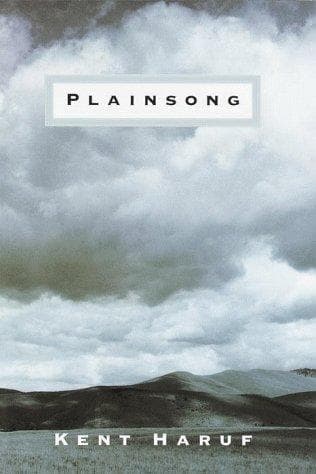
Kent Haruf
Haruf's plain, graceful prose and small-town Colorado setting offer the same quiet emotional power and respect for ordinary people found in Maclean's Montana.
Izaak Walton, Charles Cotton
The classic meditation on fishing as a contemplative way of life, it shares Maclean's sense that casting a line can be a path toward patience, virtue and grace.