
We earn a commission if you buy through these links. Learn more
Crossing to Safety
Guide by the Books of the Day editors · Updated · How we write our guides
Stegner's late novel follows two couples across four decades, asking what a good life and a true friendship actually cost, and it does so with unusual tenderness.
What Creators Say About Crossing to Safety
2 creators reviewed Crossing to Safety on YouTube in 2026, with 3.9K views between them. Their opinions are their own; we picked these reviews, we didn't write them.
What It's About
Crossing to Safety traces the friendship of two couples, Larry and Sally Morgan and Sid and Charity Lang, from their meeting as young people in the late 1930s through the decades that follow. Larry narrates from later in life, looking back at the shared years: early poverty and ambition, the slow accumulation of careers and children, and the losses that arrive as the years pass. The point of view is that of a man trying to understand what he saw and what he missed.
Much of the book's pull comes from its attention to small things, such as a meal, a summer spent together, or a remark that stayed with the narrator for years. Rather than building toward dramatic set pieces, it gathers detail and lets the reader sit with how people change and where they fall short of their own intentions. The emotional register is reflective and often elegiac, and it asks more of patience than of plot.
Reading it feels like being let into someone else's long memory. It is less a story about events than about what friendship demands of people who are not perfect, and about the difference between being admired and being kind. Readers who want a fast plot will find it slow; readers who value character and the passage of time will find it generous.
Read this if you…
- enjoy novels about long friendships and the slow passage of years
- appreciate reflective narrators who look back on their own lives with some honesty
- want literary fiction where character matters more than plot twists
Skip it if you…
- need a fast-moving story with a clear hook in the first chapter
- prefer fiction that is mainly about dramatic events or a single crisis
Key Ideas
- 1
Friendship as a lifelong practice
The novel treats friendship less as a feeling than as something people keep choosing to do. Its characters show up, disappoint each other, forgive, and sometimes fail, and the book is interested in what that ongoing effort looks like across thirty years rather than in the spark of first meeting. Readers who have kept a friendship through hard stretches will recognize the texture of it here.
- 2
Ambition weighed against ordinary goodness
Several characters measure their lives by professional achievement, and the novel quietly questions that scale. Stegner sets the pursuit of recognition beside more modest forms of decency, such as loyalty, patience, and care for others. The tension is never resolved by a lecture; it emerges from how the characters' choices play out over time.
- 3
Memory, retrospection, and the narrator's blind spots
Because Larry tells the story from later life, the book is as much about how we reconstruct the past as about the past itself. He is honest about some things and evasive about others, which makes the reader alert to what he may be leaving out. This layering gives the prose a meditative, self-questioning quality that many readers find the book's most distinctive feature.
- 4
Quiet, precise prose over dramatic incident
Stegner's sentences are measured and observant, favoring close description and steady analysis over heightened scenes. The storytelling moves by accumulation rather than escalation, so the emotional force arrives gradually. This restraint is the reason the book rewards slow reading, and it is also the reason some readers find it hard to get into.
Limitations
The novel is deliberate and unhurried, and readers expecting brisk pacing or sharp dramatic turns may find long stretches of reflection tiring. Some critics have felt that the narrator's regret can tip into self-absorption, and that a few characters are seen more clearly than others. Its world is also that of a particular mid-century, mostly white, professional class, so its preoccupations may feel narrow to readers looking for a broader social canvas.
Questions Readers Ask
- Is Crossing to Safety a good first Stegner novel?
- It can be, though many readers start with Angle of Repose because it is more often recommended as an entry point. Crossing to Safety is gentler and more intimate, which suits readers who enjoy character-driven domestic fiction. If you like the reflective tone and want something shorter in scope, it works well as a starting place.
- Does the book still feel relevant today?
- Its central questions about friendship, marriage, money, and what makes a life worthwhile remain current, even though the settings and social expectations belong to an earlier era. Readers who care about character over plot tend to find it holds up well. Those who want contemporary voices or themes may find it dated in places.
- Published
- 1987
- ISBN
- 9788416213399
- Difficulty
- intermediate
- Category
- Fiction
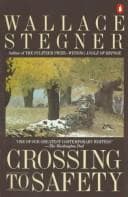
Book details and cover from Google Books.
Ready to read Crossing to Safety?
Get your copy on Amazon, or listen to it on Audible. We earn a commission if you buy through these links.