
The Millionaire Next Door
Thomas J. Stanley, William D. Danko
Like Cashflow Quadrant, it challenges the assumption that a good salary creates wealth, showing how owning businesses and saving steadily builds real net worth.
Reader-supported: when you buy through links on our site, we may earn an affiliate commission. Learn more
12 books to read next
If you loved Rich Dad's Cashflow Quadrant by Robert T. Kiyosaki, Sharon L. Lechter
Readers who loved Rich Dad's Cashflow Quadrant usually come for its central idea: that there are four ways to earn money, and that moving from employee or self-employed work toward owning businesses and investments changes your financial life. The book is direct, story-led and built around a simple diagram, with a clear focus on cash flow, assets and financial independence rather than job security. Expect plain language, a lot of personal anecdote and a push to think differently about money.
Thomas J. Stanley, William D. Danko
Like Cashflow Quadrant, it challenges the assumption that a good salary creates wealth, showing how owning businesses and saving steadily builds real net worth.
George S. Clason
Its short parables about saving, investing and putting money to work echo the book's core message that assets, not income alone, build security.
Napoleon Hill
A classic on mindset and ambition, it shares Cashflow Quadrant's push to stop relying on employment and to pursue opportunity deliberately.
Michael E. Gerber
It explores why small business owners stay stuck working inside their own companies, a theme that matches the book's shift from self-employment toward true business ownership.
Robert T. Kiyosaki
The earlier book in the same lineage sets out the same contrast between employee thinking and asset building, and is a natural next step.
Peter Thiel, Blake Masters
Written by an investor and founder, it examines how new businesses create value, giving fresh perspective to readers drawn to building enterprises.
Benjamin Graham
A foundational guide to disciplined investing, it complements the book's emphasis on making money work through wise, long-term investments.
Burton Gordon Malkiel
It explains how markets work and why patient investing beats speculation, useful for readers wanting to understand the investing side of the quadrant.
John C. Bogle
A short, practical case for low-cost index investing, ideal for readers who want a clear, simple path to building investment income.
Morgan Housel
It explores how behaviour and attitudes shape financial outcomes more than technical knowledge, a useful companion for anyone who found the book's mindset lessons compelling.
Vicki Robin, Joe Dominguez
It challenges how we trade time for money and offers a structured way to build financial independence, echoing the book's concern with escaping the rat race.
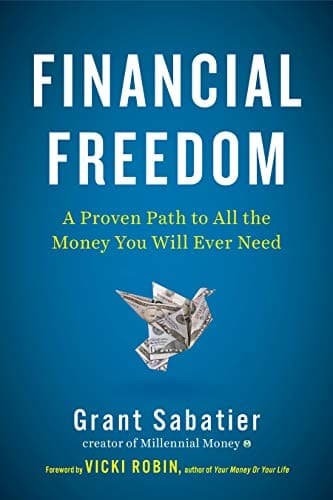
Grant Sabatier
A modern, practical guide to building income streams and reaching financial independence, suited to readers who want concrete steps after the book's big-picture ideas.
We earn a commission if you buy through these links. Learn more