
We earn a commission if you buy through these links. Learn more
Financial Freedom
Guide by the Books of the Day editors · Updated · How we write our guides
A sweeping, motivational personal finance playbook that argues you can raise your income as well as trim spending, with simple investing as the long-term engine.
What Creators Say About Financial Freedom
2 creators reviewed Financial Freedom on YouTube between 2021 and 2023, with 12.7K views between them. Their opinions are their own; we picked these reviews, we didn't write them.
What It's About
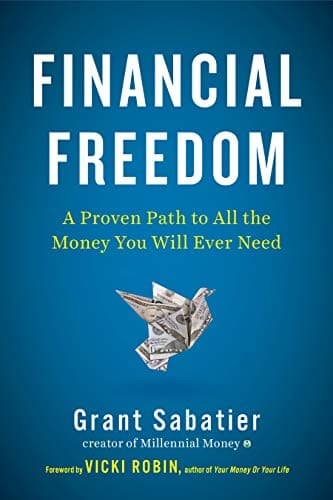
Financial Freedom is Grant Sabatier's attempt to lay out a complete personal finance system in one book. Drawing on his own path from debt and low income to financial independence in his thirties, by his account, he treats money as a set of connected levers: how much you spend, how much you earn, what you do with the surplus, and the habits and beliefs that keep those levers moving.
The writing is direct and personal, mixing his own experiments with practical steps and a lot of encouragement to act. Expect an upbeat, coaching tone and a strong emphasis on increasing income, not just cutting costs, which sets it apart from many frugality-focused books. Much of the material will feel familiar if you've read blogs or podcasts on index investing and expense cutting, but the value lies in tying those pieces into one sequence.
Reading it feels like working through a long self-coaching program: quick to get through, easy to agree with, and most useful when you pick two or three changes and carry them out. Treat specific numbers and tactics as a starting point to check against your own country, tax situation, and circumstances.
Read this if you…
- want one book that covers spending, income, and investing together in a single framework
- are looking for motivation to start or restart a savings and investing plan
- are early in your career and want to think seriously about growing your earnings
Skip it if you…
- want detailed guidance on retirement withdrawals, estate planning, or tax strategy
- prefer evidence-heavy, research-driven writing over a personal success story
Key Ideas
- 1
Spending less and earning more both matter
Sabatier's core argument is that a savings rate depends on both sides of the ledger. Cutting expenses has limits, so he pushes readers to look at income as something they can actively grow. The point is less about any single tip and more about seeing your finances as a system you can adjust from both directions.
- 2
Income growth as the main lever
A substantial part of the book focuses on earning more through career moves, skill building, and extra income streams. This is where it differs most from budgeting books. The reader is encouraged to treat their earning ability as an asset to develop, which can feel empowering but also assumes time, energy, and some freedom to experiment.
- 3
Simple investing as the long-term engine
The investing advice generally points toward low-cost, diversified, long-term holdings and steady contributions rather than active trading or complicated products. The reasoning is that consistency and time do most of the work. Readers already familiar with index fund basics will find this section a quick reminder rather than new territory.
- 4
Habits and mindset drive follow-through
Sabatier spends real effort on the behavioral side: tracking money, setting concrete goals, and staying motivated when progress is slow. He argues that knowing what to do is rarely the bottleneck. Readers who struggle with follow-through may find this the most useful part of the book, even if the specific prompts feel generic.
Limitations
Much of the advice is framed around United States accounts and tax rules, so readers elsewhere will need to translate it. The narrative rests on one person's experience, and the path that worked for him depends on circumstances, luck, and a level of income flexibility that not everyone has. Some suggestions about side income can feel like they assume spare time that many working parents or people in demanding jobs simply do not have. Interest rates and market conditions have shifted since publication, so any return or savings assumptions should be checked against current figures.
Questions Readers Ask
- Who is Financial Freedom best suited for?
- It suits readers who are starting from scratch or rebuilding after debt and want a single, motivating overview of how spending, earning, and investing fit together. People who already understand index investing and budgeting will find the early material familiar, though the income-growth focus may still be useful to them.
- How does it compare to The Total Money Makeover?
- The two books share a goal of getting your finances in order, but they take different routes. Ramsey's approach is strict, rule-based, and built around eliminating debt in a set order. Sabatier is more flexible and emphasizes raising income alongside cutting costs, so readers who want rigid steps may prefer Ramsey while those who want room to adapt may prefer this book.
- Is the advice still relevant?
- The core principles of spending below your means, investing consistently in diversified funds, and building income skills remain sound. Specific figures, account rules, and market assumptions may be out of date, so verify them against current sources before acting on them.
- Published
- 2019
- ISBN
- 9780525540885
- Difficulty
- beginner
- Category
- Finance
Book details and cover from Google Books.
Ready to read Financial Freedom?
Get your copy on Amazon, or listen to it on Audible. We earn a commission if you buy through these links.