
A Traveller in Time
Alison Uttley
Like Tom's Midnight Garden, it moves a child between past and present through a familiar old house, with the same quiet attention to history and the way a place holds its past.
Reader-supported: when you buy through links on our site, we may earn an affiliate commission. Learn more
We earn a commission if you buy through these links. Learn more
Find Similar BooksA patient, atmospheric children's classic in which a clock striking thirteen opens a midnight garden, and the rewards deepen on rereading.
Tom is sent to stay with his aunt and uncle in a flat carved out of an old house in an English city while his brother's family is quarantined with measles. The summer is dull, the household runs on strict rules, and Tom cannot sleep. Then a clock strikes thirteen, and the back door opens onto a garden that the grown-ups insist has never existed. The premise is simple, and Pearce lets it unfold slowly.
Pearce writes in a calm, observant voice that trusts the reader. The early chapters are built on small domestic details: the odd layout of the house, the sounds of the night, the small humiliations of being a child among adults. The fantasy arrives gradually rather than spectacularly. The emotional core is loneliness, and the gap between being a child and being an adult who has forgotten what that felt like. The mystery is pleasurable because it is patient.
Reading it feels unhurried and a little old-fashioned, in the best sense. It is short enough to finish in a few sittings, and it rewards close attention to how the time-slip works and how the two halves of the story comment on each other. Expect a quiet book rather than an adventure, and a story that asks more of your feelings than of your nerves.
The magic is tied to a particular hour and to a particular boy's restlessness. Pearce treats the garden as something that appears when Tom is awake and unhappy, so the fantasy feels like an extension of his inner life rather than a separate world with its own rules to learn.
Tom is a visitor in a home where he is not especially wanted, and his days are controlled by other people's routines. The book takes his boredom and isolation seriously, and it shows how a child in that position builds a private world to survive it.
A central concern is how grown-ups lose touch with their own childhoods and dismiss what children experience as trivial. The story asks whether that forgetting is inevitable, and it makes the reader feel the cost of it on both sides.
Pearce relies on careful description of rooms, light, weather, and garden plants rather than action set pieces. Readers who enjoy atmosphere and gradual revelation will find the style rewarding, while those wanting momentum may find it slow.
The relationship at the heart of the book connects two people living in different times. Pearce uses this to explore how time changes people and what, if anything, stays constant. The emotional payoff depends on the reader letting the connection build at its own pace.
Some readers find the pace slow, especially those raised on faster modern fantasy. The adult characters are often stern and limited in their roles, reflecting the attitudes of the 1950s, and the portrayal of gender and class will feel dated to some. The time-travel logic is intentionally loose and emotional rather than mechanical, so anyone wanting a tightly explained paradox may be frustrated. The melancholy is real, and it can feel heavy for younger readers.
Book details and cover from Google Books.
Ready to read Tom's Midnight Garden?
Get your copy on Amazon, or listen to it on Audible. We earn a commission if you buy through these links.
Alison Uttley
Like Tom's Midnight Garden, it moves a child between past and present through a familiar old house, with the same quiet attention to history and the way a place holds its past.
Lucy Maria Boston
A boy in an old manor house meets children from earlier centuries, offering the same blend of cosy English domestic detail and gently uncanny ghostly company.
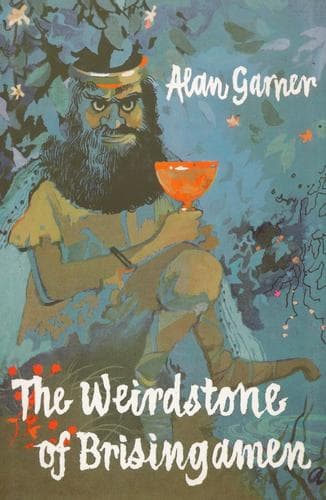
Alan Garner
Its enchanted English landscape and ancient magic have the same sense of an ordinary child crossing into a older, stranger world that readers of Tom's Midnight Garden enjoy.
Frances Hodgson Burnett
Another classic about a lonely child discovering a hidden garden that heals and transforms, with the same attention to growing things and a slow, intimate tone.