
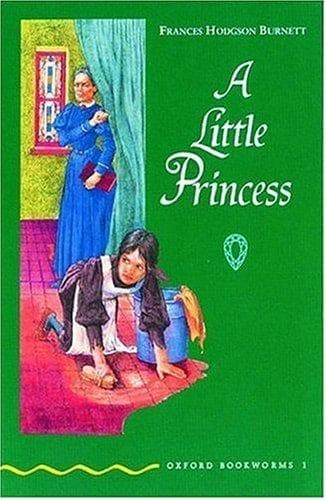
A Little Princess
Frances Hodgson Burnett
Like Bonnie and Sylvia, Sara Crewe is left at a harsh boarding school under a cold headmistress, and her courage in hard times will feel familiar to fans of Aiken's heroines.
Reader-supported: when you buy through links on our site, we may earn an affiliate commission. Learn more
We earn a commission if you buy through these links. Learn more
Find Similar Booksby Joan Aiken
Guide by the Books of the Day editors · Updated · How we write our guides
A brisk, Gothic-tinged adventure where two cousins face wolves, a cruel governess and a sinister orphan school, and the pages keep turning.
1 creator reviewed The Wolves of Willoughby Chase on YouTube in 2017, with 1.9K views between them. Their opinions are their own; we picked these reviews, we didn't write them.
The Wolves of Willoughby Chase is the first of Joan Aiken's Wolves Chronicles, a children's novel set in an alternate Britain where a Stuart king still sits on the throne and wolves have pushed south into the English countryside. Aiken builds the story around a comfortable country house, then strips its comforts away one by one, so the reader feels each loss alongside the girls. The setting is part history lesson and part fairy tale, and the rules of this world are left mostly unexplained, which keeps the story moving quickly.
The voice is brisk and wry, with a narrator who occasionally steps forward to comment on events and a villain who is cartoonishly nasty without becoming a mere joke. Chapters tend to end on a hook, and the book moves through a sequence of set pieces: a snowbound journey, a harsh institution, and a daring flight across frozen country. Aiken writes action with clear geography and physical detail, so the cold, hunger and fear are easy to picture.
Reading it feels like being pulled through a Gothic adventure at a steady gallop. It works well as a read-aloud for younger children and as a quick, satisfying read for adults who enjoy classic children's fiction. The emotional core is the friendship between Bonnie, practical and kind, and Sylvia, spoiled and frightened, whose relationship shifts under pressure.
Aiken sets the story in a version of England where history took a different path and wolves have returned to the countryside. She doesn't stop to explain how this came about. The strangeness gives the book a fairy-tale quality, while the social details of class, service and inheritance keep it grounded. Readers who enjoy invented histories will find the world more enjoyable than a straightforward adventure would be.
Bonnie and Sylvia begin as very different girls, and the hardships they endure test both of them. Bonnie's steadiness and warmth make her an easy character to root for, while Sylvia's vanity and fear give the story a more complicated emotional line. Their relationship is the part of the book that most rewards careful reading, because it shows how comfort can hide weakness and how hardship can reveal strength.
Much of the menace in the book comes from grown-ups who should protect the girls but instead exploit them. Aiken shows how authority can be abused through money, paperwork and routine cruelty. The villainy is exaggerated for effect, but the underlying idea, that children depend on adults who may not deserve their trust, runs through the whole story and gives it weight beyond the adventure.
The book borrows from Gothic fiction, with its sinister governess, isolated houses and sense of looming danger. Aiken keeps the tone light enough that the scares feel like part of a lively adventure rather than real horror. The humour, often in the narrator's asides and the characters' sharp exchanges, stops the darker material from becoming oppressive and makes the book easy to return to.
Some readers find the plot episodic and the cruelty of the adults, though not graphic, heavy-handed. The alternate-history backdrop is sketched rather than explained, which can frustrate readers who want the politics spelled out. Characters are drawn broadly, so the villains in particular read as types rather than people. Its vocabulary and sentence style reflect the early 1960s, and a few references may need explaining to modern children. Readers used to longer, more psychologically layered fiction may find it slight.
Book details and cover from Google Books.
Ready to read The Wolves of Willoughby Chase?
Get your copy on Amazon, or listen to it on Audible. We earn a commission if you buy through these links.
Frances Hodgson Burnett
Like Bonnie and Sylvia, Sara Crewe is left at a harsh boarding school under a cold headmistress, and her courage in hard times will feel familiar to fans of Aiken's heroines.
Roald Dahl
A clever, mistreated child faces a domineering adult who abuses her power, much as Miss Slighcarp terrorises the girls, and the story turns on wit and defiance.
Lemony Snicket
Three orphans are passed to a villainous guardian and face one misfortune after another, with the same wry narrator tone and mix of peril and humour that Aiken's readers enjoy.
Katherine Rundell
A girl in an alternative early-1900s Russia gets caught up in the care of wolves, offering the same gripping wolf-filled danger and daring rescue that drive The Wolves of Willoughby Chase.