
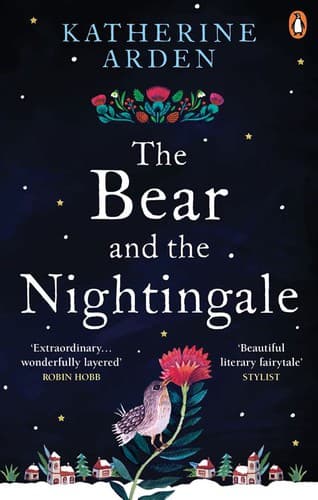
The Bear and the Nightingale
Katherine Arden
Like The Snow Child, it draws on Russian folklore and a deep, dangerous winter, letting frost demons and household spirits feel as real as the hardships of a remote wilderness family.
Reader-supported: when you buy through links on our site, we may earn an affiliate commission. Learn more
We earn a commission if you buy through these links. Learn more
Find Similar Booksby Eowyn Ivey
Guide by the Books of the Day editors · Updated · How we write our guides
A quietly haunting debut that turns a Russian folktale into a frontier story about grief, marriage, and the cost of a child who may not be entirely of this world.
2 creators reviewed The Snow Child on YouTube between 2025 and 2026, with 1.7K views between them. Their opinions are their own; we picked these reviews, we didn't write them.
The Snow Child is a slow, atmospheric novel about two people trying to hold a marriage and a homestead together in Alaska in the 1920s. Its core is a Russian folktale about a girl made of snow, which Eowyn Ivey weaves into a realistic world of brutal winters, failing crops, and isolation. The fairy-tale element is never fully explained away, so the book sits in an uneasy space between myth and historical fiction.
Ivey's style is patient and sensory. Long stretches cover the physical work of clearing land, hunting, and keeping animals alive, and the prose lingers on cold light, woodland sounds, and the strain of living far from anyone. The point of view moves among the main characters and a neighbor, so the same events land with different emotional weight depending on who is watching. Dialogue is spare, and much of the feeling sits in what people do not say.
Reading it feels like being shut inside a long winter: quiet, sometimes slow, and occasionally startling when the violence of the setting breaks through. It rewards readers who enjoy atmosphere and ambiguity more than plot momentum, and it asks you to care about the marriage as much as the mystery.
The novel treats childlessness as a daily weight rather than a plot device. The couple's sorrow shapes how they treat each other, how they work, and what they hope for. The fantastical child arrives as an answer to that longing, and the book keeps asking what people will accept when they want something badly enough.
Ivey places a fairy-tale figure inside a very ordinary struggle to survive on land that does not forgive mistakes. The myth gives the story its shape and its uncanny moments, while the homestead gives it stakes. Readers who enjoy seeing old stories grounded in real material conditions will find this the book's most distinctive feature.
Jack and Mabel's relationship is tested by unequal burdens, loneliness, and the impossibility of escaping each other in a remote place. The book is honest about how isolation can wear down affection and how two people can want the same future while experiencing their days very differently.
The story keeps returning to what it means to belong to a place. Settlers arrive claiming land, while the wilderness has its own rules and its own inhabitants. Ivey lets the question of who truly belongs remain open, which adds moral complexity to a story that could otherwise feel purely tender.
Some readers find the middle slow, with long passages of routine labor and waiting that can dull the tension. The central couple gets most of the depth, and several secondary characters, along with the perspectives of Native and other outsider figures in the region, feel less fully realized. The ambiguity that many readers love is, for others, a frustration, since the magic is left open and some threads resolve more neatly than the rest of the book suggests.
Book details and cover from Google Books.
Ready to read The Snow Child?
Get your copy on Amazon, or listen to it on Audible. We earn a commission if you buy through these links.
Katherine Arden
Like The Snow Child, it draws on Russian folklore and a deep, dangerous winter, letting frost demons and household spirits feel as real as the hardships of a remote wilderness family.
Diane Setterfield
A mysterious girl appears and changes the lives of grieving adults who long for a child, with the same ambiguity between folklore and fact that makes The Snow Child so haunting.
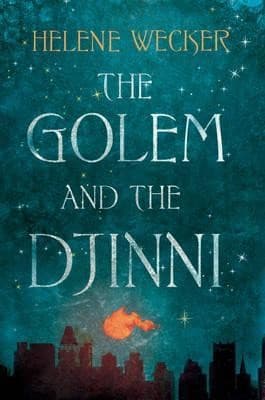
Helene Wecker
Mythical beings navigate a carefully drawn historical world, and the gentle, character-driven magic will appeal to anyone who loved how Faina's nature stays tantalisingly uncertain.
Eowyn Ivey
Ivey returns to Alaska with an 1885 expedition and a wife left behind, mixing hardship, Native legend and marriage in letters and diaries with the same feel for wilderness.