
We earn a commission if you buy through these links. Learn more
Golem and the Jinni
Guide by the Books of the Day editors · Updated · How we write our guides
A slow, humane fantasy in which a clay golem and a fire jinni build unlikely lives in turn-of-the-century New York, rewarding readers who value character over spectacle.
What Creators Say About Golem and the Jinni
2 creators reviewed Golem and the Jinni on YouTube between 2017 and 2019, with 12.1K views between them. Their opinions are their own; we picked these reviews, we didn't write them.
What It's About
The Golem and the Jinni is a historical fantasy set in New York in 1899, when the city's immigrant neighborhoods were crowded, noisy, and wary of outsiders. Its two central figures are creatures from old folklore who have ended up in a place that has no room for them. Chava is a golem, a figure of clay brought to life and left alone in a new country. Ahmad is a jinni, a being of fire from Middle Eastern tales, released from a copper flask by a tinsmith who did not expect what would come out.
Wecker alternates between their separate lives as each struggles to pass as human. Chava must learn how people behave, while Ahmad, long bound to serve and newly free, must decide what he owes anyone at all. Their paths gradually connect through a cast of Jewish and Syrian neighbors, and the novel spends much of its time on daily life: work, food, religious observance, money, and the small tensions of living among people who view you with suspicion.
The prose is patient and descriptive rather than fast. Expect a slow, immersive read that builds atmosphere and character more than plot momentum, with the folklore treated as something people half-believe rather than as spectacle. It suits readers who enjoy long novels that feel firmly rooted in a particular place and time.
Read this if you…
- want a long, character-driven historical novel with a touch of myth
- enjoy immigrant stories set in early twentieth-century New York
- like slow-building friendships more than fast plot twists
Skip it if you…
- want a fast-paced fantasy with battles and a clear quest
- dislike large casts and digressive, scene-by-scene storytelling
Key Ideas
- 1
Being human is a practice, not a birthright
Chava arrives fully formed yet must learn ordinary habits and emotions, while Ahmad has to understand mercy, choice, and responsibility after a life of obedience. The book asks whether humanity comes from where you originate or from how you act toward others.
- 2
Immigrant identity and the cost of passing
Both characters hide what they are in a city where Jewish and Syrian communities are themselves negotiating belonging. Concealment keeps them safe but also isolates them, and the novel tracks what that secrecy costs over time.
- 3
Old folklore placed in a real city
Wecker draws on Jewish golem legends and Arabic tales of jinn and grounds them in turn-of-the-century Manhattan, with its workshops, bakeries, and crowded streets. The myths feel like beliefs the characters carry with them rather than decorative magic.
- 4
Freedom versus obligation
Ahmad's release does not simply grant him liberty, since old bonds and new loyalties keep pulling at him. Chava's sense of purpose is also tied to the person who made her. The tension between autonomy and duty runs through the whole book.
- 5
Friendship as the emotional center
The relationship between the two leads grows slowly from wariness and curiosity into something deeper. Much of the novel's warmth comes from small, patient scenes of two outsiders learning to trust each other and themselves.
Limitations
Critics often point to pacing. The middle stretches can feel slow, and the book juggles many side characters and subplots, some of which pull focus from the central pair. The fantasy elements are restrained, so readers expecting dramatic magic may find it muted. The portrait of the Jewish and Syrian neighborhoods is affectionate but sometimes leans on period texture. The novel is followed by a sequel, The Hidden Palace, so some threads remain open at the end, which may frustrate readers who want a fully closed arc.
Questions Readers Ask
- Do I need to know Jewish or Syrian folklore before reading?
- No. Wecker explains what readers need through the characters' own experiences and beliefs. Some familiarity with golem and jinn legends adds texture, but the story stands on its own, and the background details will likely send you to the myths themselves with interest.
- How does it compare to The Night Circus?
- Both are slow, atmospheric, and built around two enigmatic figures. Wecker is more grounded in history and social realism, with less whimsy and more concern for everyday survival and religious life. If you liked the mood of The Night Circus but want more realism, this is a good next pick.
- Published
- 2013
- ISBN
- 9780062269416
- Difficulty
- intermediate
- Category
- Fiction
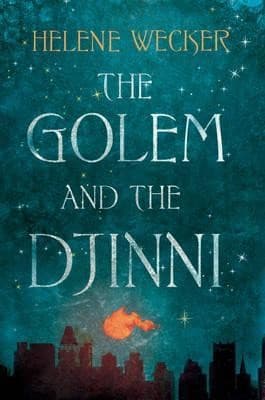
Book details and cover from Google Books.
Ready to read Golem and the Jinni?
Get your copy on Amazon, or listen to it on Audible. We earn a commission if you buy through these links.