Reader-supported: when you buy through links on our site, we may earn an affiliate commission. Learn more

Cover of The Reluctant Fundamentalist
Buy on AmazonBuy on Bookshop.orgListen on Audible

We earn a commission if you buy through these links. Learn more

Find Similar Books

The Reluctant Fundamentalist

by Mohsin Hamid

Fiction
★★★☆☆3.0 (2)

Guide by the Books of the Day editors · Updated · How we write our guides

A tense, quietly devastating monologue about a young Pakistani analyst in New York whose world turns after 9/11, told to a listener who may be dangerous.

What Creators Say About The Reluctant Fundamentalist

2 creators reviewed The Reluctant Fundamentalist on YouTube between 2013 and 2020, with 19.3K views between them. Their opinions are their own; we picked these reviews, we didn't write them.

The Reluctant Fundamentalist by Mohsin Hamid (summary and analysis)Fiction Beast on YouTube12.8K views · 2020
The Reluctant Fundamentalist by Mohsin Hamid | Book Reviewrincey reads on YouTube6.4K views · 2013

What It's About

The Reluctant Fundamentalist is written as one long spoken account delivered over a single evening at a café table in Lahore. Changez, a former top student at Princeton who went on to work as a corporate valuation analyst in Manhattan, tells his story to an American he addresses as sir. That listener never speaks in the text, so you hear only one side and must work out what is being left unsaid.

Hamid's prose is spare, polished, and courteous, with a dry irony that makes Changez sound like a relaxed conversationalist while he is quietly controlling the story. The narrative moves through his rise in New York, his absorption in the city's energy, his attachment to Erica, and the shift in how he is seen after September 11. The tension comes less from plot twists than from what Changez chooses to withhold and what the listener might be planning.

Reading it feels like sitting across from someone carefully choosing each word, and the unease grows from wondering whose version of events to trust. It is short enough to read in one sitting, but it tends to linger long after you finish.

Read this if you…

  • want a short, carefully built novel about identity and suspicion after 9/11
  • enjoy unreliable or openly persuasive narrators you have to read between the lines
  • are interested in how globalisation affects ambition, class, and belonging

Skip it if you…

  • need a fully resolved plot or a clear answer to what happens between the two men
  • prefer fast-moving thrillers with action and a steady pace of revelations

Key Ideas

  1. 1

    Narration as a form of argument

    Because the listener's replies are never shown, every sentence Changez speaks carries the weight of persuasion. The book makes you notice how a monologue can steer your sympathy while appearing to be a simple confession. Paying attention to the gaps between his words is part of the experience.

  2. 2

    The outsider's view of American success

    Changez arrives believing that brilliance and hard work will earn him a place among the powerful. His job of valuing companies becomes a lens for how the book judges people and institutions by their price. The novel asks what it costs to measure yourself by a standard that others set for you.

  3. 3

    Suspicion as a force that reshapes identity

    After the attacks, Changez discovers that his standing depends on how others read his face, beard, and background. The book shows how suspicion can push a person toward the very identity that others fear. It is a sharp study of how a private self gets reorganised by public fear.

  4. 4

    Love entangled with class and history

    His relationship with Erica is shaped by her own past and by the social hierarchy of wealthy Manhattan. The romance matters because it reveals what Changez wants to belong to and what he cannot fully reach. Their connection works as a test of whether attraction can cross deep divides of history and privilege.

  5. 5

    Ambiguity that resists a single reading

    The frame around the conversation keeps the question of threat open, and the story never settles every detail. Hamid builds a structure in which the reader must judge both the narrator and the situation. This ambiguity is the book's most distinctive feature and the source of much of its lasting impact.

Limitations

Some readers find the frame device heavy-handed, feeling that the open-ended setup can overshadow the story it contains. Others argue that the political argument is delivered with more polish than depth, and that the portrayal of Erica and other women is thinner than Changez's emotional life. The book's reliance on a single voice can also feel restrictive to readers who want wider perspectives. Because it is closely tied to the post-2001 climate, some of its immediacy may feel more historical to younger readers.

Questions Readers Ask

Is The Reluctant Fundamentalist still worth reading today?
Yes. Its concerns about how suspicion and national identity shape individual lives have not faded, and the monologue format still feels fresh. Some references to the early 2000s may feel dated, but the psychological questions carry well into the present.
How does it compare to Hamid's earlier novel Moth Smoke?
Moth Smoke is set in Lahore and is more sprawling, with multiple characters and a darker tone. The Reluctant Fundamentalist is far more contained, relying on one speaker and one evening. If you want a tighter, more deliberately constructed novel, this is the stronger entry point.
Published
2009
ISBN
9780307373359
Difficulty
intermediate
Category
Fiction

Book details and cover from Google Books.

Ready to read The Reluctant Fundamentalist?

Get your copy on Amazon, or listen to it on Audible. We earn a commission if you buy through these links.

Books Like The Reluctant Fundamentalist

View all →
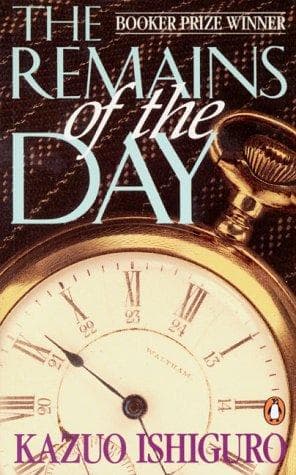
Cover of The Remains of the Day

The Remains of the Day

Kazuo Ishiguro

Like Changez, Stevens narrates his own life with polished restraint, and the gap between what he says and what he feels slowly opens up. Its measured, reflective voice will feel familiar to anyone drawn to Hamid's storytelling.

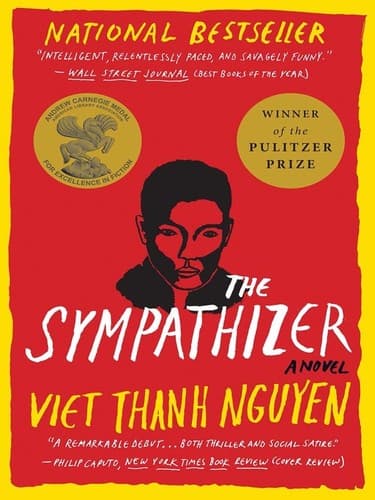
Cover of The Sympathizer

The Sympathizer

Viet Thanh Nguyen, Francois Chau

A man recounts his history to an unseen listener, caught between two sides and divided loyalties. Like The Reluctant Fundamentalist, it turns a personal confession into a sharp commentary on politics and identity.

Cover of Disgrace

Disgrace

J. M. Coetzee

A proud, troubled man refuses to explain himself fully as his world falls apart. Its spare prose and moral unease reward readers who appreciated the way Hamid's narrator withholds and reframes the truth.

Cover of Home Fire

Home Fire

Kamila Shamsie

A British Pakistani family faces suspicion and loyalty tests in the years after 2001. Its political stakes and divided sense of home mirror the tensions Hamid explores through Changez's changing position.

Explore More