
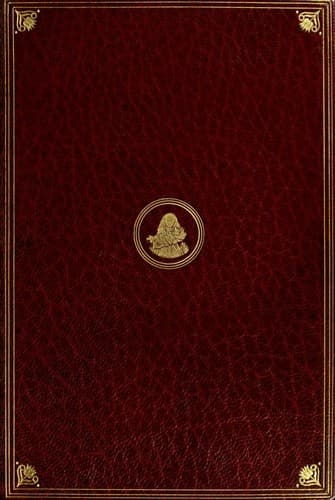
Alice's Adventures in Wonderland
Lewis Carroll
Like Milo's trip through the Lands Beyond, Alice wanders into a world where language and logic bend in surprising ways. Carroll's puns and riddles will appeal to anyone who enjoyed Juster's wordplay.
Reader-supported: when you buy through links on our site, we may earn an affiliate commission. Learn more
We earn a commission if you buy through these links. Learn more
Find Similar BooksA bored boy drives through a magic tollbooth into a land built from puns and idioms, and comes back curious; it's one of the funniest celebrations of thinking ever written for kids.
Milo is a boy who finds everything pointless: school, toys, even getting home. When a mysterious tollbooth kit shows up in his bedroom, he assembles it and drives his toy car through out of sheer boredom. On the other side he finds the Lands Beyond, a country where figures of speech are literal, words and numbers are rival kingdoms, and two exiled princesses named Rhyme and Reason need rescuing. Along the way he picks up companions, chiefly a watchdog with a clock in his body and a pompous, unreliable insect called the Humbug.
The book reads like a string of comic encounters, each one built around a joke about language, logic, or perception. Characters eat their words at a banquet, numbers are mined like gems, and a boy floats in midair because he grows downward. Jules Feiffer's scratchy line drawings add a lot of the charm. Beneath the gags is a gentle argument that curiosity and learning are what make life interesting.
For children it's an adventure full of strange creatures and silly logic; for adults rereading it, the satire of bureaucracy, laziness, and empty talk lands surprisingly hard. It works well as a read-aloud because so much of the pleasure is in the wordplay, and kids often catch new jokes on a second or third pass. Expect a quest structure more episodic than suspenseful, closer to Alice in Wonderland than to a modern plot-driven fantasy.
Milo's problem isn't that the world is dull but that he has stopped noticing it. The journey is designed to wake him up. Juster treats boredom as a habit of mind that can be broken, which gives the story a hopeful, almost instructive core without ever feeling like a lecture.
The book's signature move is taking idioms, puns, and clichés at face value: jumping to conclusions, eating your words, killing time. Each becomes a place or a character. This turns vocabulary into something physical and funny, and many readers credit the book with first making them love how words work.
Dictionopolis and Digitopolis are ruled by quarreling brothers who each insist their domain matters more. Their feud, and the banishment of Rhyme and Reason, frames the story's point that language and mathematics, feeling and logic, are partners rather than rivals. It's a neat way to tell kids not to write off a subject.
Many encounters poke fun at adult foibles: officials who obstruct for the sake of rules, people who waste time doing nothing, demons representing ignorance and trivial busywork. Children enjoy the absurdity, while grown-ups recognize the targets, which is a big reason the book holds up for family reading.
The story is episodic, so readers expecting a page-turning plot may find the middle meanders from one gag to the next. Some wordplay will go over younger children's heads, and a few references feel mid-century. The cast is overwhelmingly male, with the princesses functioning more as a goal than as characters. The moral about learning is clear and occasionally a little on-the-nose. Kids raised on fast-paced contemporary fantasy may need an adult reading alongside to get into its rhythm.
Book details and cover from Google Books.
Ready to read The Phantom Tollbooth?
Get your copy on Amazon, or listen to it on Audible. We earn a commission if you buy through these links.
Lewis Carroll
Like Milo's trip through the Lands Beyond, Alice wanders into a world where language and logic bend in surprising ways. Carroll's puns and riddles will appeal to anyone who enjoyed Juster's wordplay.
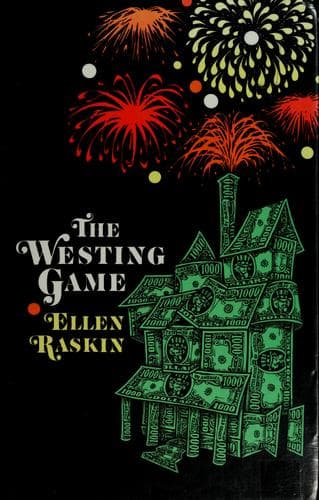
Ellen Raskin
Raskin fills her story with clever clues, puzzles and word games, much as Juster does with his Dictionopolis episodes. Young readers who enjoyed solving the riddles in The Phantom Tollbooth will enjoy working out this mystery.
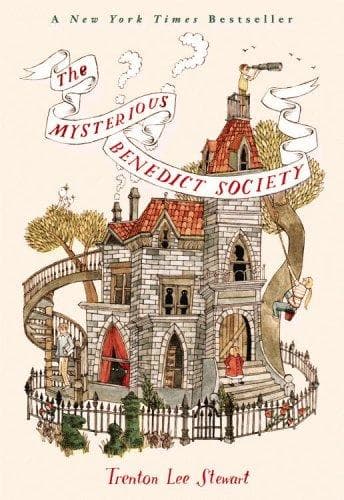
Trenton Lee Stewart
Stewart's gifted children tackle riddles and tests with humour and ingenuity, echoing the playful problem-solving of Milo's quest. It has the same mix of brainy fun and gentle adventure that makes Juster's book so appealing.
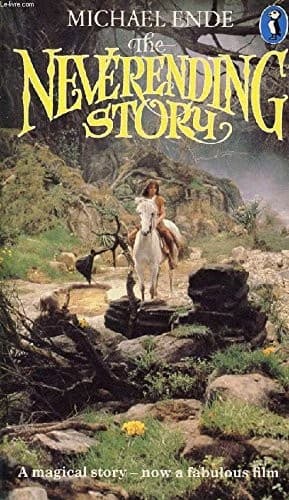
Michael Ende
Ende's story also follows a young reader drawn into a fantastical realm where imagination shapes the world. Fans of Milo's journey will appreciate its inventive places and its thoughtful reflections on meaning.