
We earn a commission if you buy through these links. Learn more
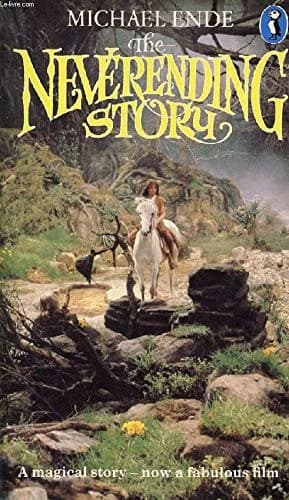
The Neverending Story
by Michael Ende
Guide by the Books of the Day editors · Updated · How we write our guides
A bookish outcast slips into a dying fantasy world through the pages of a book he has stolen, and Ende turns that premise into a strange, moving meditation on imagination and loss.
What Creators Say About The Neverending Story
2 creators reviewed The Neverending Story on YouTube in 2025, with 1.2M views between them. Their opinions are their own; we picked these reviews, we didn't write them.
What It's About
The Neverending Story is a German novel from 1979, translated into English by Ralph Manheim, and it works on two levels at once. On the surface it follows Bastian, a lonely, bullied schoolboy who steals a book from a bookshop and starts reading it in a school attic. The book he reads tells of Fantastica, a realm threatened by a creeping emptiness called the Nothing, and of a young hunter named Atreyu sent on a dangerous quest. The novel keeps cutting between Bastian's world and the story he is absorbed in, so the reader is always aware of both.
The style is leisurely and digressive. Ende lingers over invented creatures, odd customs, and the rules of his made-up realm, and he is not in a hurry to reach action. Many readers find the early sections enchanting, while others find the pacing slow and the allegory heavy-handed. The tone is earnest rather than ironic, and the book asks big questions about what stories are for.
Reading it feels like being slowly drawn into a dream that has its own logic. It rewards patience and a willingness to accept whimsy without explanation. It is a book about the act of reading itself, and it changes meaning for readers who return to it at different stages of life.
Read this if you…
- love fantasy that treats imagination as something serious and worth protecting
- enjoy slow, atmospheric worldbuilding more than fast plotting
- want a book about reading itself that pays off emotionally
Skip it if you…
- need tight pacing and constant action from the first page
- find allegory and earnest moral lessons tiresome
Key Ideas
- 1
A story that depends on its reader
The novel is built around the idea that imagined worlds need someone to keep them alive. Fantastica is only as healthy as the attention paid to it, and the frame of Bastian reading turns the act of reading into the central drama. Ende makes the reader feel implicated in the fate of the land, which gives the book an unusually personal charge.
- 2
The danger of forgetting who you are
Bastian's experience inside the story raises pointed questions about identity, memory, and what a person gives up in exchange for power or escape. The book is wary of simple wish fulfillment and shows how getting everything you desire can cost you the things that make you yourself. This thread gives the fantasy an emotional weight that many lighter adventures lack.
- 3
Emptiness as a force in the world
The Nothing is more than a monster. It is a spreading indifference and a loss of meaning that eats away at everything it touches. Ende uses it as a metaphor for despair and cultural decay, so the threat feels abstract and philosophical rather than merely physical, which some readers will find haunting and others will find vague.
- 4
A quest structured as a book within a book
The layered structure is the novel's most distinctive feature. Chapters alternate between the boy's life and the adventures of the hero, and the two narratives slowly press against each other. This nesting makes the book feel like a puzzle about perspective, where the reader must keep track of which world they are in and why it matters.
Limitations
The book is long, and its middle stretches can feel repetitive or meandering, with many episodes that add color but little forward motion. Its moral message is stated openly at times, which some modern readers find blunt. The English translation has been praised for keeping the voice intact, but the rhythm of a mid-century German fairy tale sits differently with contemporary expectations. Ende's vision is also less interested in fully developed characters than in ideas and symbols, so people who want deep psychological portraits may be disappointed.
Questions Readers Ask
- Is The Neverending Story only for children?
- No. It is often shelved as children's or young adult fiction, and its hero is a young boy, but its themes of despair, memory, and the cost of escape land hard with adults. Many readers come back to it later in life and notice much more. Adults who enjoy whimsical, philosophical fantasy usually find it rewarding, though they may be impatient with some of the slower passages.
- How does the book compare to the 1984 film?
- The 1984 film covers only the first part of the novel and reshapes much of the story, so the book is far larger and stranger than the movie. Readers who loved the film often find the novel more reflective and less sentimental. The book spends much more time on its invented world and on the consequences of Bastian's choices, which the film largely leaves out.
- Published
- 1983
- ISBN
- 9780140076196
- Difficulty
- intermediate
- Category
- Fantasy
Book details and cover from Google Books.
Ready to read The Neverending Story?
Get your copy on Amazon, or listen to it on Audible. We earn a commission if you buy through these links.