Reader-supported: when you buy through links on our site, we may earn an affiliate commission. Learn more

Cover of The Like Switch
Buy on AmazonBuy on Bookshop.orgListen on Audible

We earn a commission if you buy through these links. Learn more

Find Similar Books

The Like Switch

by Jack Schafer, Marvin Karlins

Self-Improvement
★★★★★5.0 (1)

A former FBI behavioral analyst's quick, practical guide to reading people and making a warmer impression, useful if you treat its science claims with healthy skepticism.

What It's About

The Like Switch is a short, practical guide by Jack Schafer, a former FBI behavioral analyst, that turns investigative habits toward everyday social life. Its premise is that being liked is a skill you can notice and adjust, and it treats first meetings, dates, sales calls and interviews as small problems in reading signals and choosing what to show.

Schafer's style is brisk and anecdotal. Chapters move through observations, rules of thumb and examples drawn from his professional experience, with the tone of a veteran sharing field habits rather than a researcher laying out studies. Expect many concrete suggestions about body language, conversation pacing and how to gauge whether someone is warming to you. The writing is accessible and quick to read, and many ideas are easy to try the same day.

The experience is less a theory than a toolkit. You finish with a heightened awareness of nonverbal cues and a checklist mindset, which is what makes it useful. It rewards readers who want practical habits, and it works best when taken as a set of hypotheses to test in your own life rather than settled truth about how people think.


Read this if you…

  • want practical, quick-to-apply habits for first meetings and everyday conversations
  • are curious how investigators and interviewers read people, and want the everyday version
  • like a confident, anecdotal voice more than dense academic writing

Skip it if you…

  • want rigorous research on body language or lie detection, since the evidence for both is weaker than the book suggests
  • find the idea of reading people for advantage uncomfortable, or are looking for relationship-first advice about warmth and trust

Key Ideas

  1. 1

    Likeability as a learnable skill

    Schafer frames being liked as something you can measure and improve, using an idea he calls a Likeability Quotient. The point is that people's warmth toward you depends partly on the signals you send and partly on how well you respond to theirs, so small adjustments in attention, tone and posture can change how a first meeting goes.

  2. 2

    Reading nonverbal cues against a baseline

    Borrowing investigative habits, the book urges you to observe how someone normally behaves before reading meaning into a change. A shift in posture or gaze means little alone; it matters when it departs from that person's usual pattern. The idea is practical, though readers should weigh it against how unreliable body language reading can be.

  3. 3

    Mirroring and matching to build rapport

    Schafer covers mirroring, matching another person's pace, posture and energy, as a way to create a sense of similarity. The approach is about subtle synchrony rather than copying, and the book stresses timing and restraint so that it doesn't feel like a performance.

  4. 4

    Turning a relationship's intensity up or down

    The book discusses how to deliberately raise or lower the emotional temperature of an interaction, from a quick business exchange to a deeper personal connection. The useful takeaway is to match intensity to context and to notice when someone wants more distance.

  5. 5

    Spotting deception in person and online

    The book includes a section on detecting lies in face-to-face and digital communication, drawing on interview experience. Read it as a set of observational prompts rather than a reliable lie detector, since the book is more confident here than the research supports.

Limitations

Critics point out that the book's claims about spotting lies and decoding body language are stronger than the research supports. People are generally poor at detecting deception, and nonverbal cues are ambiguous and vary across cultures. The FBI background gives the advice authority, but the book leans heavily on anecdote and offers few references to controlled studies. Some readers find its influence-focused framing manipulative, and it is less useful on the slower work of trust, vulnerability and real friendship. Published in 2015, it also reflects the style of its era and does not explore digital life in depth beyond a brief online section.

Questions Readers Ask

Is The Like Switch based on scientific research?
Partly. Schafer draws more on his investigative experience than on controlled studies, and many of his claims about nonverbal cues and lie detection are stronger than the research supports. Treat the techniques as hypotheses to test, and look to social psychology work on rapport and first impressions for firmer evidence.
How does it compare to Never Split the Difference?
Both draw on law enforcement experience, but Chris Voss's Never Split the Difference centers on a clear negotiation method. The Like Switch is broader and focuses on everyday likeability and reading nonverbal signals. Readers wanting structured negotiation tools may prefer Voss; those wanting to sharpen social instincts may prefer Schafer.
Who is this book best suited for?
It suits readers who want quick, concrete social tips for dates, interviews and sales conversations, and who are comfortable treating the advice as experiments. It is less suited to readers seeking depth, academic grounding or a thorough treatment of how relationships develop over time.

What Creators Say About The Like Switch

Reviews from readers on YouTube. Their opinions are their own.

The Like Switch by Jack Schafer Audiobook | Summary by Brain BookBrain Book on YouTube
The Like Switch in 15 MinutesLibrary Of Alexandria on YouTube
Published
2015
ISBN
9781476754505
Difficulty
beginner
Category
Self-Improvement

Book details and cover from Google Books.

Ready to read The Like Switch?

Get your copy on Amazon, or listen to it on Audible. We earn a commission if you buy through these links.

Books Like The Like Switch

View all →
Cover of What every BODY is saying

What every BODY is saying

Joe Navarro, Marvin Karlins

Written by another former FBI agent, this book teaches the same kind of nonverbal reading Schafer covers. It explains how posture, gestures, and facial expressions reveal what people feel, which suits readers who enjoyed his cue-spotting chapters.

Cover of The Definitive Book of Body Language

The Definitive Book of Body Language

Barbara Pease, Allan Pease

This illustrated guide breaks down gestures, eye contact, and touch in a friendly, accessible way. Readers who liked The Like Switch's nonverbal tips will appreciate its many concrete examples of what different signals usually mean.

Cover of Captivate

Captivate

Vanessa van Edwards

Van Edwards draws on research into human behavior to show how small actions shape how others see you. Its practical experiments and first-impression advice match the goal of The Like Switch: becoming someone people warm to quickly.

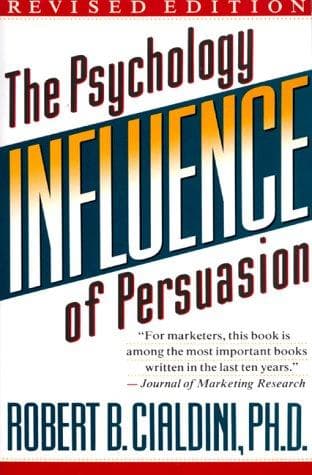
Cover of Influence

Influence

Robert B. Cialdini

This classic examines the principles that make people say yes, such as reciprocity and liking. Schafer's ideas about building rapport and earning goodwill connect directly to Cialdini's research-based explanations of why we trust some people more than others.

Explore More