
The Da Vinci Code
Dan Brown
Like The Last Templar, it pairs a cryptologist and a symbologist with a chase through historic sites while secret societies and hidden codes drive every chapter, all moving at a relentless pace.
Reader-supported: when you buy through links on our site, we may earn an affiliate commission. Learn more
We earn a commission if you buy through these links. Learn more
Find Similar BooksGuide by the Books of the Day editors · Updated · How we write our guides
A fast, plot-driven thriller that pairs an FBI agent with an archaeologist to chase a medieval Templar secret, best for readers who want momentum and globe-trotting over literary depth.
1 creator reviewed The Last Templar on YouTube in 2016, with 162 views between them. Their opinions are their own; we picked these reviews, we didn't write them.
The Last Templar is a commercial thriller that braids a modern manhunt with a medieval backstory about the Knights Templar. Its two main investigators, an FBI agent and an archaeologist, give the story two angles: the procedural side of a crime and the historical side of a mystery that nobody in the present seems to fully understand. The book keeps shifting between them, so the reader is always being handed a new clue or a new location.
The writing is functional rather than ornate. Sentences are direct, scenes are short, and the chapters are built to end on a hook. Characters are sketched more than deeply drawn, and the romance between the leads follows a familiar pattern. The historical material works mainly as a source of intrigue. The book is more interested in puzzle-solving and chase sequences than in careful scholarship, so the Templar lore should be read as atmosphere rather than a reliable account.
Reading it feels like settling into a well-paced airport novel. You do not need any background in medieval history or crime investigation to follow it, and the pace makes it easy to read in long sittings. It rewards readers who enjoy escalating danger, secret societies, and the sense that the past is still pressing on the present.
The Templars function as a source of secrets that reach into the present day. The book uses the order's legendary reputation to give a contemporary crime a sense of deep, hidden history. The historical element is there to create intrigue and a sense of something ancient at stake, not to offer a balanced account of the period.
An archaeologist and an FBI agent bring different skills to the same problem. One reads the past through objects and sites, the other through evidence and procedure. Their working relationship gives the story its structure, and their contrasting methods let the book move between museum-world puzzles and law-enforcement tension.
The story is built around pursuit. The investigators and their opponents keep trading advantages as the search takes them to several countries. The structure relies on short scenes, shifting locations, and cliffhanger endings, which keeps the reader moving forward even when the characterization is thin.
Religious and governmental institutions are treated as places where information gets hidden or controlled. This suspicion of established authority drives much of the tension. The book leans into the appeal of secret societies and buried truths, which is a long-running thriller tradition.
The most common criticisms are about the characters and the prose. The leads are competent but rarely surprising, and the dialogue and romantic subplot can feel formulaic. The historical material is loosely handled and should not be treated as scholarship. Readers who value nuance about the Templars, or who want a grounded procedural with realistic investigative detail, will find the book simplifying. Its conspiracy framing is also a conventional one that veteran thriller readers may recognize quickly.
Book details and cover from Google Books.
Ready to read The Last Templar?
Get your copy on Amazon, or listen to it on Audible. We earn a commission if you buy through these links.
Dan Brown
Like The Last Templar, it pairs a cryptologist and a symbologist with a chase through historic sites while secret societies and hidden codes drive every chapter, all moving at a relentless pace.
Ian Caldwell, Dustin Thomason
Two friends decode a centuries-old manuscript at Princeton, uncovering a hidden history much as Tess and Reilly chase the Templar secret, with a clever puzzle structure and a steady sense of danger.
Steve Berry
A standalone thriller about a lost Templar treasure and a race against ruthless rivals, offering the same mix of historical mystery, global travel and villains hunting the same prize.
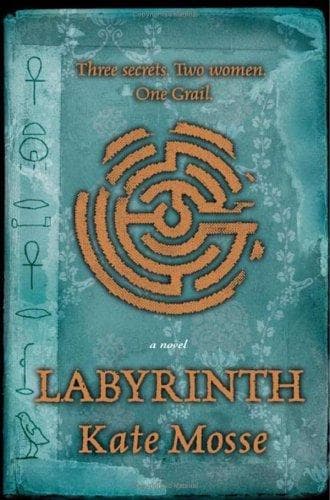
Kate Mosse
Alternating between medieval Languedoc and modern Carcassonne, it follows a hunt for a sacred relic tied to the Cathars, matching the book's pairing of a past mystery with a present-day investigation.