
We earn a commission if you buy through these links. Learn more
Labyrinth
by Kate Mosse
Guide by the Books of the Day editors · Updated · How we write our guides
Kate Mosse's Labyrinth braids a 1209 siege of Carcassonne with a modern treasure quest, offering a page-turning entry point into Cathar history and the Grail legend.
What Creators Say About Labyrinth
2 creators reviewed Labyrinth on YouTube between 2014 and 2020, with 4.2K views between them. Their opinions are their own; we picked these reviews, we didn't write them.
What It's About
Labyrinth is a commercial historical novel that alternates between two timelines. In one, a young woman named Alaïs is caught inside the walled city of Carcassonne in 1209, as crusader armies gather against the Languedoc and its Cathar communities. In the other, a present-day woman follows a trail of clues that seems to lead back to those same walls and to a sacred object people have pursued for centuries.
Mosse writes in a brisk, accessible style, with short chapters, frequent cliffhangers, and a good deal of historical scaffolding about the Occitan world, its troubadour culture, and the religious conflict that tore it apart. The sections set in the past carry most of the emotional weight, while the modern thread is driven more by puzzle-solving and a sense of urgency.
Reading it feels like sitting down with a well-researched thriller. You will not find subtle prose or deep psychological complexity, but you will get a vivid sense of medieval Languedoc, a clear sense of what is at stake, and the pleasure of watching two stories pull toward each other. It works best as a holiday or long-weekend read rather than a slow, reflective one.
Read this if you…
- enjoy historical fiction with a mystery or treasure-hunt engine
- want an accessible entry point into the Cathars and medieval Languedoc
- like dual-timeline novels where the past and present slowly converge
Skip it if you…
- want subtle prose or a slow, character-driven literary novel
- are looking for strict historical accuracy or a scholarly account of the Cathars
Key Ideas
- 1
Two timelines mirroring each other
The medieval siege and the modern search are built to echo one another through places, objects, and choices. Mosse wants you to notice the rhymes between eras, and the structure rewards attentive reading more than a quick skim. The gradual convergence of the two threads is the book's main engine.
- 2
The Cathar world and the crusade
The novel gives readers a readable introduction to the Languedoc, its Cathar faith, and the violent campaign waged against it. Mosse simplifies and fictionalizes in places, blending invented characters with real events, so it is best treated as an invitation to learn more rather than a reliable record.
- 3
The Grail legend as a framing device
The modern plot leans on the Grail myth and the long tradition of treasure-hunting stories built around it. Mosse uses these legends to ask who gets to tell the history of a place and whose version survives. Readers familiar with the genre will recognise its conventions, but the medieval setting gives it extra texture.
- 4
Women at the centre of a violent era
The medieval protagonist must act with courage and resourcefulness inside a siege and a religious war that others largely control. The book foregrounds women's roles, relationships, and moral choices, which gives the historical strand more emotional immediacy than the battles alone would provide.
- 5
Pacing built for momentum
Short chapters, shifting viewpoints, and clues placed to pull you forward make this a quick read. The style favours momentum over lyrical description, so the experience is closer to following a well-plotted film than to lingering over a literary novel.
Limitations
Critics often point to functional prose, thin characterisation in the modern strand, and a plot that leans heavily on coincidence and familiar Grail tropes. The history is blended with legend and invented detail, so readers may mistake fiction for fact. The modern thread is generally felt to be less compelling than the medieval one. Published in 2005, the book also reflects the conventions of its moment, and its pacing and style may feel dated to readers used to more recent historical fiction.
Questions Readers Ask
- Is Labyrinth historically accurate?
- Mosse grounds the medieval strand in real events, including the 1209 siege of Carcassonne and the wider Albigensian Crusade. However, it is a novel that mixes invented characters, legend, and dramatic licence with history. Enjoy it as a gateway, then turn to a historian's account for the facts about the Cathars.
- How does Labyrinth compare to The Da Vinci Code?
- Both combine a modern puzzle with an ancient mystery and a religious legend. Labyrinth is set in a more concrete historical world and is less focused on conspiracy, with more attention to medieval daily life and the siege. Readers who enjoy quick, clue-driven plotting will likely find it familiar and satisfying.
- Is Labyrinth still worth reading today?
- Yes, especially if the Cathars and medieval Languedoc are new to you. The prose style is of its time and the modern plot can feel dated, but the historical setting remains vivid and distinctive. It is a good choice for a fast, engaging read rather than a deeply literary one.
- Published
- 2005
- ISBN
- 9781429503068
- Difficulty
- beginner
- Category
- Historical Fiction
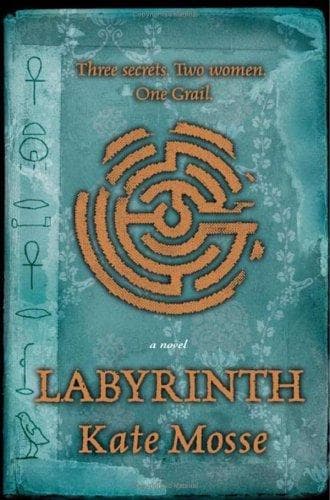
Book details and cover from Google Books.
Ready to read Labyrinth?
Get your copy on Amazon, or listen to it on Audible. We earn a commission if you buy through these links.