
The Murder of Roger Ackroyd
Agatha Christie
Like Higashino's novel, it is built on a carefully fair puzzle in which the reader is led to misjudge who is hiding what. Its structure rewards close attention in the same way.
Reader-supported: when you buy through links on our site, we may earn an affiliate commission. Learn more
We earn a commission if you buy through these links. Learn more
Find Similar BooksA cover-up is planned in plain view, and the question becomes whether a brilliant physicist can find the one flaw, making this a rare puzzle built on sympathy and logic.
The Devotion of Suspect X turns the usual whodunit inside out. The killing and the planned cover-up are laid out early, so the suspense is not about who did it but whether the lie will hold. Higashino, a Japanese writer known for mysteries built on precise logic, lets the reader watch both sides of the game, and that is where the tension comes from.
The investigation follows Detective Kusanagi, who senses a hole in an alibi he cannot locate, and Yukawa, a physicist who approaches the case through scientific reasoning rather than gut feeling. Their conversations are unhurried and cerebral, and the police procedure feels grounded rather than flashy. The prose is spare, and the emotional weight comes from characters who are often seen from the outside.
Expect a slower, more interior read than a fast thriller. The pleasure lies in watching two intelligent people match wits and in the gradual unfolding of what drives the central choices. If you want a clean, twisty puzzle to race through, this may feel deliberate. If you enjoy mysteries where logic and motive matter as much as the body count, it rewards patience.
Instead of asking who committed the crime, the book asks how the deception will be exposed, if it can be exposed at all. The reader knows the basic facts early and tests each step of the cover-up alongside the investigators. This shifts the enjoyment from surprise to anticipation, as you wait for the one assumption that might break open the case.
The cover-up is shown through the reasoning of Ishigami, a mathematics teacher who thinks in procedures and probabilities. His methodical planning reveals who he is as much as any dialogue could. Readers who enjoy seeing a mind at work, step by step, will find his sections the most absorbing part of the book.
Yukawa does not rely on hunches. He tests assumptions against physical facts and asks whether a story could really have happened the way the police believe. The book presents scientific thinking as a practical tool for doubting a neat explanation, which gives the investigation a distinct texture compared with more intuitive detectives.
The title points to the book's central tension: how far a person will go for someone they love, and whether that loyalty excuses what they do. The novel invites sympathy for a character who has done something terrible without asking readers to endorse it. That moral ambiguity gives the ending its weight and keeps the story from feeling like a simple game.
The contest between Ishigami and Yukawa is the heart of the novel. Each anticipates the other's moves, and the reader is kept between admiration for both. The rivalry is less about physical danger than about intellectual pressure, so the book suits anyone who enjoys watching clever people outthink one another.
Some readers find the characters distant, since the emotional core is more about devotion as an idea than as something you feel up close. The prose is plain and can feel flat, and translation choices can make dialogue read more formally than the original. The scientific explanations, while clear, can be dense for readers without a physics background. The book also leans on a slow build, so those expecting constant momentum may lose patience before the central contest fully develops.
Reviews from readers on YouTube. Their opinions are their own.
Book details and cover from Google Books.
Ready to read The Devotion of Suspect X?
Get your copy on Amazon, or listen to it on Audible. We earn a commission if you buy through these links.
Agatha Christie
Like Higashino's novel, it is built on a carefully fair puzzle in which the reader is led to misjudge who is hiding what. Its structure rewards close attention in the same way.
C. J. Tudor
It uses a tightly controlled reveal across two timelines, much as The Devotion of Suspect X does with its shifting viewpoint. Readers who enjoy being misdirected will find the same pleasure.
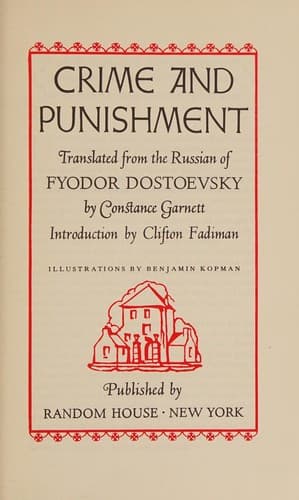
Fyodor Dostoevsky
A brilliant man commits a murder and then fences with a shrewd investigator, which mirrors the cat-and-mouse contest between Ishigami and Yukawa. It also explores the moral cost of a calculated crime.

Patricia Highsmith
Its protagonist is a cool, rational planner who keeps covering his tracks, much like Ishigami. Readers drawn to a meticulous killer who stays calm under pressure will find it gripping.