
Wonder
R. J. Palacio
Like Cap, Auggie starts school for the first time after years at home, and multiple narrators show how one unusual kid reshapes a whole grade's sense of kindness.
Reader-supported: when you buy through links on our site, we may earn an affiliate commission. Learn more
We earn a commission if you buy through these links. Learn more
Find Similar BooksA warm, very funny middle-school novel told by a rotating cast, where a commune-raised boy's total innocence slowly turns a school's cruel pecking order upside down.
Schooled follows Capricorn Anderson, a thirteen-year-old raised on an isolated farm commune by his grandmother, who suddenly has to attend a regular public middle school. He has no idea what a locker combination is, let alone the unwritten rules of who gets mocked and why. The school's most popular kid sees a perfect target and pushes Cap into a long-running prank: electing the weirdest student as class president. What nobody expects is how Cap's calm sincerity begins to affect everyone around him.
Gordon Korman tells the story through many narrators, with chapters passing between Cap, the popular crowd, a bullied former target, the guidance counselor's resentful daughter, school staff, and others. This structure is the book's secret weapon. Readers see the same events from the bully's side, the victim's side and the bystander's side, which makes the comedy sharper and the change in each character feel earned rather than preachy.
Reading it is brisk and light. Chapters are short, the jokes come from character and situation rather than gross-out humor, and the gap between Cap's world and modern middle school produces steady laughs. Underneath the fun, the book quietly asks what makes someone cool, why kids go along with cruelty, and whether kindness can be contagious. It works well as a read-aloud, a classroom novel, or an independent read for kids around ages 9 to 13.
Because Cap has never absorbed the usual social rules, everything ordinary about middle school looks strange through his eyes. Korman uses this fish-out-of-water setup to expose how arbitrary popularity, teasing, and status really are. Young readers get to laugh at Cap's confusion while also noticing that some of the habits he finds baffling deserve to be questioned.
The rotating narrators let readers inside the heads of people who would normally be flat side characters, including the ringleader of the prank and kids who simply stand by. Hearing each perspective builds empathy naturally: readers understand why people act badly without the book excusing it. The shifting voices also keep the pacing quick and give each chapter its own flavor of humor.
Cap doesn't fight back against mockery the way kids might expect. He responds with openness, patience, and genuine interest in others, and that steadiness gradually unsettles people who expected him to crack. The book suggests that decency can shift a group's behavior more effectively than confrontation, without making Cap a flawless saint or turning the message into a lecture.
Much of the humor comes from a cruel tradition that many students participate in without thinking. The story looks honestly at how group pressure works, how former victims can become complicit, and how people talk themselves into joining in. It gives kids a safe, funny way to think about their own role in school social dynamics.
The premise relies on broad exaggeration: Cap's ignorance of modern life and the school's willingness to let a newcomer run things can strain belief for older or more literal-minded readers. Some adults find the portrayal of commune life and hippie culture leans on gentle stereotypes, and certain characters change heart a little conveniently. With so many narrators, a few voices sound alike, and younger readers may briefly lose track of who is speaking. The book's pop-culture details are mild, so it has aged reasonably well, though phone-free school life now feels slightly dated.
Reviews from readers on YouTube. Their opinions are their own.
Book details and cover from Google Books.
Ready to read Schooled?
Get your copy on Amazon, or listen to it on Audible. We earn a commission if you buy through these links.
R. J. Palacio
Like Cap, Auggie starts school for the first time after years at home, and multiple narrators show how one unusual kid reshapes a whole grade's sense of kindness.
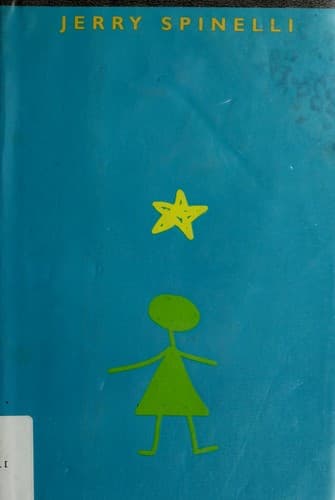
Jerry Spinelli
A free-spirited, home-schooled girl arrives at a conformist school, much like Cap. Fans of Schooled will recognise the joy and the cost of refusing to blend in.
Lynda Mullaly Hunt
Ally hides her dyslexia behind jokes until a teacher sees her clearly. It shares Schooled's heart about being misjudged and the friends who stand up for you.
Gordon Korman
Another Korman story told by many voices: a school bully loses his memory and must rebuild who he is, mirroring Schooled's look at bullies, victims and second chances.