
The Big Sleep
Raymond Chandler
The next Philip Marlowe novel, with the same sardonic voice and sprawling Los Angeles corruption. It follows the detective through a blackmail case tied to a wealthy family, with the same crisp dialogue you enjoyed.
Reader-supported: when you buy through links on our site, we may earn an affiliate commission. Learn more
We earn a commission if you buy through these links. Learn more
Find Similar BooksChandler's second Marlowe novel is a tangled, atmospheric noir where the voice matters as much as the puzzle, and 1940s Los Angeles feels like a living character.
Farewell, My Lovely (1940) follows Philip Marlowe, a Los Angeles private detective who takes what looks like a simple job: help a huge, gentle ex-convict named Moose Malloy find a woman he lost years ago. That search drags Marlowe through a tangle of stolen jewels, bodies that keep turning up, and people with good reasons to lie to him. The plot is knotty, and Chandler is less interested in tidy solutions than in the texture of the city and the people moving through it.
The real draw is the voice. Marlowe narrates in wry, hard-edged similes and short, bruising observations about money, power, and the people who sell both. Chandler packs a lot into few words, so the book reads quickly even when the case doesn't. Expect plenty of talk in offices, apartments, and back rooms, and violence that arrives suddenly rather than as set pieces.
This is noir in the classic sense: the city is corrupt at every level, and Marlowe stands out mostly by refusing to be bought. The mood is more melancholy than thrilling. Readers who come for a clean mystery may find the plot loosely held together. The pleasure lies in the company, the atmosphere, and the rhythm of the prose.
Marlowe is not a saint, but he has a private code he won't abandon for money or easy comfort. The book's sense of right and wrong comes less from its plot than from watching him decide, again and again, what he will and won't do. That stubbornness gives an otherwise sprawling story its emotional spine.
Much of the book's appeal is in how Marlowe describes what he sees. His similes are sharp, often funny, and sometimes cruel, and they turn ordinary rooms and people into quick sketches. Chandler's style influenced generations of crime writers, and reading this book shows why the voice mattered more than any single clever plot device.
The city here is a web of money, real estate, nightclubs, and police who can be bought. Chandler moves between rich hillside houses and seedy bars, and the contrast does a lot of work. The setting is not just backdrop; it shapes who has power and who gets crushed by it.
The plot branches and doubles back, and some connections feel more atmospheric than airtight. Chandler seems more invested in the feeling of being lost in a dangerous city than in a neat final reveal. Readers used to puzzles that click into place may find this frustrating, while others find the looseness part of the charm.
Beneath the violence is a current of sadness about people who have been left behind or used up. Moose Malloy, in particular, is both threatening and oddly pitiable, and Marlowe's occasional tenderness toward the damaged gives the book its heart. The story is less about who did it than about what the city does to people.
Modern readers may find the plot hard to follow, since clues and motives can feel loosely connected and some reversals land more on mood than logic. Women characters are often drawn as types, and racial and ethnic attitudes reflect the period in ways that jar today. Marlowe's wisecracks and his brooding can wear thin over a long book, and a few passages run on in ways that slow the momentum. The book also offers little beyond its own world, so readers wanting social critique beyond noir conventions will look elsewhere.
Reviews from readers on YouTube. Their opinions are their own.
Book details and cover from Google Books.
Ready to read Farewell, My Lovely?
Get your copy on Amazon, or listen to it on Audible. We earn a commission if you buy through these links.
Raymond Chandler
The next Philip Marlowe novel, with the same sardonic voice and sprawling Los Angeles corruption. It follows the detective through a blackmail case tied to a wealthy family, with the same crisp dialogue you enjoyed.
Dashiell Hammett
Hammett's classic of the hard-boiled genre shares Chandler's clipped prose and a detective who trusts no one. Its tangle of greed, lies and double-crosses suits readers drawn to Marlowe's cynical world.
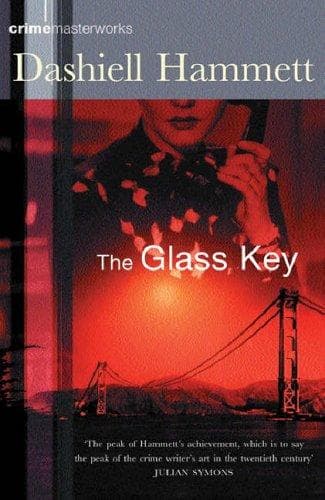
Dashiell Hammett
Another Hammett novel with a tough, watchful investigator caught in political corruption and murder. Its pared-down style and morally grey characters echo the corrupt city of Farewell, My Lovely.
James Ellroy
A sprawling 1950s Los Angeles crime novel full of police corruption, celebrity scandal and violence. Its gritty, morally compromised view of the city will feel familiar to Chandler's readers.