
We earn a commission if you buy through these links. Learn more
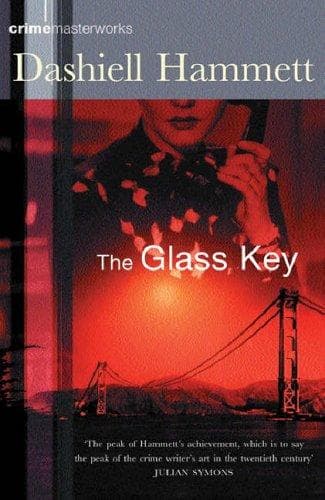
The Glass Key
Hammett's 1931 novel is a tight, cynical study of loyalty and corruption, told through a gambler who would rather be trusted than be right.
What It's About
The Glass Key follows Ned Beaumont, a gambler who serves as the closest adviser to Paul Madvig, the political boss who runs an unnamed American city through a machine of favors, payoffs and muscle. Ned is less a conventional hero than a man who has picked a side and intends to stay with it. When the son of a powerful senator is found dead, and a feud between Madvig and his rivals spills into the police station and the newspapers, Ned finds himself in the middle of a murder he didn't commit and a loyalty he has to reconsider.
Hammett writes in short, clipped sentences and lets dialogue carry most of the weight. Descriptions are sparse, and people are revealed through what they say, what they leave out, and how they handle money and threats. The narration stays close to Ned's point of view, so you learn only what he notices, and he notices a great deal while showing very little. The result is a book that moves quickly but rewards attention, because a line that sounds like small talk often turns out to matter.
Reading it feels less like watching a puzzle assemble than like sitting across a card table from someone who knows the odds. The violence is sudden and matter-of-fact, the corruption is treated as ordinary business, and the tone is dry rather than sentimental. It is a short novel that asks for steady concentration rather than long stretches of time.
Read this if you…
- enjoy hard-boiled crime fiction with a strong sense of place and atmosphere
- are interested in how political machines actually operate on the ground
- like spare, dialogue-driven prose that trusts you to read between the lines
Skip it if you…
- need a clear detective who solves the case through brilliant deduction
- want warm characters you can root for without reservation
Key Ideas
- 1
Loyalty as the central test
Ned's devotion to Madvig drives nearly every decision in the book. Hammett keeps asking whether loyalty is a virtue, a habit, or a trap that makes a man easy to use. You won't get a neat verdict, and the book is more interesting for it, because Ned's reasons for staying put are never simply noble or simply foolish.
- 2
Politics as an economy of debts
The city's machine is portrayed less as a secret conspiracy than as a working system of favors, bribes and obligations that everyone understands. Hammett shows how power is maintained through small transactions and quiet threats, which makes the corruption feel mundane and therefore more believable than a melodramatic villain could.
- 3
Dialogue doing the work of description
Hammett rarely tells you what a character feels. Instead, speech reveals intent, evasion and calculation. Readers who slow down will notice how much is communicated by pauses, questions answered with questions, and the things characters decline to say, which is a large part of the pleasure of the prose.
- 4
A mystery driven by self-interest
The investigation is not run by a brilliant detective delivering a tidy explanation. People pursue the truth because it protects them or threatens them. This makes the plot feel grounded and sometimes murky, and it shifts the question from who did it to what each person stands to lose by finding out.
Limitations
Many readers find the plot hard to follow on first reading, since alliances shift and motives are rarely stated outright. Women are mostly seen through the men around them and have little independent weight in the story, which reflects the period and will feel dated to many readers today. Some ethnic stereotypes appear in minor characters. The ending may frustrate those who want every thread tied off, and Ned himself can seem remote, which is deliberate but can keep readers at a distance.
Questions Readers Ask
- Should I read The Glass Key or The Maltese Falcon first?
- The Maltese Falcon is the more famous and more accessible starting point, with a clearer central quest and a memorable cast. The Glass Key is darker and more concerned with politics and loyalty than with a single chase. If you like Hammett's style, it is a rewarding second read. Neither novel requires the other, so you can start with whichever sounds more appealing.
- Is The Glass Key still worth reading today?
- Yes, especially if you care about how crime fiction handles power and corruption. Its portrait of a city run through favors and fear still feels recognizable, and its prose remains lean and modern in feel. The period attitudes toward women and some minor characters are the main things that have aged, so it helps to read with that context in mind.
- Do I need to know Hammett's other books to enjoy it?
- No. The Glass Key stands on its own, with new characters and a separate story. Some readers enjoy noticing how Hammett refines his approach across his work, but the novel never assumes prior knowledge. It is short enough to read in a few sittings, so you can judge it directly without committing to a series.
- Published
- 1931
- ISBN
- 9781980945994
- Difficulty
- beginner
- Category
- Fiction
Book details and cover from Google Books.
Ready to read The Glass Key?
Get your copy on Amazon, or listen to it on Audible. We earn a commission if you buy through these links.