
Little Women
Louisa May Alcott
Like Francie, Jo March is a bookish girl with writing dreams growing up in a family short on money but rich in love. It shares the same warm, episodic portrait of family life.
Reader-supported: when you buy through links on our site, we may earn an affiliate commission. Learn more
We earn a commission if you buy through these links. Learn more
Find Similar Booksby Betty Smith
A warm, unsentimental coming-of-age novel about a bookish girl growing up poor in early-1900s Brooklyn, worth reading for its vivid neighborhood and its honest look at family love under strain.
A Tree Grows in Brooklyn follows Francie Nolan, a curious and watchful girl growing up in the tenement neighborhood of Williamsburg, Brooklyn, in the early twentieth century. Her family is poor, and much of the novel is about how they manage: how they earn and spend money, how they make do with food and clothes, and how a child learns to read the adults around her. It is less a plot-driven story than a portrait of a household and a street over several years.
The book moves in episodes rather than a tight arc. Scenes of school, holidays, small triumphs, and money worries sit alongside the steady pressure of her parents' marriage. Betty Smith writes in plain, warm prose and pays close attention to ordinary domestic detail. The emotional force comes from accumulation rather than big set pieces, and the tone shifts between tenderness and hardship without much sentimentality.
Reading it feels like being let into a family's kitchen for a long time. It is slow, immersive, sometimes funny, and often painful, especially where drinking and poverty weigh on the household. Expect long stretches of everyday life rather than a fast narrative drive, and be prepared for an ending that lands hard.
Francie's hunger for books and learning drives much of the novel. Her reading becomes a private world and a way of imagining a different future. The book shows how a poor child can treat schooling as both a refuge and a practical ladder, and how adults around her respond to that ambition with a mix of pride and wariness.
Her mother is practical, strict, and determined to hold the family together, while her father is charming, warm, and unreliable. The novel does not turn either into a simple villain or hero. It asks how a child can love both people while seeing clearly what each one costs the family.
Williamsburg is a crowded world of tenements, church, school, shops, and rivalries. Its customs and expectations press on the Nolans constantly. The street is not just a backdrop but a force that decides what is normal, what is shameful, and what might be possible for a girl like Francie.
Money, food, and clothing appear again and again in the book, often as sources of anxiety and humiliation. Yet the family keeps small rituals of pride and care. The novel finds meaning in these routines, and it treats daily struggle as something worth describing in full rather than something to hurry past.
Some readers find the book sentimental, especially in its portrayal of childhood and its heavier emotional moments. The episodic structure can feel loose, and the story sometimes lingers on details that others may find repetitive. Its views on gender, class, and ethnicity reflect its era, so some scenes may read as dated. It is a novel shaped by a particular time and place rather than a broad survey of immigrant life in America.
Reviews from readers on YouTube. Their opinions are their own.
Book details and cover from Google Books.
Ready to read A Tree Grows in Brooklyn?
Get your copy on Amazon, or listen to it on Audible. We earn a commission if you buy through these links.
Louisa May Alcott
Like Francie, Jo March is a bookish girl with writing dreams growing up in a family short on money but rich in love. It shares the same warm, episodic portrait of family life.
L. M. Montgomery
An imaginative, word-loving girl finds her place in the world through stubborn hope. Fans of Francie's inner life and love of learning will recognise a kindred spirit in Anne.
Harper Lee
Told through a sharp young girl's eyes, it blends childhood wonder with hard truths about the adult world, much as Smith's novel does with poverty and prejudice.
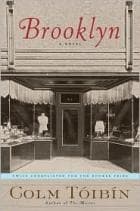
Colm Tóibín
A quiet, observant young woman builds a new life in mid-century Brooklyn. Readers who loved Smith's attention to neighbourhood detail and modest ambitions will find the same gentle precision here.