
We earn a commission if you buy through these links. Learn more
Zone One
by Colson Whitehead, Mireia Carol Gres
Guide by the Books of the Day editors · Updated · How we write our guides
A zombie novel that uses the genre's rules to examine memory, trauma, and the slow, unglamorous work of rebuilding a city after catastrophe, with dry wit throughout.
What It's About
Zone One follows Mark Spitz, a young man in a post-apocalyptic Manhattan where a plague has turned much of the population into mindless, shambling creatures called skels. Spitz is one of the Sweepers, a cleanup crew assigned to comb sealed-off districts and eliminate stragglers so the island can be declared safe. The job is tedious and dangerous, and much of it consists of walking, waiting, and checking buildings. Whitehead gives the novel a wry, clipped voice that treats bureaucracy and rumor as seriously as the violence.
The structure moves between the present-day mission and fragments of the past, including Spitz's memories of life before the outbreak and of the early days of collapse. Those flashbacks carry the emotional weight and explain a good deal about how he copes now. Rather than building toward a single climax, the book works more like an accumulation of small scenes, observations, and rueful asides, each adding texture to a city trying to pretend it is returning to normal.
Reading it feels closer to a literary novel with genre furniture than to a horror thriller. There are tense moments and real violence, but the mood is more melancholy and funny than frightening. Whitehead is interested in how people rename and reorganize the world to make it bearable, and the book lingers on the gap between official optimism and what Spitz actually sees on the street. It rewards slow, attentive reading.
Read this if you…
- are drawn to literary fiction that uses genre conventions without fully embracing them
- want a post-apocalyptic novel focused on aftermath and daily routine rather than action set pieces
- enjoy wry, observational narration and are happy with a book that builds through small details
Skip it if you…
- want a fast-paced horror novel with constant danger and a clear plot drive
- need a tidy, conclusive story with every question answered
Key Ideas
- 1
Genre as a lens on memory
The zombie framework is less the subject than the scaffolding. Whitehead uses the familiar rules of the apocalypse to explore how a person carries loss and how memory keeps resurfacing in unexpected places. The creatures are a constant reminder of the past, but the novel is really interested in the quieter damage that follows a disaster and the private ways people try to manage it.
- 2
Bureaucracy after catastrophe
The Sweepers operate under a plan, with procedures, categories, and official language meant to reassure everyone that recovery is underway. Whitehead satirizes the impulse to turn chaos into a manageable program. The gap between the neat paperwork of reconstruction and the messy reality on the ground is one of the book's sharpest and most persistent concerns.
- 3
Ordinary labor in extraordinary conditions
Much of the novel is about routine: the schedule, the equipment, the repeated checks, the small rituals that keep a worker functioning. Whitehead makes this monotony vivid and believable. Readers who expect constant action will find instead a portrait of how people keep going when the danger has become part of the job.
- 4
Humor as a survival tool
The narration is dry, observant, and frequently funny, even when the situation is grim. That humor is not a relief from the darkness so much as a way of seeing it clearly. Whitehead uses irony to puncture official optimism and to show how a sense of the absurd can help a damaged mind hold together.
Limitations
The pacing is deliberately slow and fragmented, and readers who want momentum may find the shifts between present and past distancing. The emotional payoff arrives unevenly, and some readers find the satire of institutions broader than the rest of the book. The novel is also little interested in the science of the outbreak or in the world beyond Manhattan, so anyone hoping for a full explanation of how the plague spread or a picture of the wider country will be left wanting.
Questions Readers Ask
- Is Zone One really a zombie novel?
- It has zombie-like creatures and the setting of a plague aftermath, so yes in premise. But the creatures are mostly a backdrop for a story about work, memory, and recovery. If you want the gore and suspense of a typical zombie book, you will likely find this one restrained.
- How does Zone One compare to The Road?
- Both are literary post-apocalyptic novels, but they feel very different. The Road is bleak, spare, and built around a father and son's journey. Zone One is wittier, more urban, and organized around a cleanup job, with a narrator whose irony offers some distance from the horror around him.
- Published
- 2011
- ISBN
- 9780385535014
- Difficulty
- intermediate
- Category
- Fiction
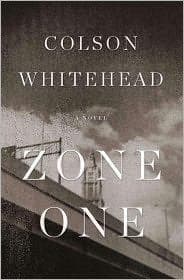
Book details and cover from Google Books.
Ready to read Zone One?
Get your copy on Amazon, or listen to it on Audible. We earn a commission if you buy through these links.