
We earn a commission if you buy through these links. Learn more
Z for Zachariah
A quietly tense survival story told as a teenager's journal, where the real drama is how one person holds on to her values once she is no longer alone.
What It's About
Z for Zachariah is set in a green valley that has escaped the fallout of a nuclear war that has left most of the world dead. Ann Burden, a sixteen-year-old, has spent months on her family's farm believing she is the only person left. Her routine of planting, canning, checking the water and keeping the house running gives the early pages a practical texture that is more absorbing than you might expect.
Robert C. O'Brien tells the story in Ann's own voice, so the prose is plain, observant and often wry about small domestic matters. Ann is not a superhero. She is careful, lonely and honest about her fear, and the book lets its suspense build from ordinary decisions rather than action set-pieces. The pacing is deliberate, and the tension comes from questions of trust and survival rather than from gore or spectacle.
Reading it feels like sitting with someone who is working out, in real time, what kind of person she wants to be. It is short and quick to read, but it lingers. It works well as a first encounter with post-apocalyptic fiction for younger readers, and it still rewards adults who come back to it.
Read this if you…
- want a short, character-driven survival story
- enjoy a narrator who thinks carefully about ethics and everyday decisions
- are looking for a first post-apocalyptic novel for a younger reader
Skip it if you…
- want fast action, chases or large-scale catastrophe on the page
- need a fully explained world that shows how the disaster unfolded across the globe
Key Ideas
- 1
Isolation as a test of character
Ann's solitude is the central pressure in the book. Without other people to judge her, she has to decide for herself what decent behavior looks like. The novel uses that emptiness to ask what rules we follow when no one is watching, and whether they survive when they become inconvenient.
- 2
Routine as a way to hold on to hope
Ann's daily chores, record-keeping and careful planning are not filler. They show how ordinary habits can keep a person functioning when the world around her has collapsed. The book treats routine as both a practical necessity and a quiet form of resistance against despair.
- 3
Trust after the end of the old world
Once another person enters her small world, the story turns on whether strangers can be trusted when institutions and rescue no longer exist. The tension is less about violence than about the slow, uncomfortable work of deciding how much to rely on someone you barely know.
- 4
Nuclear fear and the limits of self-reliance
Written in the shadow of Cold War anxieties, the novel reflects a period when many people feared nuclear annihilation. It is more interested in the human scale of that disaster than in its politics, and it considers how far individual competence can go when the larger systems that support life have failed.
Limitations
The book is shaped by its Cold War moment, and some readers will find its fear of nuclear conflict more dated than the modern dystopias they know. The wider world beyond the valley is barely glimpsed, so anyone wanting a panoramic picture of collapse will be disappointed. Some characterization is sparse, and the slow, deliberate pace can feel thin to readers used to faster genre fiction. The ending also divides readers, with some finding it powerful and others finding it abrupt.
Questions Readers Ask
- Is Z for Zachariah suitable for children?
- It is written for young readers, roughly middle-grade and teen, and its prose is accessible. The content still includes death, the aftermath of nuclear war and difficult moral choices. Many parents and teachers read it first or discuss it together, especially with younger children who may find the isolation unsettling.
- How does it compare to The Road?
- Both are post-apocalyptic novels about survival and moral strain. The Road by Cormac McCarthy is darker, more lyrical and more graphic. Z for Zachariah is gentler, more hopeful and easier to read, with a narrator whose voice is direct and personal. It is a better fit for teens or readers who want a lighter entry point.
- Is it still relevant today?
- Its central questions about isolation, trust and how people keep their values under pressure still resonate. The specific fear of nuclear war feels more historical to many readers now, but the novel's focus on a single person's choices has not aged much. Readers often find its human-scale approach fresher than the sprawling disaster stories that followed.
- Published
- 1975
- ISBN
- 9781850899556
- Difficulty
- beginner
- Category
- Children's Books
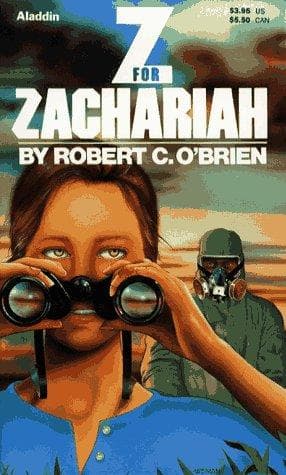
Book details and cover from Google Books.
Ready to read Z for Zachariah?
Get your copy on Amazon, or listen to it on Audible. We earn a commission if you buy through these links.