
We earn a commission if you buy through these links. Learn more
Your Erroneous Zones
Wayne Dyer's short, blunt guide to the self-defeating habits that quietly drain daily life, still useful as a quick reset for anyone prone to guilt or people-pleasing.
What It's About
Your Erroneous Zones is a short self-help book, first published in 1976, that asks readers to look closely at the everyday mental and behavioral habits that keep them from enjoying their lives. Dyer's central move is to label these habits as 'erroneous zones' and treat them as choices rather than fate. Most of the book is organized around recognizable patterns: seeking approval from everyone, feeling guilty by default, putting things off, and dwelling on the past or worrying about the future.
The style is direct and conversational, with brief sections, self-assessment prompts, and plenty of exhortation. Dyer draws on ideas associated with Albert Ellis's rational-emotive approach, along with older philosophy and popular wisdom, and leans heavily on the notion that you can change how you respond to a situation by changing what you tell yourself about it. Reading it feels more like a motivational pep talk with a checklist than a study of the mind.
The experience is quick. You can finish it in an afternoon, and the value comes from applying a few ideas rather than mastering a theory. Expect repetition and a tone that sometimes sounds more certain than the evidence allows. It works best as a mirror you hold up to ordinary days, rather than a treatment for serious distress.
Read this if you…
- want a short, practical nudge to examine your daily habits
- tend to feel guilty or need constant approval from others
- want an accessible entry point into the idea that thoughts shape feelings
Skip it if you…
- want rigorous evidence or a clinically tested program
- are dealing with depression, trauma or anxiety that needs professional care
Key Ideas
- 1
Self-worth should not hinge on others' approval
A large share of the book targets the habit of needing everyone to like you, and the guilt that follows when they don't. Dyer argues that approval-seeking quietly shapes choices and costs you time, honesty and energy. His remedy is to notice the need, question where it came from, and decide what you want regardless of the audience. The idea is simple to state and harder to practice, which is why the book keeps returning to it.
- 2
Guilt and worry as changeable habits
Dyer treats guilt, worry and regret as things you do rather than things that happen to you. He suggests that replaying the past or rehearsing future disasters keeps you from acting in the present. The practical takeaway is to catch yourself mid-pattern and redirect attention to what you can actually control today. Readers who know cognitive behavioral techniques will recognize the logic, though Dyer presents it with far less structure.
- 3
Procrastination as a choice to avoid discomfort
The book argues that putting things off is less about laziness than a decision to keep an uncomfortable feeling at a distance. Dyer encourages readers to examine the excuses they tell themselves and to test whether those excuses hold up. Some sections read as blunt calls to act now, which can feel bracing or exhausting depending on the day. The advice is most useful when applied to one specific task rather than to life in general.
- 4
Taking responsibility for your own feelings
A recurring theme is that other people do not make you feel anything; your reactions are yours to shape. Dyer uses this to push back against blaming family, bosses or circumstances for how you feel. The point is empowering for many readers, though it can slide into the idea that every hurt is self-created. Read it as a reminder to examine your own part, not as a full account of how relationships work.
Limitations
Critics have long noted that the book is more a collection of persuasive assertions than a tested method, and its evidence base is thin by modern standards. Its tone can feel preachy, and some readers find the emphasis on personal responsibility dismissive of trauma, poverty and mental illness. The language and examples reflect the 1970s, including some dated gender assumptions, so expect a period feel. It does not offer a structured program or address the nuances of serious psychological conditions.
Questions Readers Ask
- Is Your Erroneous Zones still relevant today?
- Parts of it are. The core idea that habits of thought and approval-seeking shape how we feel and act remains widely accepted, and the book works well as a quick self-check. The examples and tone are dated, and modern readers may want more structured, evidence-based material to reach the same goals.
- How does it compare to Feeling Good by David Burns?
- Feeling Good is more clinical, more detailed, and built around specific techniques for depression and anxiety, with a stronger research base. Your Erroneous Zones is shorter, more casual, and aimed at everyday self-improvement. Choose Burns if you want a structured method, and Dyer if you want a quick, motivating read.
- Published
- 1976
- ISBN
- 9780380462438
- Difficulty
- beginner
- Category
- Psychology
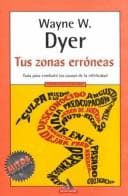
Book details and cover from Google Books.
Ready to read Your Erroneous Zones?
Get your copy on Amazon, or listen to it on Audible. We earn a commission if you buy through these links.