
We earn a commission if you buy through these links. Learn more
Wuthering Heights
Brontë's only novel is a claustrophobic study of obsession that turns the moors into a character, rewarding readers who can handle its cruelty and fractured timeline.
What It's About
Wuthering Heights is a novel of obsession set on the bleak Yorkshire moors, first published in 1847 under the pseudonym Ellis Bell. It follows the stormy bond between Catherine Earnshaw and Heathcliff, a foundling taken into the Earnshaw household, and the damage done when class, pride and jealousy pull them apart. The story is told through layered narration: a newcomer to the district hears the history from the housekeeper, Nelly Dean, so events arrive secondhand, filtered through people with their own biases.
Brontë's style is dense, often violent, and deliberately uncomfortable. The narrative jumps across decades and between two generations of families, so you have to assemble the timeline yourself. Dialect in the servants' speech and the rough, weather-beaten setting give it a physical texture that many readers find oppressive in a good way. It is short enough to finish in a few sittings but dense enough that you will likely reread passages.
Reading it is less like following a conventional love story and more like being trapped in a house with a feud. The gothic atmosphere, with its wind-battered windows, restless spirits and cruelty passed from parent to child, explains why it is often shelved as horror. Expect to feel unsettled rather than comforted.
Read this if you…
- want a gothic novel where atmosphere does as much work as plot
- are curious about 19th-century narrative experiments and layered storytelling
- like brooding, morally knotted characters you cannot easily root for
Skip it if you…
- need characters to be likeable or a story with a comforting arc
- find dense, dialect-heavy prose tiring and want a quick, easy read
Key Ideas
- 1
Obsession that outlasts the people involved
The bond between Catherine and Heathcliff is possessive and destructive rather than tender. The novel refuses to present it as comfort or simple romance, and it keeps asking what love looks like when it becomes a form of ownership that continues past death.
- 2
Class, property and the marriage market
Money, inheritance and social standing shape nearly every choice the characters make. Heathcliff's rejection by polite society and Catherine's decision to marry for status show how wealth can quietly override feeling, and the book treats these pressures as the real engine of its tragedy.
- 3
Nested narrators and unreliable accounts
Two storytellers filter the events, and each brings judgments and gaps. Readers must weigh what they are told against what they can infer, which turns reading into an act of detective work and shapes how much sympathy any character deserves.
- 4
Landscape as a mirror for inner storms
The moors, the weather and the two houses function almost as characters. The wild, exposed Heights contrasts with the sheltered Grange, and the setting makes emotional extremes feel like a natural force rather than private drama.
- 5
A cycle of cruelty across generations
Patterns of harshness repeat in the children of the first generation, and the second half of the book shifts focus to them. The structure asks whether damage can be inherited and whether the past can ever be set aside.
Limitations
Many readers find the characters unlikable, and the novel presents Heathcliff's abuse of others with little direct condemnation, which can feel unsettling or frustrating. The frame narration and shifting timeline can make the family relationships hard to track without rereading. Critics also debate how the book portrays Heathcliff's outsider status, including its racial implications, and its class attitudes and violence reflect Victorian assumptions. It offers no tidy moral resolution, which some readers find rewarding and others find hollow.
Questions Readers Ask
- Is Wuthering Heights really horror?
- It is usually shelved as gothic fiction rather than horror. It has ghostly scenes, violence and an oppressive atmosphere, but its engine is emotional and social rather than scares. If you pick it up expecting a frightening read, you may find it more haunting than frightening.
- How does it compare to Jane Eyre?
- Both novels were published by the Brontë sisters around the same time, but Jane Eyre is more conventional, with a first-person narrator and a clearer moral arc. Wuthering Heights is colder, more fragmented and more ambiguous, so readers who enjoy one do not always enjoy the other.
- Is it still worth reading today?
- Yes, especially if you are interested in narrative structure, gothic conventions or stories about inherited damage. Its formal experiments and bleak view of love still feel fresh to many modern readers, though its class attitudes and treatment of outsiders are best read with historical context.
- Published
- 1846
- ISBN
- 9781481964869
- Difficulty
- intermediate
- Category
- Horror
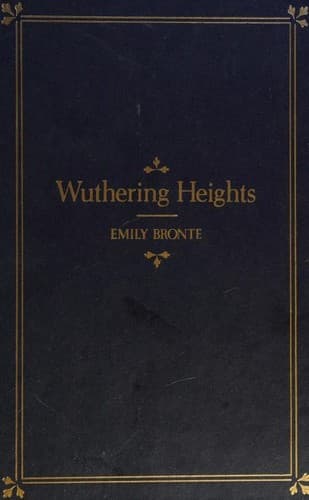
Book details and cover from Google Books.
Ready to read Wuthering Heights?
Get your copy on Amazon, or listen to it on Audible. We earn a commission if you buy through these links.