
We earn a commission if you buy through these links. Learn more
Written on the Body
A lyrical, genderless first-person love story that takes a fierce look at desire, possession and illness, written with a poet's compression and a playful refusal of convention.
What It's About
Written on the Body is a short novel narrated in the first person by a speaker whose gender is never stated, a choice that shapes how the whole book reads. The narrator falls hard for Louise, a woman who is married to Elgin, a doctor. The story moves back and forth in time through fragments and digressions, and the narrator speaks directly to the reader, sometimes arguing, sometimes teasing, sometimes pausing to turn a single idea over from several angles.
The book's energy comes from its prose. Winterson writes in short, charged sentences and weaves in material from history, anatomy and art, especially medieval illuminated manuscripts, which give the narrator a way of thinking about bodies as things that can be looked at, copied, misread and mistrusted. The result is closer to a prose poem stretched across a novel than to a conventional plot.
Reading it feels intimate and a little feverish. It asks more of you than a plot-driven book does: you have to hold on to the narrator's voice and the shifting timeline, and accept that the book cares more about feeling than about tidy facts. Expect to slow down, reread a paragraph, and finish with a few lines you want to copy out.
Read this if you…
- want a love story told with the formal daring of prose poetry
- are interested in how language shapes desire and gender assumptions
- enjoy books that ask you to piece the story together yourself
Skip it if you…
- need a clear plot with steady forward momentum
- find an emotionally charged affair with a married woman hard to sit with
Key Ideas
- 1
Love framed as ownership and loss
The narrator's passion for Louise is treated less as a romance to be admired than as a claim, a contest and a source of grief. The book keeps asking who gets to possess whom, and how marriage, law and social expectation sit around a love that refuses to be filed neatly. Much of its tension comes from that pressure.
- 2
The body as text and argument
Bodies in this book are read the way the narrator reads manuscripts and medical texts. They are described, decorated, diagnosed and misunderstood. Winterson uses this habit of looking to show how much of what we know about bodies is inherited from people who were certain of their own categories.
- 3
A gender left deliberately unfixed
Because the narrator's gender is never given, readers have to notice their own assumptions and how they color each scene. The effect is less a statement about identity than a test of how much a love story depends on the labels we automatically attach to the people in it.
- 4
Memory, digression and fragmented time
The narrative circles back on itself, returns to scenes with new details, and interrupts its own storytelling. This structure mirrors how memory works after loss. The pleasure lies in watching the narrator assemble and reassemble a relationship rather than follow a straight line of events.
- 5
Illness and the limits of medicine
A serious illness sits near the heart of the book, and the presence of a doctor brings questions about knowledge, authority and care. Winterson is less interested in medical detail than in what it feels like to be on the outside of a body that is failing, and to love someone whose suffering you cannot fix.
Limitations
Some readers find the style mannered, with the sentences so relentlessly clever that the wordplay sometimes gets in the way of the feeling. The fragmented structure can make the emotional arc harder to follow, and the decision to withhold the narrator's gender is seen by some as a striking device and by others as a gimmick. Its early-1990s frame also shapes some of its arguments about sexuality and identity, so it reads differently today than it did when it appeared.
Questions Readers Ask
- Is the narrator's gender ever revealed?
- No. Winterson leaves the narrator's gender unstated throughout the book. Readers have to work from the narrator's own words and from how other characters respond. That absence is the point for many readers, since it forces attention onto desire and language rather than onto the categories people usually use to sort a love story.
- How does it compare to Winterson's Oranges Are Not the Only Fruit?
- Oranges Are Not the Only Fruit has a more linear shape and a sharper, often comic tone, and it follows a clearer chronology of childhood and growing up. Written on the Body is more experimental, more lyrical and less interested in story for its own sake. If you liked the voice of Oranges but want something stranger, this is the next step.
- Is it still worth reading today?
- Yes, especially if you are interested in how fiction handles gender, desire and the body. Some of its debates feel rooted in the early 1990s, but its prose and its structure still feel fresh. Its questions about who is allowed to be loved, and how, remain unresolved, which keeps it relevant.
- Published
- 1992
- ISBN
- 9789025440978
- Difficulty
- intermediate
- Category
- Fiction
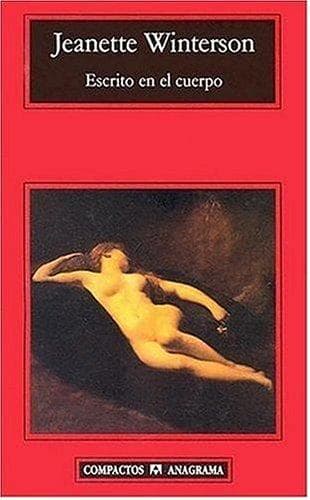
Book details and cover from Google Books.
Ready to read Written on the Body?
Get your copy on Amazon, or listen to it on Audible. We earn a commission if you buy through these links.