
We earn a commission if you buy through these links. Learn more
Wonderstruck
Guide by the Books of the Day editors · Updated · How we write our guides
Brian Selznick's illustrated novel weaves two children's stories fifty years apart through words and pencil drawings, making it a quiet, unusual reading experience worth a slow evening.
What Creators Say About Wonderstruck
2 creators reviewed Wonderstruck on YouTube in 2011, with 17.9K views between them. Their opinions are their own; we picked these reviews, we didn't write them.
What It's About
Wonderstruck is a novel for young readers, usually shelved as middle-grade, by Brian Selznick, who also wrote The Invention of Hugo Cabret. The category here lists it as History, but it is better understood as a story that borrows history's texture. Two children, fifty years apart, make their way through New York. Ben, in 1977, has recently lost his mother and, after a dramatic accident, most of his hearing. Rose, in 1927, is a deaf girl who feels shut out of her family's life. Their paths are linked by a museum and by a question neither can fully answer on their own.
The approach is what sets the book apart. Ben's chapters are told in prose, while Rose's story unfolds almost entirely in long sequences of detailed pencil drawings, closer to a silent film than to a conventional novel. You turn pages and read images, and the drawings do real narrative work rather than decorating the text. The effect is quick and tactile, a hybrid of picture book and novel that rewards close looking.
The result is a book about silence, communication, and the ways people search for the families and histories they have lost. It moves at a gentle pace and asks the reader to pay attention to what is not said. Adults who enjoy illustrated fiction will likely find it as absorbing as younger readers do.
Read this if you…
- enjoy illustrated fiction where the pictures carry real narrative weight
- want a quiet, emotionally textured story rather than a fast-paced adventure
- are curious about how a novel can portray deafness through silence and image
Skip it if you…
- want a fast plot full of dialogue and constant action
- expect rigorous historical detail about 1927 or 1977 New York
Key Ideas
- 1
Two stories told in two forms
Ben's life is told in written chapters, while Rose's is carried by wordless drawings. Selznick makes the form itself part of the meaning, so the reader feels the difference between a child who can hear the world and one who experiences it visually. Switching between the two keeps the book feeling fresh and forces you to hold both timelines in mind.
- 2
Deafness and the limits of language
Both protagonists are cut off from ordinary speech in different ways, and the book takes seriously what it means to communicate without hearing. Rather than treating silence only as a loss, it shows how attention, touch, and images can carry feeling. Readers come away thinking about how much of life passes through sound and how much through looking.
- 3
The search for family and origins
Each child is looking for someone who has been absent from their life, and the search drives the plot forward. The book is less interested in a neat solution than in the emotional work of wanting to know where you come from. The longing it describes is quiet and believable, which gives the ending its weight.
- 4
Museums, collecting, and wonder
A natural history museum sits at the center of the story, and the book is drawn to objects, specimens, and the human urge to gather and display the world. Selznick uses the museum to suggest how people preserve memory and how a sense of wonder can be passed between generations, giving the historical setting a reflective, almost meditative quality.
Limitations
The book is long for its audience, and the wordless sections can feel slow to readers who expect text on every page. Some readers find the link between the two children stretched or reliant on coincidence. The historical settings are evoked impressionistically rather than researched in depth, so this is not a source for social history. Its portrayal of deafness reflects the conventions of its time, and some readers wish more deaf writers and voices had shaped how it was told.
Questions Readers Ask
- Is Wonderstruck suitable for adults?
- Yes. Although it is usually classed as middle-grade, the book's themes of loss, family, and communication appeal to adults as well. Its drawings and structure reward careful reading, so many adults find it more rewarding on a second read than a first. It is a short, accessible experience that does not talk down to its audience.
- How does Wonderstruck compare to The Invention of Hugo Cabret?
- Both books by Selznick combine drawings with narrative and set a child in a historic urban setting. Wonderstruck spreads its drawings across two timelines and a more explicit theme of deafness, while Hugo is more focused on a single mystery and a machine. Readers who liked the pictures in Hugo will probably find this one a more ambitious and layered follow-up.
- Published
- 2011
- ISBN
- 9780329918101
- Difficulty
- beginner
- Category
- History
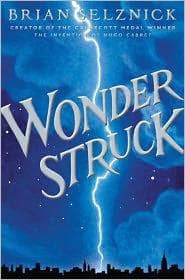
Book details and cover from Google Books.
Ready to read Wonderstruck?
Get your copy on Amazon, or listen to it on Audible. We earn a commission if you buy through these links.