
We earn a commission if you buy through these links. Learn more
Wolf Brother
by Michelle Paver, Patricia Anton De Vez Ayala-Duarte
Guide by the Books of the Day editors · Updated · How we write our guides
A Stone Age survival story about a boy and a wolf cub, built on close attention to how people lived and hunted six thousand years ago, with a supernatural thread running underneath.
What It's About
Wolf Brother is the first book in Michelle Paver's Chronicles of Ancient Darkness, a series for young readers that opens in Britain roughly six thousand years ago, when the land was still thick with forest and farming had not yet arrived. The story follows Torak, a boy whose life is upended by his father's death and who must survive in a world where food, shelter, and trust have to be earned by hand.
Paver writes in short, clean chapters with a tight focus on Torak's point of view. Much of the appeal lies in the physical texture: how he tracks animals, builds fires, forages, and reads weather and terrain. Spiritual belief runs through the book as something people live with rather than something the narrator explains, so the supernatural elements feel rooted in how these people might have understood the world. The prose stays plain, which keeps the pace brisk.
Reading it feels like a survival adventure with a mythic undertone. The relationship between Torak and a wolf cub carries much of the emotional weight, and it raises the question of what it means for a wild animal to be a companion without being tamed. It works best as an immersive, slightly eerie journey, and it leaves threads open for the books that follow rather than tying everything up.
Read this if you…
- want a survival story with real, practical detail about daily life
- enjoy animal companion stories with an emotional core and no easy answers
- are curious about deep prehistory told through a single young character
Skip it if you…
- want fast plotting, frequent twists, or big battle scenes
- dislike series that leave major questions open until later volumes
Key Ideas
- 1
Survival as daily, practical craft
Much of the book is about the unglamorous work of staying alive: finding water, making tools, keeping warm, and judging which tracks mean danger. Paver makes these tasks concrete and sequential, so the reader sees how knowledge of land and animals becomes the difference between life and death. This gives the story its grounding even when the plot turns strange.
- 2
A bond between a boy and a wolf
The relationship with the wolf cub is the emotional center of the book. Paver treats the animal as a creature with its own instincts and loyalties, not a pet or a talking sidekick. The friendship develops through trust earned slowly, and it asks the reader to accept that companionship can be real even when it is uneasy.
- 3
Belief woven into ordinary life
The spiritual dimension is part of how the characters move through the world, not a separate system of magic that needs explaining. Paver lets the reader sense forces that the characters respect and fear. This makes the eerie passages feel earned, though readers who want clear rules for the supernatural may find the approach frustratingly open.
- 4
A prehistoric world built from informed invention
Paver reconstructs a Mesolithic landscape and its way of life, filling gaps in the record with imagination. The result feels specific and lived-in, and the setting is one of the book's main pleasures. Readers should understand that the people and customs are a modern reconstruction, shaped by the story's needs rather than documented fact.
Limitations
Some readers find the early pace slow, since the book spends time on survival routines before the larger plot gathers force. The supernatural elements are deliberately ambiguous, which can feel vague to readers who want clear rules. Because it is the first book in a series, it ends with unresolved threads and is best read as an opening rather than a complete story. The depiction of prehistoric life is a reconstruction, so it should be read as imaginative fiction rather than an accurate picture of the period.
Questions Readers Ask
- Who is Wolf Brother best suited for?
- It is written for young readers, roughly ten and up, and works well for confident readers in that range. Adults who enjoy survival stories, animal fiction, or quiet prehistoric adventures often like it too. Its short chapters and plain prose make it easy to pick up, and the emotional story has depth without being heavy.
- How does it compare to Jean Auel's Earth's Children series?
- Auel's books are longer, written for adults, and go into much more detail about prehistoric life, with more mature content. Wolf Brother is shorter, gentler, and more focused on a single young character and his animal companion. Readers wanting a light, accessible entry into similar territory often start with Paver's book.
- Published
- 2004
- ISBN
- 9781419326264
- Difficulty
- beginner
- Category
- Fiction
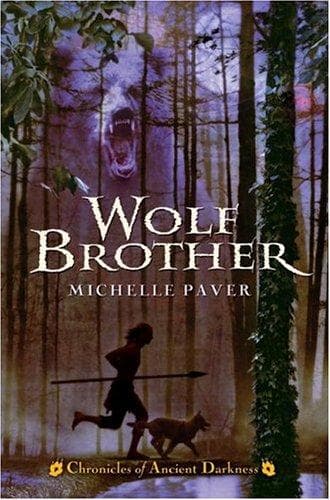
Book details and cover from Google Books.
Ready to read Wolf Brother?
Get your copy on Amazon, or listen to it on Audible. We earn a commission if you buy through these links.