
We earn a commission if you buy through these links. Learn more
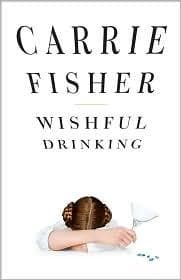
Wishful Drinking
A funny, candid memoir from a performer who grew up inside Hollywood royalty and wrote openly about bipolar disorder, electroshock treatment and addiction without turning any of it into a sob story.
What It's About
Wishful Drinking began as a one-woman stage show Carrie Fisher performed, and the book keeps that spoken, conversational voice. It is a short memoir made of loosely connected episodes rather than a tidy chronological biography, moving between her childhood in a family of famous performers and her own career and struggles.
Fisher writes about being raised by Debbie Reynolds and Eddie Fisher, the public fallout when her father left her mother for Elizabeth Taylor, her early acting work, and her years as Princess Leia. The heavier material covers her bipolar diagnosis, the electroconvulsive treatment she underwent, and her long history with drugs and alcohol. She handles these subjects with a joking, offhand tone, and that restraint is what makes the sadder passages land harder.
The reading experience is quick and light. It feels like listening to a witty friend talk over a drink, with a joke arriving every few lines. It is less a full biography than a set of sharp observations, so readers tend to finish wanting more of her voice rather than more facts. It works well as a single afternoon read.
Read this if you…
- want a short, funny memoir you can finish in one sitting
- are curious about life behind Hollywood's famous names and the Star Wars years
- want a frank first-person account of living with bipolar disorder and addiction
Skip it if you…
- want a detailed, chronological biography with careful research and full context
- prefer memoirs that are deeply introspective or emotionally raw from start to finish
Key Ideas
- 1
Humor as a way of surviving pain
Fisher's central move is to treat her worst experiences as material for jokes. The humor is not a disguise for despair so much as a way of holding it at arm's length. Readers who want a memoir that stays emotionally raw throughout may find this distancing, but it is also why the book reads so easily and why its darker moments hit as unexpectedly as they do.
- 2
Growing up inside Hollywood royalty
The book shows what it was like to be the child of two famous stars whose marriage and divorce played out in public. Fisher describes the strange mix of privilege and exposure that came with that life, and how it shaped her sense of herself long before she had a career of her own. The celebrity material is lively, though it stays on the surface of the family rather than probing it deeply.
- 3
Mental illness and the cost of treatment
Fisher discusses her bipolar diagnosis and the electroconvulsive therapy she received, describing both the relief and the damage such treatment can bring. She is candid about how difficult it was to accept a diagnosis and to live with its side effects. The book is useful as a first-person account of living with the condition, though it is one perspective rather than a medical guide.
- 4
Addiction told without self-pity
Fisher writes frankly about her drug and alcohol use and the chaos it created in her life. She avoids the redemptive arc that many addiction memoirs rely on, and she is more interested in the absurdity of her behavior than in moralizing about it. That tone can feel either bracing or glib, depending on what the reader wants from the subject.
- 5
Being known for a role you played
Much of the book circles around the fame that came with playing Princess Leia in the Star Wars films. Fisher reflects on how a single iconic character can overshadow an entire career and a whole private identity. This theme gives the memoir a clear thread through its scattered episodes and connects the celebrity stories to her own sense of self.
Limitations
The book is short and built from stage material, so it covers many topics only briefly and some episodes feel like bits rather than fully developed stories. Readers looking for in-depth reflection on family or mental health may find it too light. Some of the humor leans on celebrity name-dropping that may feel dated or thin to readers without much interest in 1990s and 2000s Hollywood. It was published in 2008, and Fisher's later writing covers some of the same ground in more depth.
Questions Readers Ask
- Is Wishful Drinking a memoir or a biography?
- It is a memoir, written in Fisher's own voice and based on her one-woman stage show of the same name. It is not a biography by an outside writer. The episodes are loosely arranged and focus on her perspective, so readers wanting a full, independently researched account of her life or family should look elsewhere.
- Do I need to be a Star Wars fan to enjoy it?
- No. Star Wars comes up because it was a major part of Fisher's life, but the book is mostly about her family, mental health and addiction. Fans will enjoy the behind-the-scenes perspective, but a general reader with no interest in the films will still find the rest of the book engaging.
- How does it compare to Postcards from the Edge?
- Postcards from the Edge is a semi-autobiographical novel that uses fiction to explore addiction and a difficult mother-daughter relationship. Wishful Drinking is nonfiction and far more direct about the same kinds of experiences. Readers who liked the novel's humor will likely enjoy the memoir's blunter, more personal style.
- Published
- 2008
- ISBN
- 9788364460395
- Difficulty
- beginner
- Category
- Biographies
Book details and cover from Google Books.
Ready to read Wishful Drinking?
Get your copy on Amazon, or listen to it on Audible. We earn a commission if you buy through these links.