
We earn a commission if you buy through these links. Learn more
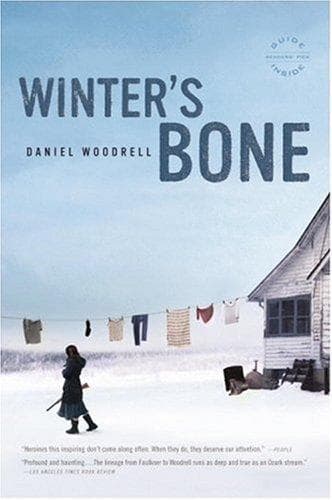
Winter's Bone
by Daniel Woodrell, Amir Tsukerman
Daniel Woodrell's spare, unsentimental novel of a teenage girl searching the Ozarks for her missing father is short, tense, and unlike most crime fiction.
What It's About
Winter's Bone is a 2006 novel by Daniel Woodrell, set in the hill country of the Missouri Ozarks, where poverty, kinship, and the illegal methamphetamine trade shape daily life. The story follows Ree Dolly, a seventeen-year-old who looks after her two younger siblings and a mother who has withdrawn from the world. Her father has put up the family home as security for his bail and then vanished, so Ree sets out to find him before the court takes the house.
Woodrell writes in a spare, rhythmic prose that borrows the cadence of Ozark speech without turning into caricature. Scenes are short and sharp, and the narration moves through hollers and back roads with a close, unsentimental eye. Violence arrives suddenly and is handled without melodrama, which gives the book its tension. It is a short book that reads quickly, yet the sentences reward slow attention.
The experience is less a plot-driven thriller than an immersion into a community with its own codes of loyalty, silence, and pride. Ree's determination is the spine of the book, and the question of what family owes one another hangs over nearly every encounter. Woodrell trusts the reader to read between the lines, and much of the emotional weight comes from what characters refuse to say. Readers hoping for a neat resolution or a sympathetic outside guide may find the world harsher and more ambiguous than they expected.
Read this if you…
- want a short, intense novel about rural poverty and family duty
- appreciate lean, lyrical prose that trusts you to read between the lines
- like character-driven crime fiction with a determined young female lead
Skip it if you…
- want a fast-paced thriller with clear answers and a tidy ending
- prefer uplifting stories and find bleak, morally murky worlds hard to sit with
Key Ideas
- 1
Loyalty to kin above the law
The people of the region settle matters among themselves, and silence is a survival skill. Ree must work out who she can trust in a world where asking the wrong question is dangerous. The book shows how obligation to family can override fear, reason, and self-interest, and it never presents that code as simply admirable or simply cruel.
- 2
Poverty as landscape, not backdrop
Hunger, failing houses, and the pull of the drug economy are not decoration here. They shape every choice the characters make and limit what they can imagine for themselves. Woodrell makes the land itself feel like a force, so the setting explains as much about the characters as their own actions do.
- 3
A heroine who refuses pity
Ree is resourceful, stubborn, and frightened, but she does not ask anyone to feel sorry for her. Her decisions come from practical necessity rather than heroic instinct. Readers who want a protagonist who feels earned and specific rather than inspirational will find her memorable.
- 4
Language that carries a region
Woodrell's sentences are clipped and musical, with dialect rhythms that suggest a whole community without heavy phonetic spelling. Much of the novel's power lies in its restraint, as lyrical passages arrive briefly and then give way to hard, plain description.
Limitations
Some readers, especially those from the Ozarks, have criticized the book for leaning on familiar images of rural hardship and for portraying the region as more closed and violent than their experience. The drug trade is present as a force but is not examined in depth, and the wider institutions around the characters are largely offstage. Dialect and the spare style can slow readers who are not used to it. The novel's bleakness offers little consolation, and secondary characters are sometimes sketched more than fully developed.
Questions Readers Ask
- Is Winter's Bone worth reading if I have already seen the 2010 film?
- Yes. The 2010 film, directed by Debra Granik and starring Jennifer Lawrence, follows the book's central story closely and captures its mood well. The novel offers more interior texture, more of Woodrell's distinctive sentences, and more of the community around Ree, so it gives a fuller sense of the world than the film can.
- Who is this book best suited to?
- It suits readers who enjoy literary crime fiction, rural settings, and stories driven by character rather than plot twists. It also works well for anyone curious about Appalachian and Ozark life as seen by a writer who grew up in the region. Because it is short, it is an easy first step into Woodrell's work.
- Published
- 2006
- ISBN
- 9780340897980
- Difficulty
- intermediate
- Category
- Fiction
Book details and cover from Google Books.
Ready to read Winter's Bone?
Get your copy on Amazon, or listen to it on Audible. We earn a commission if you buy through these links.