
We earn a commission if you buy through these links. Learn more
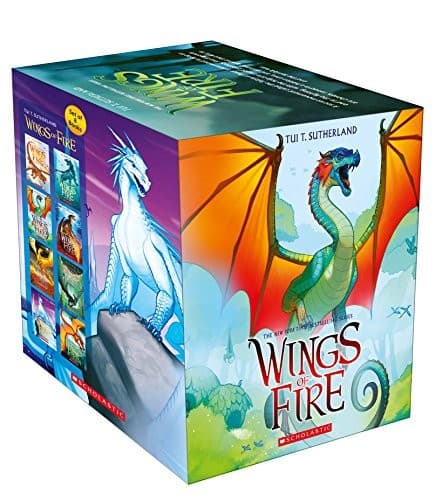
Wings of Fire
by Tui T. Sutherland, Brianna C. Walsh
Guide by the Books of the Day editors · Updated · How we write our guides
Wings of Fire rewards readers who want a fast, dragon-filled fantasy with tribal politics, rotating points of view, and a series that keeps expanding.
What Creators Say About Wings of Fire
1 creator reviewed Wings of Fire on YouTube in 2026, with 3.8K views between them. Their opinions are their own; we picked these reviews, we didn't write them.
What It's About
Wings of Fire is a middle-grade fantasy series, credited to Tui T. Sutherland, about dragons divided into tribes that have been at odds for generations. The story follows young dragons who were raised apart from their own kind and must figure out what their tribes expect of them, while a prophecy hangs over their futures. Readers who come for the dragons will find a world built around distinct tribal traits, each with its own colors, abilities, and way of living.
The books move quickly. Chapters are short, the action comes often, and the narration shifts among a rotating cast of dragons, so each volume offers a different angle on the same conflicts. Sutherland leans on cliffhangers and clear stakes, and the prose is plain enough for younger readers without talking down to them. The world-building arrives in pieces, so you learn about tribes, rivalries, and history as the plot needs them rather than in long lectures.
The reading experience is closer to following a big adventure serial than sitting with a literary novel. Expect bold heroics, betrayals, and loyalties tested under pressure more than subtle moral ambiguity. For many readers that is the appeal: the series is built to be devoured, and it rewards the habit of starting the next book right away.
Read this if you…
- love dragons and creature-driven fantasy
- want a fast, plot-first series that suits younger readers
- enjoy long-running series with a large cast to follow
Skip it if you…
- want subtle, literary character studies with complex moral grey areas
- are looking for a complete, self-contained story in a single volume
Key Ideas
- 1
Tribes defined by identity and loyalty
Each dragon tribe carries its own traits, habits, and history, and much of the conflict comes from inherited rivalries. The series asks what you owe your group when its leaders are wrong, and whether belonging means obeying or thinking for yourself. Those questions give the tribal setting more emotional weight than a simple good-versus-evil map would.
- 2
Prophecy as pressure, not destiny
A prophecy shapes how characters see themselves and how others treat them, which creates steady tension. The books repeatedly test whether a foretold future is fixed or whether choices can change it. That push and pull keeps the stakes personal rather than purely cosmic.
- 3
Rotating points of view
Switching narrators lets readers know more than any single character, which produces dramatic irony and suspense. You often see a misunderstanding forming before the characters do. The technique also gives a large cast room to matter without slowing the pace.
- 4
World-building revealed through plot
Maps, tribal customs, and backstory come out gradually, usually while characters are in the middle of something urgent. Instead of front-loading exposition, the series trusts readers to piece things together. Younger readers can follow the action easily, and fans who enjoy lore can keep digging.
- 5
Friendship across divided groups
Some of the strongest scenes involve characters from opposing tribes learning to trust one another. The theme is less about grand reconciliation than about the small, uncomfortable choices that make cooperation possible. It gives the series a hopeful thread without making it preachy.
Limitations
Critics often point to plain prose and a fairly predictable structure, where prophecies, secret identities, and cliffhangers recur. With many dragons and tribes, some characters can blur together, especially for readers who pick up later volumes. The series has also expanded into spinoffs and companion material, so newcomers may find the catalog overwhelming. The cover lists Brianna C. Walsh alongside Sutherland, and I cannot confirm her role, so check the edition's credits before buying.
Questions Readers Ask
- Is Wings of Fire only for children?
- It is written for middle-grade readers, roughly ages 8 to 12, but many adults enjoy it. The prose is direct and the pacing is brisk, so it works well as a fast read. Adults who want more complex characters or themes may find it lighter than they would like, but it is a pleasant escape for anyone who likes fantasy.
- Where should I start the series?
- Start with the first book. The opening arc introduces the tribes, the central prophecy, and the main group of characters, and later books build directly on those foundations. Skipping ahead would leave you confused about who is who and why the conflicts matter.
- Published
- 2018
- ISBN
- 9781339013985
- Difficulty
- beginner
Book details and cover from Google Books.
Ready to read Wings of Fire?
Get your copy on Amazon, or listen to it on Audible. We earn a commission if you buy through these links.