
We earn a commission if you buy through these links. Learn more
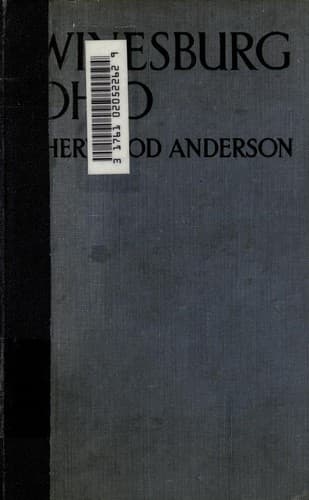
Winesburg, Ohio
A cycle of linked stories about restless, lonely people in a small Ohio town, and an early, influential model for American modernist fiction.
What It's About
Winesburg, Ohio is a set of connected short stories about the people of a fictional Midwestern town and the young man who moves among them. Rather than following one plot, the book circles through the lives of shopkeepers, teachers, ministers, and dreamers, each of whom carries some private hunger they rarely voice. A recurring figure, a reporter's apprentice named George Willard, links many of the stories, so the collection gradually builds a portrait of a whole community.
Anderson writes in plain, unhurried sentences that often repeat and circle back on themselves. The stories tend to end on a moment of quiet recognition rather than a resolution, and the emotional weight comes from accumulation. Reading it feels less like following a narrative and more like walking through a town one house at a time, noticing what people keep behind their doors.
The experience is melancholy but not bleak. Anderson is interested in the gap between how people appear and what they feel, and in the small moments when someone almost reaches another person. The book rewards slow reading and rereading, especially for readers who enjoy seeing how a loose collection can add up to something structured and cumulative.
Read this if you…
- want literary fiction that is quiet, character-driven, and emotionally layered
- are interested in the history of the modern short story and its influence on later writers
- enjoy books that build a community from many small portraits rather than one plot
Skip it if you…
- need a strong plot, momentum, or a clear sense of where the book is heading
- find repetitive, deliberately plain prose tiring rather than hypnotic
Key Ideas
- 1
Loneliness as the town's shared condition
Almost every character is isolated by something: fear, pride, unspoken desire, or a habit of routine. Anderson treats loneliness less as a personal failing than as the ordinary climate of small-town life, and he shows how people build walls out of respectability and silence.
- 2
The grotesque as a way of seeing people
Anderson presents his characters as 'grotesques,' people whose one distorted truth has come to dominate their lives. The idea is generous as much as critical: each person is a little warped by a single belief or wound, and the stories ask the reader to see that warping with sympathy.
- 3
Connected stories that build a whole town
The stories overlap in characters, places, and rumors, so a reader who finishes the book sees the town as a web of mutual observation. The structure works like a novel built from scenes, where meaning emerges from how one life brushes against another.
- 4
Moments of revelation over plot
Anderson's stories often turn on a brief, intense moment in which a character glimpses a truth about themselves or someone else. These epiphanies are quiet and sometimes unsettling, and they set a pattern that later short-story writers would refine.
- 5
Youth on the edge of leaving
George Willard's gradual awareness of the adults around him gives the collection a thread of coming-of-age. The book is as much about what a young person sees and absorbs as it is about the older residents he watches.
Limitations
Readers often note that the stories can feel samey, since many end on a similar note of isolation and unspoken longing. The prose is intentionally repetitive, which some find powerful and others find monotonous. The book's view of women and of its small-town setting reflects its era, and its portrait of Midwestern life is selective, focused on the emotionally troubled rather than the community as a whole. It is a short book, but it asks for patience.
Questions Readers Ask
- Is Winesburg, Ohio a novel or a collection of stories?
- It is usually described as a story cycle or linked short stories rather than a novel. Each chapter can stand alone as a complete story, but recurring characters, especially George Willard, and a shared setting connect them. Reading them in order shows how the town fits together, which is part of the book's appeal.
- Is Winesburg, Ohio still worth reading today?
- Yes, especially if you are interested in how modern fiction developed. Its focus on inner life, restraint, and the lonely individual influenced many later writers. Some of its attitudes and its prose style feel dated, but its emotional observation remains sharp and it is short enough to read in a few sittings.
- How does it compare to Olive Kitteridge or Dubliners?
- It shares with Dubliners a focus on ordinary people and their private disappointments, and with Olive Kitteridge a sense of a community seen through linked portraits. Compared to Dubliners, Anderson's stories are more fragmentary and emotionally intense. Readers who enjoy one of those books will likely find the other rewarding.
- Published
- 1919
- ISBN
- 9780497901806
- Difficulty
- intermediate
- Category
- Fiction
Book details and cover from Google Books.
Ready to read Winesburg, Ohio?
Get your copy on Amazon, or listen to it on Audible. We earn a commission if you buy through these links.