
We earn a commission if you buy through these links. Learn more
Wilmington's Lie
A narrative account of the 1898 coup in Wilmington, North Carolina, that shows how white supremacists seized a biracial city government and then rewrote the story so the violence looked like a justified uprising.
What It's About
Wilmington's Lie is David Zucchino's account of the violence that erupted in Wilmington, North Carolina, in November 1898. White supremacist leaders, backed by armed men, forced out the city's elected biracial government, killed Black residents, and drove prominent Black citizens from town. Zucchino, a longtime newspaper correspondent, builds the book around a small cast of people on both sides, including the Black newspaper editor whose editorial inflamed white opinion and the Democratic politicians who used racial fear to win power.
The book is reported in the manner of a journalist who has done the archival digging. Zucchino draws on newspapers, letters, court records, and personal accounts to reconstruct events day by day. His most useful contribution is showing how the lie of the title was manufactured: how a political campaign built on fear was turned into a story of a 'race riot' caused by Black aggression, and how that story was repeated in print and schoolbooks for decades afterward.
Reading it is a grim, absorbing experience. The narrative moves quickly and has the tension of a crime story, but it also asks you to sit with the brutality and with the slow, deliberate way the official account was made to stick. Expect some dense political detail in the sections on the election and the press, and expect the material to be emotionally heavy throughout.
Read this if you…
- want a clear, well-sourced account of a Reconstruction-era atrocity that many Americans were never taught
- are interested in how newspapers and political campaigns can shape what a community believes about its own past
- prefer narrative history that reads with the momentum of a story over dry academic argument
Skip it if you…
- want a broad survey of Reconstruction or the Jim Crow South rather than one event and its aftermath
- find detailed accounts of political maneuvering and newspaper history hard to stay with
Key Ideas
- 1
A coup disguised as a riot
Zucchino argues that the events of 1898 were not a spontaneous riot but a planned overthrow of an elected government. He shows the organization behind the armed mobs and the political goals they served, which is the central correction the book makes to the traditional account.
- 2
Politics built on racial fear
The book traces how a white supremacist campaign in the months before the violence used newspapers and public rallies to frame Black political power as a threat. Readers see how a campaign of fear prepared the ground for the violence that followed.
- 3
How a false history was constructed
A major thread concerns the making of the official story, in which the massacre was recast as a justified response to Black crime. Zucchino follows how this narrative was sustained through print and public memory, which makes the book as much about historical myth as about one event.
- 4
Individual lives within a larger tragedy
Rather than treating Wilmington as an abstraction, the book follows particular people, both victims and perpetrators, and shows what happened to them. These personal stories give the political analysis a human weight that many accounts of the period lack.
Limitations
Some readers will want more on the wider context of white supremacist politics across North Carolina and the South, which the book touches on but does not explore in depth. Because the violence was poorly recorded and deliberately obscured, exact casualty figures remain uncertain, and the book is open about the limits of the evidence. The narrative is focused and carefully reported, but it is not a comprehensive history of Wilmington's Black community before or after 1898.
Questions Readers Ask
- Is Wilmington's Lie a good starting point for learning about Reconstruction?
- Yes, if you want a single, vivid case study. It covers one event in depth rather than the whole period, so it works well as an entry point. Readers who want a broader overview may want to pair it with a general survey of the era afterward.
- How does it compare to other books on racial violence in the South?
- It is closer to a focused narrative investigation than a sweeping synthesis. Its main strength is the way it connects the violence to the story told about it afterward. Readers looking for wider analysis across many communities may want to read additional titles alongside it.
- Is the book still relevant today?
- Yes. Its subject, the way political campaigns use racial fear and the way official histories can obscure violence, remains a live question. Many readers come to the book because the events were left out of mainstream American history for so long.
- Published
- 2020
- ISBN
- 9780802148650
- Difficulty
- intermediate
- Category
- History
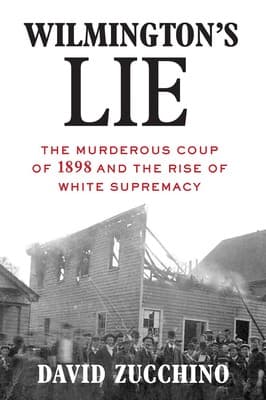
Book details and cover from Google Books.
Ready to read Wilmington's Lie?
Get your copy on Amazon, or listen to it on Audible. We earn a commission if you buy through these links.