
We earn a commission if you buy through these links. Learn more
Wicked
Guide by the Books of the Day editors · Updated · How we write our guides
Maguire's Wicked turns the Wizard of Oz inside out, following the misunderstood Elphaba through a sly, politically charged world where villains are made rather than born.
What Creators Say About Wicked
2 creators reviewed Wicked on YouTube in 2024, with 510K views between them. Their opinions are their own; we picked these reviews, we didn't write them.
What It's About
Wicked reimagines L. Frank Baum's Oz, and the famous 1939 film, from the perspective of Elphaba, the green-skinned girl who grows up to become the Wicked Witch of the West. Maguire takes the familiar landscape and rebuilds it as a place with schools, factions, religious orthodoxy, and a government that presents itself as benevolent. It reads less like a fairy tale than a political novel about how a powerful state manufactures its enemies.
The style is one of its strongest features. The narrative moves through Elphaba's life in shifting close perspectives, layered with invented history, ironic asides, and allusions to Baum, theology, and older literature. The sentences are rich and often digressive, and the wit is dry rather than cheerful. Familiar names and characters reappear in altered shapes, so the pleasure comes partly from recognizing what has been changed and why.
Reading it is an immersive, sometimes demanding experience. The opening sections build slowly as the world is established, and the book asks you to sit with moral ambiguity rather than resolve it. It is an adult novel with violence and sexual content. Readers who enjoy being challenged to reconsider a story they thought they knew will find it rewarding. Those hoping for the bright, sing-along spirit of the stage adaptation will find something much heavier.
Read this if you…
- enjoy revisionist retellings that rethink a familiar story from the villain's side
- want political and moral allegory without tidy answers
- like dense, witty prose and don't mind a slow, layered build
Skip it if you…
- want the lighthearted tone, romance, and songs of the musical or film
- prefer a fast plot with clear heroes and villains
Key Ideas
- 1
Villainy as a product of propaganda
Much of the novel concerns how an authority shapes public opinion, deciding who counts as a threat and who counts as a hero. Elphaba's reputation is not simply earned by her actions but assembled by a regime that needs an enemy. The book invites you to notice how official narratives harden into accepted truth, and how a single version of events can outlast the people it describes.
- 2
Otherness and the cost of difference
Elphaba's green skin marks her as different from birth, and the story follows how society responds to that difference with suspicion, pity, and cruelty. The novel extends this theme to a persecuted group of talking animals whose rights are slowly stripped away. Maguire uses these threads to examine how prejudice gets normalized, often through ordinary, respectable institutions.
- 3
Faith, authority, and the stories we're told
Religion and institutional certainty run throughout the book, from state-sanctioned doctrines to private doubts. Maguire is interested in how belief can comfort, control, and justify violence at once. Characters who claim moral clarity often prove the least reliable, and the book keeps asking who gets to define good and evil in a given society.
- 4
A myth retold from its margins
The distinctive achievement is structural as much as thematic. By placing the story inside the mind of its supposed villain, Maguire turns a children's classic into a meditation on memory, bias, and the gap between a person and their legend. The retelling works best when you know the original, since much of its irony depends on the contrast.
Limitations
The book is often praised for its ideas but criticized for its pacing. Long stretches of invented history, political maneuvering, and theological speculation can slow the momentum, and some readers find the wordplay more tiring than clever. Elphaba's certainty about her own righteousness can become wearing over the length of the book. The violence and sexual content are frank, which some readers will find jarring for a story they associate with children. The novel also leaves several threads loose, and readers who want the story's puzzles solved may feel unsatisfied.
Questions Readers Ask
- Do I need to have read The Wizard of Oz first?
- It is not strictly required, but the novel is written in conversation with Baum's book and the 1939 film. Many of its pleasures come from spotting what has been changed, reinterpreted, or deliberately inverted. If you know only the film, you will still follow the story, but you may miss some of the satirical edge.
- How is the novel different from the Broadway musical?
- The novel is darker, more political, and far more complex in its moral questions. Its characters are less charming and their motives less simple. The musical keeps the friendship and comedy at its center, while the book treats those elements as part of a larger story about power, prejudice, and propaganda.
- Published
- 1995
- ISBN
- 9780606311847
- Difficulty
- intermediate
- Category
- Fiction
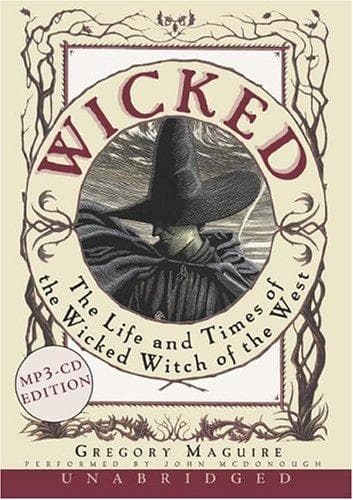
Book details and cover from Google Books.
Ready to read Wicked?
Get your copy on Amazon, or listen to it on Audible. We earn a commission if you buy through these links.