
No Cover
Harold and the Purple Crayon
Crockett Johnson
Like Max, Harold makes his own adventure from nothing but imagination, drawing a whole world and finding his way back to bed, a gentle classic with the same journey-and-return shape.
Reader-supported: when you buy through links on our site, we may earn an affiliate commission. Learn more
We earn a commission if you buy through these links. Learn more
Find Similar BooksA short picture book that takes a child's anger seriously, and its drawings do as much storytelling as the sparse text, which makes it worth a slow, repeated look at any age.
Where the Wild Things Are is a 1963 picture book by Maurice Sendak, and it won the Caldecott Medal the following year. It runs only a few dozen pages, with short sentences that are easy to read aloud, so a first reading takes minutes. Adults often return to it for much longer, though, because the book rewards attention to what is happening in the pictures.
The story follows a boy in a wolf suit whose mischief gets him sent to his room without supper. From there his imagination takes over, and the walls of his bedroom give way to a larger, wilder world. Sendak's pen-and-ink drawings, with their dense crosshatching, shift from cramped domestic rooms to full-page and spread-size scenes where the scale itself carries the emotion. The text is spare and rhythmic, so the reading experience feels closer to sitting with a picture-led story than working through a novel.
Read as an adult, the book is notable for how seriously it treats a child's anger, desire for control, and need to be loved after acting badly. It does not moralize or punish its hero. It is a strange, compact, emotionally honest book that works on several levels at once.
The book treats a child's rage and mischief as real feelings rather than behavior to be corrected. Max's wild behavior is not framed as a failure to be punished. Instead, the story gives anger a place to play out in imagination, which is why many readers find it validating rather than preachy. Parents and children often read it as a way to talk about big feelings without making the conversation a lecture.
Once Max leaves his room in his mind, he finds himself in a position of unexpected authority over creatures far larger than him. The book explores what it feels like to be in charge, to be feared and admired, and how quickly that kind of power can lose its appeal. It is a small study of control, and the appeal of being in charge is shown alongside its limits.
Sendak's art does much of the work. The shifts in scale, the shading, and the way the page layout opens up or closes in tell you how Max feels before the words do. Looking closely at how the drawings build mood is one of the main reasons adults keep returning to the book. It is a useful example of how picture books can work as visual storytelling.
The book's emotional center is the pull between wanting freedom and wanting to be cared for. It does not end with a moral or a lecture. Instead, it suggests that home is something you come back to because it offers comfort, not because you were told to. This quiet, unforced ending is part of why the book has lasted, and it leaves room for each reader to draw their own meaning.
Some parents find the wild creatures and Max's unruly behavior unsettling for very young or anxious children, so it may be better shared with an older toddler or preschooler. Readers who want a clear lesson will find the book deliberately open-ended. Its supporting characters are thin, and older readers may find it slight as a story, especially compared with later picture books that do more with text and structure. Its appeal leans heavily on the art, which can feel less rewarding in cheap or small reprints.
Reviews from readers on YouTube. Their opinions are their own.
Book details and cover from Google Books.
Ready to read Where the Wild Things Are?
Get your copy on Amazon, or listen to it on Audible. We earn a commission if you buy through these links.
Crockett Johnson
Like Max, Harold makes his own adventure from nothing but imagination, drawing a whole world and finding his way back to bed, a gentle classic with the same journey-and-return shape.
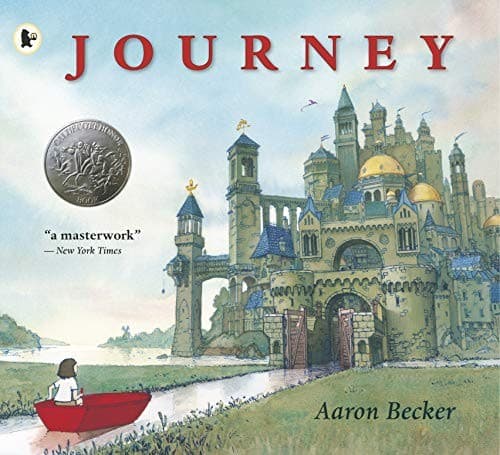
Aaron Becker
A wordless book where a lonely girl draws a door into a lavish fantasy kingdom, echoing the moment Max's room turns into a forest and his sea voyage begins.
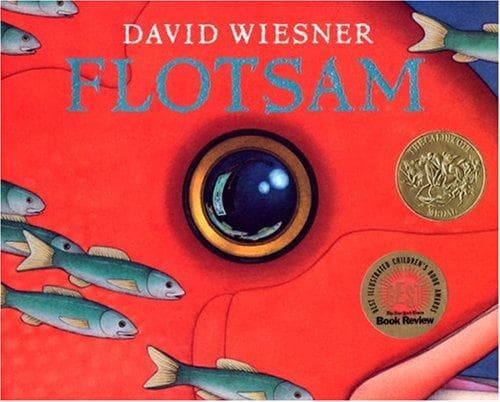
David Wiesner
Wiesner's detailed, nearly wordless paintings reward the same lingering looks that Sendak's big spreads do, opening a hidden, wondrous world from an ordinary day at the beach.
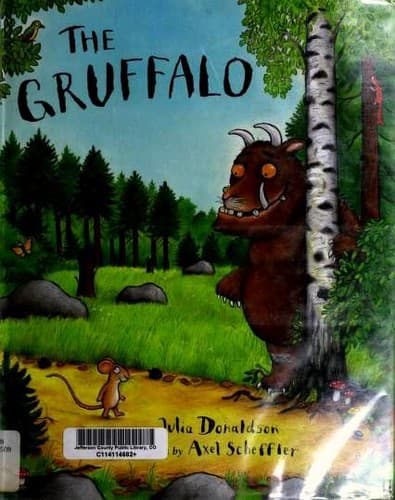
Julia Donaldson
A rhyming read-aloud with a monster who is scary yet funny, perfect for children who loved roaring with the Wild Things and enjoy a clever small hero.