
We earn a commission if you buy through these links. Learn more
Where the Red Fern Grows
by Wilson Rawls
A short, emotionally direct novel about a boy, two hunting dogs, and the hard lessons of loyalty and loss in the Ozark hills, worth reading for its plain storytelling and lasting emotional impact.
What It's About
Where the Red Fern Grows follows Billy Colman, a boy growing up in the Ozark hills of Oklahoma, who spends years saving money from odd jobs to buy two coonhound puppies. The story is narrated in the first person by an adult Billy looking back on his boyhood, which gives the telling a reflective, slightly weathered tone. Rawls drew on his own rural childhood, and the book feels lived-in.
Much of the book is practical and specific. Billy trains his dogs, hunts raccoons at night, and enters the hunting contests that were a real part of that world. Rawls writes plainly, with short chapters and little ornament, and his attention to food, weather, work, and family routines gives the setting texture. Hunting is central to the book, and some readers will find the animal-hunting scenes harder to sit through than the sentiment.
The reading experience is warm and sentimental in a direct way, and it builds toward an ending that many readers remember for decades. Rawls leans as much on folk legend and faith as on plot, using a local story about a red fern to frame the emotional core. Because the prose is simple and the chapters move briskly, most readers can finish it in a sitting or two.
Read this if you…
- want a short, emotionally direct novel about a boy and his dogs
- enjoy rural settings, hunting-dog stories, and books about hard-earned pride
- are reading with a child around 9 to 13 and want a book to talk about loyalty and loss
Skip it if you…
- find sentimental stories that make grief the central event hard to take
- want a fast-paced plot, complex characters, or literary experimentation
Key Ideas
- 1
Earning what you want through patient work
Billy's years of saving and his willingness to take on small jobs to buy his dogs form the spine of the book. Rawls treats honest labor and delayed gratification as a source of dignity, and the reader feels the cost of every dollar. This makes the dogs feel earned rather than given, which deepens the attachment that follows.
- 2
Training as a partnership between boy and dogs
The book shows raising and training coonhounds as a daily discipline built on trust, repetition, and affection. Billy's relationship with Old Dan and Little Ann is portrayed through hard work and shared time, not sentimental declarations. Readers who enjoy animal stories grounded in real routines will find this part especially satisfying.
- 3
Rural poverty and family resilience
Billy's family lives with limited money in a hard landscape, and the novel shows how they adapt through cooperation and thrift. Adults are often seen mostly through Billy's eyes, so their inner lives stay mostly offstage. The result is a portrait of endurance that feels more like memory than social analysis.
- 4
Folk belief, faith, and the red fern legend
A local story about a fern that grows where an angel has touched the ground gives the book its title and its spiritual framing. Rawls uses it to make loss feel meaningful within a community's shared beliefs. Readers who are uncomfortable with explicit religious themes may find this part heavy-handed.
- 5
Grief and loyalty told without irony
The book's emotional force comes from its refusal to be clever about feeling. It asks readers to care openly about animals and to accept sorrow as part of love. That directness is why it still works on young readers, though adults may notice the sentiment is deliberate.
Limitations
The book's hunting scenes are central and detailed, which may trouble readers who object to killing animals for sport. Adult characters, including Billy's parents, are sketched lightly and seen mainly through his eyes. The emotional style is deliberate and unsubtle, and some readers will find it manipulative rather than moving. Its folk-religious elements and rural attitudes reflect their time and place, and they are not examined critically. These limits matter most to adult readers, though many still find it worth reading.
Questions Readers Ask
- Is Where the Red Fern Grows suitable for adults or only children?
- It is written for young readers, but many adults read it and appreciate its directness and nostalgia. Adults who want complex characters or sophisticated style may find it thin. It works best as a quick, affecting read, either on its own terms or alongside a younger reader.
- How does it compare to Old Yeller?
- Both are classic American novels about a boy and a dog that end in sorrow. Where the Red Fern Grows has a larger cast of hunting scenes, a folk-legend frame, and more focus on training and work. Readers who loved Old Yeller often find this one similarly moving, though the emotional tone is somewhat more overt.
- Published
- 1961
- ISBN
- 9781432850326
- Difficulty
- beginner
- Category
- Children's Books
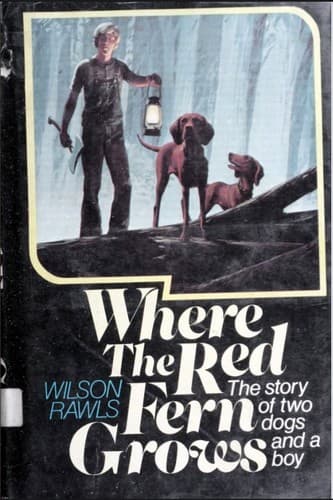
Book details and cover from Google Books.
Ready to read Where the Red Fern Grows?
Get your copy on Amazon, or listen to it on Audible. We earn a commission if you buy through these links.