
We earn a commission if you buy through these links. Learn more
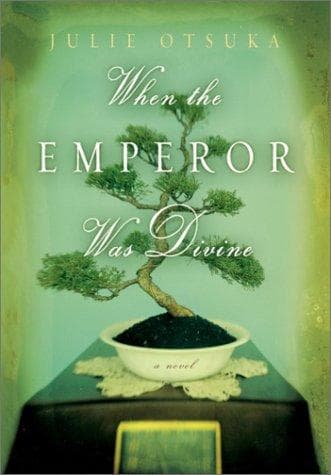
When the emperor was divine
by Julie Otsuka
Guide by the Books of the Day editors · Updated · How we write our guides
A short, restrained novel that conveys the forced removal of a Japanese American family in 1942 through quiet, precise sentences, and shows how much a small domestic life can hold.
What Creators Say About When the emperor was divine
2 creators reviewed When the emperor was divine on YouTube between 2017 and 2024, with 55.1K views between them. Their opinions are their own; we picked these reviews, we didn't write them.
What It's About
When the Emperor Was Divine is Julie Otsuka's 2002 debut novel, a slim work of literary fiction about a Japanese American family in California after Pearl Harbor. The father is taken away by authorities, and the mother and her two children are sent by train to an incarceration camp in the Utah desert. The book follows their confinement and the strain of trying to hold a family together under armed guard and watchtowers.
The novel's distinctive move is its shifting point of view. Its sections pass between family members, so the same events come back in different voices, and the reader sees the loss from several sides without the narrative ever settling into one comfortable center. The prose is spare and clipped, with a flat, observant tone that avoids melodrama. Much of the emotional weight comes from what is left unsaid.
Reading it is brief and absorbing, and it tends to stay with you. It doesn't try to cover the whole history of the camps or argue a thesis. It asks you to sit with ordinary routines, small humiliations, and private fears, and to notice how a government decision reshapes the rhythm of a household.
Read this if you…
- Want a short, emotionally serious novel you can finish in a few sittings.
- Are interested in the wartime incarceration of Japanese Americans and want a human, close-up view of it.
- Enjoy literary fiction that works through implication and fragmented perspective rather than plot twists.
Skip it if you…
- Want a fast-moving story with strong plot momentum or a clear sense of where it is headed.
- Are looking for a detailed historical account, with dates, policy analysis, and documented context.
Key Ideas
- 1
Ordinary life disrupted by state power
The novel's power comes from its attention to everyday things: meals, schooling, chores, and the small rules of daily life. By focusing on these, it shows how quickly a government order can dismantle a home without any dramatic battle or villain. The horror is in the mundane details that suddenly no longer belong to the family.
- 2
Shifting voices as a way of seeing
Because the narration rotates among family members, no single account is complete. Each voice notices different things and carries different guilt, hope, or confusion. Readers piece together the family's experience from overlapping fragments, which mirrors how memory and history work for people who lived through it.
- 3
Silence, restraint, and what goes unsaid
Otsuka writes with a clipped, understated style that refuses to explain feelings directly. Characters rarely name their anger or grief, so the reader has to infer them from gestures, omissions, and repeated details. This restraint is what gives the book its emotional force, and it suits the subject of people forced to keep up appearances.
- 4
Identity and belonging under suspicion
The book examines what it means to be a loyal citizen when your ancestry alone makes you a suspect. The family's sense of who they are is tested by neighbors, officials, and their own uncertainty about their place in the country. The question of belonging runs quietly through every section.
Limitations
Some readers find the restrained style too cool, and the characters can feel more like vessels for the experience than fully rounded people. Because the book is so short and focused on one family, it does not survey the wider camp system, its politics, or the varied experiences of other incarcerated communities. Those who want historical depth will need to read further elsewhere. The clipped prose is also a deliberate choice that not every reader will embrace.
Questions Readers Ask
- Is When the Emperor Was Divine a good first novel about Japanese American incarceration?
- Yes, for many readers it is an accessible starting point. It is short, the prose is plain, and it focuses on one family's experience rather than on policy or sweeping history. It leaves a lot unexplained, so pairing it with a nonfiction account of the camps can add useful context afterward.
- Is the book still relevant today?
- It remains widely read and taught because it deals with how fear and government power can strip away civil rights and dignity. Its subject is historical, but the questions it raises about citizenship, suspicion, and the treatment of minority groups in wartime still resonate with readers.
- What should I read next if I like it?
- If you want more fiction on similar ground, look for other novels about the Japanese American experience during the war. If you prefer nonfiction, a documented history of the camps will fill in the political and institutional background that the novel leaves largely offstage.
- Published
- 2002
- ISBN
- 9780375432781
- Difficulty
- beginner
- Category
- Tech
Book details and cover from Google Books.
Ready to read When the emperor was divine?
Get your copy on Amazon, or listen to it on Audible. We earn a commission if you buy through these links.