
We earn a commission if you buy through these links. Learn more
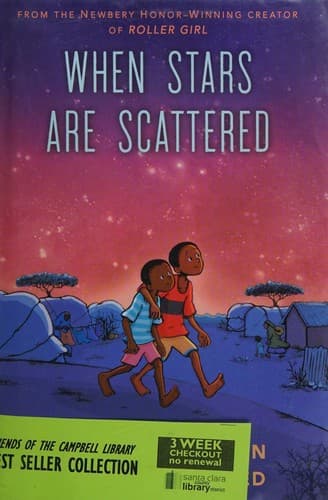
When Stars Are Scattered
Guide by the Books of the Day editors · Updated · How we write our guides
A quick-reading graphic memoir of a boy growing up in a Kenyan refugee camp, caring for his brother, and finding his way through stories, told with restraint and warmth.
What Creators Say About When Stars Are Scattered
2 creators reviewed When Stars Are Scattered on YouTube between 2019 and 2020, with 28.4K views between them. Their opinions are their own; we picked these reviews, we didn't write them.
What It's About
When Stars Are Scattered is a graphic memoir, co-created by Victoria Jamieson with Omar Mohamed, based on Omar's childhood. Although many booksellers file it under fiction, it is a true account. Omar grew up in Dadaab, a vast refugee camp in northeastern Kenya, after his family left Somalia. The book follows him through years of waiting, school with few resources, and growing responsibility for his brother Hassan, who has disabilities the camp is poorly equipped to support.
The approach is simple and visual. The story unfolds in comic panels with clean line work and a restrained palette, and the text is spare, so the book moves quickly. It is written for younger readers, but adults will feel its weight. Omar's love of reading and libraries runs through the pages, and the book treats books as a real lifeline rather than a decorative detail.
Reading it is less about plot than about daily texture: long waits, the rhythm of camp life, small pleasures and constant uncertainty. It avoids a tidy redemptive arc. What you come away with is a sense of how a child holds family, hope, and fear together while time passes slowly and nothing is settled.
Read this if you…
- Want a graphic memoir that is quick to read but stays with you
- Are interested in refugee life told from a child's point of view
- Enjoy stories about siblings and everyday resilience
Skip it if you…
- Want a plot-driven story with dramatic twists and reversals
- Need detailed historical or political context about Somalia and Kenya
Key Ideas
- 1
Waiting as a way of life
The camp is defined by limbo: people wait for papers, food, schooling, and a future they cannot plan. The book shows how that waiting shapes ordinary days and how a child learns to live inside it without knowing when it will end.
- 2
Caregiving between siblings
Omar's relationship with Hassan is at the emotional center. The book shows what it means for a young person to take on real responsibility for a sibling with disabilities, including the tenderness, frustration, and quiet pride that come with it.
- 3
Books as a lifeline
Reading offers Omar escape, a sense of self, and a link to a wider world. The book takes this seriously without turning it into a simple message about the power of reading, showing how hard it can be to get books at all.
- 4
Comics as testimony
The graphic form lets the book convey heat, crowding, and small gestures in a way prose might not. Pictures carry much of the feeling, so the sparse text lands harder, and the memoir feels immediate rather than retrospective.
Limitations
The book covers a single childhood and one family's experience, so it does not try to explain the wider history of displacement in the Horn of Africa or the politics of the camp. Some readers may find its simplicity light, especially adults expecting a deeper analysis. Because it is written for younger readers, the emotional beats are often delivered briskly, and a few moments feel compressed. It is best read as a personal account rather than a full portrait of the place or the period.
Questions Readers Ask
- Is When Stars Are Scattered fiction?
- No. Although some catalogues list it under fiction, it is a graphic memoir based on Omar Mohamed's real childhood in Dadaab refugee camp. It is written in comics form, with Victoria Jamieson drawing and co-creating the book with Omar.
- Is it suitable for adult readers?
- Yes. It is written accessibly enough for younger readers, but many adults find it moving and quick to finish in one sitting. It works well as an entry point to refugee experience and to graphic memoir as a form, though adults wanting deeper analysis may want to pair it with other reading.
- What should I read next if I liked it?
- If you want more first-person accounts of displacement, look for other memoirs about refugee childhoods. If the comics format is what drew you in, other graphic memoirs about family and childhood make a natural next step.
- Published
- 2020
- ISBN
- 9780525553908
- Difficulty
- beginner
- Category
- Fiction
Book details and cover from Google Books.
Ready to read When Stars Are Scattered?
Get your copy on Amazon, or listen to it on Audible. We earn a commission if you buy through these links.