
We earn a commission if you buy through these links. Learn more
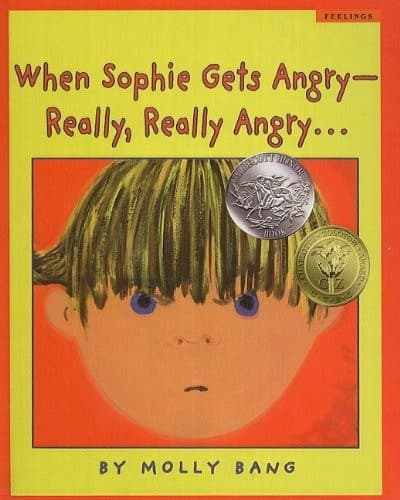
When Sophie Gets Angry - Really, Really Angry
by Molly Bang
Guide by the Books of the Day editors · Updated · How we write our guides
A short, honest picture book that treats a child's rage as ordinary and survivable, and gives adults a calm, concrete way to talk about big feelings with young children.
What Creators Say About When Sophie Gets Angry - Really, Really Angry
2 creators reviewed When Sophie Gets Angry - Really, Really Angry on YouTube between 2022 and 2023, with 15.6K views between them. Their opinions are their own; we picked these reviews, we didn't write them.
What It's About
When Sophie Gets Angry, Really, Really Angry is a picture book for young children about a small, familiar upset: a sibling gets something Sophie wanted, and her irritation swells into a full-body explosion. Bang does not scold Sophie or tell her how she should feel. The story follows the anger as it happens, from the first flare to the way it spills out of her and into the rest of the house.
The text is spare, with short sentences and a rhythm built for reading aloud. Much of the meaning sits in the illustrations, which use bold color and simple, flattened shapes, and the palette shifts with Sophie's mood, so a small child can follow the emotional arc even before the words make sense. Bang's pictures are the main event; the words mostly anchor them.
Reading it is brief and undramatic, usually a few minutes with a child on a lap. It works best as a starting point for conversation rather than a lesson. The second half turns toward recovery, showing that big feelings drain away and that ordinary life returns, which gives adults a reassuring frame for the child's own bad moments.
Read this if you…
- Are looking for a gentle, non-preachy picture book about a child's anger
- Want a read-aloud that gives you an easy opening to talk about big feelings
- Appreciate picture books where the illustrations do most of the storytelling
Skip it if you…
- Need a book with a detailed plot, character development, or a longer narrative arc
- Are hoping for practical, step-by-step strategies for managing a child's tantrums
Key Ideas
- 1
Anger is a normal feeling, not a bad one
The book never treats Sophie's fury as a character flaw. It presents anger as something that happens to people, especially small people with limited words for what they feel. That framing matters for a child who has been told to calm down or be good, because it separates the feeling from the behavior and leaves room to talk about the behavior without shaming the feeling.
- 2
Feelings can be too big for the body
Bang shows anger as physical: it fills the body, makes you want to stomp, shout, and move. The illustrations do more of this work than the text, so children can recognize the sensation before they have a name for it. This is a useful opening for talking about where a child feels anger in their own body.
- 3
Intensity passes and life resumes
A central comfort of the book is that the storm does not last forever. Sophie's rage runs its course and she returns to her family. For a young reader, this offers a simple, honest message: a strong feeling is temporary, and you can come back from it without anyone being angry at you for having had it.
- 4
Pictures carry the emotional story
Bang's use of color, shape, and composition lets a preschool audience follow Sophie's escalation without much text. The book is a good case study in how picture books can convey emotion through design rather than description, which is part of why it works so well read aloud to children who are too young to decode the words themselves.
Limitations
The book is deliberately simple, and some readers may find it too slight, especially older children who have outgrown picture books. It shows anger and its resolution but does not offer concrete coping techniques, so parents looking for a strategy guide will need to supplement it. Its depiction of a sibling conflict and family life reflects one familiar, fairly comfortable setting, and it does not explore the wider range of situations that drive children's anger.
Questions Readers Ask
- What age is When Sophie Gets Angry best for?
- It is most often read to preschool and early elementary children, roughly ages three to seven. Younger children will respond mainly to the pictures and the tone of voice, while older ones can talk about what Sophie is feeling and why. Because it is short, it works well as a read-aloud for a mixed group of siblings.
- Is it useful for children who have big tantrums?
- It can be. Many parents use it to name the feeling before a tantrum or afterward, to show that strong anger is normal and passes. It does not give step-by-step tools, so it works best alongside whatever calming approach your family already uses.
- Published
- 2012
- ISBN
- 9780756932060
- Difficulty
- beginner
- Category
- Children's Books
Book details and cover from Google Books.
Ready to read When Sophie Gets Angry - Really, Really Angry?
Get your copy on Amazon, or listen to it on Audible. We earn a commission if you buy through these links.