
We earn a commission if you buy through these links. Learn more
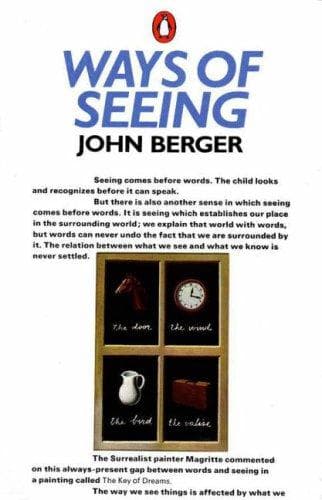
Ways of Seeing
by John Berger
Guide by the Books of the Day editors · Updated · How we write our guides
A short, sharp 1972 argument that how we look at paintings and advertising is shaped by power, money and convention, and that you can learn to see it.
What Creators Say About Ways of Seeing
2 creators reviewed Ways of Seeing on YouTube between 2020 and 2023, with 31.3K views between them. Their opinions are their own; we picked these reviews, we didn't write them.
What It's About
Ways of Seeing is a 1972 book by the British critic John Berger, and despite the Fiction label on this page it is nonfiction. It grew out of a BBC television series of the same name, and the book keeps that origin: brisk, sharply argued sections, many built around images placed beside the text so you can compare what Berger says with what you see. He writes as a critic who wants you to notice what you have been trained not to notice.
The subject is how images carry meaning, especially in European oil painting and in the advertising of the period. Berger looks at how paintings of women were often made for the men who owned them, how the idea of the nude differs from simply being naked, and how publicity offers buyers a improved version of themselves that they are invited to purchase. The prose is direct and often polemical, moving quickly from a single picture to larger claims about property, class and culture.
Reading it feels less like studying art history than like being argued with by someone clever and impatient. It is short enough to finish in a few sittings, and the pleasure lies in the shifts of attention it produces. You will likely look at museum walls, magazine pages and your own phone differently afterwards, which is the book's real aim.
Read this if you…
- are curious how pictures persuade you, not just whether you like them
- are studying art history, media or visual culture and want a short provocative starting point
- enjoy argumentative nonfiction that trains you to look harder
Skip it if you…
- want a neutral survey of art history with dates, schools and technique
- prefer long, heavily footnoted scholarship that you can check source by source
Key Ideas
- 1
Seeing comes before words
Berger argues that we look at the world long before we can describe it, and that what we see is shaped by culture and habit rather than by the eye alone. He uses this to show that paintings are not neutral records. Each one reflects a way of seeing that its makers and audiences shared, and that shared way of seeing can be recovered and questioned by a careful viewer.
- 2
Paintings of women made for male owners
A central thread examines how European oil painting often presented women as objects to be looked at, with the imagined viewer usually a man who owned the picture or the woman in it. Berger connects this to property and display, suggesting that the image itself was part of a system of ownership. The argument remains one of the book's most debated and most memorable passages.
- 3
The nude versus being naked
Berger separates the nude, a conventional art form with its own rules and idealised poses, from the naked body, which is simply unclothed. The distinction is not about the body but about how it has been arranged to be seen. Once you accept the difference, you start noticing how much of what counts as art depends on convention rather than on nature.
- 4
Publicity promises a better you
In the book's second half, Berger turns to advertising and argues that publicity works by making buyers feel incomplete and offering goods as the cure. Ads present an improved version of the self that the purchase will supposedly deliver. He frames this as a form of persuasion that depends on envy and social comparison, and his analysis still reads as a sharp account of how commercial images operate.
- 5
Reproduction changes what art means
Berger considers what happens when a painting is copied into a book, poster or print and removed from its original setting, size and location. He argues that reproduction alters meaning and that the original's authority is partly a matter of where it hangs and who is allowed to see it. This idea prompts readers to question the reliability of the images they encounter every day.
Limitations
Berger's Marxist framing can feel reductive, and some claims about class and gender are asserted more than fully demonstrated. The book concentrates on European oil painting, mostly by male artists, and on Western advertising of the early 1970s, so its examples feel narrow and dated to many readers today. The television-to-book origin also shows in its brisk tone and light sourcing. Readers looking for a comprehensive account of image theory will need to read further.
Questions Readers Ask
- Is Ways of Seeing fiction?
- No. Although this page lists it under Fiction, Ways of Seeing is nonfiction: a set of essays and visual arguments about looking at paintings, photographs and advertising. Berger wrote it as a companion to a 1972 BBC series, and it is widely taught in art and media courses.
- Do I need to know art history to read it?
- Not really. Berger assumes little prior knowledge and explains his main terms as he goes. Some familiarity with famous European paintings will help, since many of the examples come from that tradition, but the arguments about looking and display stand on their own.
- How does it compare with Susan Sontag's On Photography?
- Both are short, influential essays about images, but they differ in focus. Sontag concentrates on photography and its relationship to memory and reality. Berger writes mainly about painting and advertising, through a Marxist lens focused on ownership and class. Read Berger if you want to understand how images serve power.
- Published
- 1972
- ISBN
- 9780141917986
- Difficulty
- intermediate
- Category
- Fiction
Book details and cover from Google Books.
Ready to read Ways of Seeing?
Get your copy on Amazon, or listen to it on Audible. We earn a commission if you buy through these links.