
We earn a commission if you buy through these links. Learn more
Wasted
Guide by the Books of the Day editors · Updated · How we write our guides
Hornbacher's raw, unsparing memoir of living inside anorexia, bulimia, and the addictions and hospital stays around them, written with a novelist's control over pace and image.
What Creators Say About Wasted
1 creator reviewed Wasted on YouTube in 2015, with 196 views between them. Their opinions are their own; we picked these reviews, we didn't write them.
What It's About
Wasted is Marya Hornbacher's memoir of living with anorexia and bulimia from childhood into her early twenties, along with the other illnesses that gathered around them, including alcoholism, self-harm, and repeated hospitalizations. It is not a self-help book or a clinical guide. It is an account of one life seen from the inside, shaped by a writer who knows how to control pacing and image.
The style is what sets it apart. Hornbacher writes in short, charged sections, some of them fragmentary, and she lets the logic of the disorder show through the rhythm of the prose: the counting, the bargaining, the sudden swings between elation and despair. Scenes jump quickly from one apartment, clinic, or relationship to the next, which mirrors the restlessness of the illness itself and can leave you feeling as unmoored as she was.
Reading it is an intense, sometimes distressing experience. The book is frank about physical deterioration and about how the illness hides behind competence and charm, and it does not offer a tidy recovery arc. She looks back from a later vantage point, but the immediacy of the writing keeps the danger close. Expect to finish it wanting to talk about it with someone, and you may need to put it down for a while partway through.
Read this if you…
- want an unflinching, first-person account of anorexia and bulimia from the inside
- are interested in memoirs where the writing style is as important as the story
- want to understand how eating disorders coexist with addiction and mood disorders
Skip it if you…
- need practical recovery advice or a guide for helping someone you love, since this is a personal story rather than a manual
- are currently struggling with an eating disorder and would find graphic detail about the behaviors triggering
Key Ideas
- 1
Illness as a source of control
Hornbacher shows how restriction and purging offered a sense of order when everything else felt chaotic. The book makes clear that the disorder was not simply about appearance. It was a way of managing feelings that had no other outlet, and that is why it is so hard to give up even when it is destroying her.
- 2
The self-deception that keeps illness going
A major thread is the mind's talent for justifying the behavior: the rules it sets, the excuses it finds, the way it recasts danger as discipline. Readers get an unusually detailed picture of how someone can understand the harm perfectly and still keep doing it, which is the book's most unsettling lesson.
- 3
Family, institutions, and the limits of treatment
The memoir looks closely at hospitals, psychiatric holds, and the people who tried to help. It shows how treatment can contain a person without changing what drives them, and how relationships with family and caregivers become tangled up in the illness. The critique is personal rather than systemic, but it is pointed.
- 4
Coexisting disorders and the question of identity
Eating disorders rarely travel alone here. Alcohol, self-harm, and mood swings run alongside the food struggles, and the book asks how much of a person's sense of self becomes organized around being sick. Its honesty about how the illnesses feed one another gives the story its force.
- 5
Memoir as an act of craft
Hornbacher is a skilled writer, and her choices about structure, repetition, and fragmentation are part of the meaning. Readers who care about how life stories get told will notice how the form imitates the disorder, and how she uses precise, sometimes stark imagery to make the reader feel the weight of each episode.
Limitations
Wasted is one person's account, reconstructed from memory, and it is not meant to represent everyone with an eating disorder. Some readers find the fragmented, relentless tone repetitive or mannered, and the constant cycle of crisis and hospitalization can feel overwhelming. The book is also a product of the late 1990s, so its descriptions of treatment and diagnosis reflect that period. It offers little on evidence-based therapies or on recovery as a long process.
Questions Readers Ask
- Is Wasted suitable for someone who has never had an eating disorder?
- Yes, and it is one of the most widely read books for readers wanting to understand these illnesses from inside. It is not a textbook, so no background is needed. Be prepared for frank descriptions of the physical and emotional damage, and read it at a pace that feels manageable.
- How does Wasted compare to other memoirs about eating disorders?
- It is more stylized and fragmented than many memoirs in the genre, which makes it feel closer to literary fiction in places. Readers who want a more measured, reflective account may prefer other titles, while readers who want immediacy and craft often find this one more striking.
- Is Wasted still relevant today?
- The core experience it describes remains recognizable, and the book is still widely taught and discussed. The treatment landscape has changed since it was published, so readers wanting current clinical information should pair it with more recent sources.
- Published
- 1998
- ISBN
- 9780062327031
- Difficulty
- intermediate
- Category
- Biographies
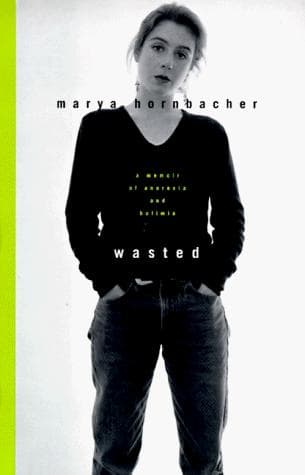
Book details and cover from Google Books.
Ready to read Wasted?
Get your copy on Amazon, or listen to it on Audible. We earn a commission if you buy through these links.