
We earn a commission if you buy through these links. Learn more
Walk this way
Guide by the Books of the Day editors · Updated · How we write our guides
Aerosmith's own account of their rise, drug years, and 1980s comeback, told in overlapping voices, is candid, funny, and far messier than the usual rock-star memoir.
What Creators Say About Walk this way
1 creator reviewed Walk this way on YouTube in 2019, with 117 views between them. Their opinions are their own; we picked these reviews, we didn't write them.
What It's About
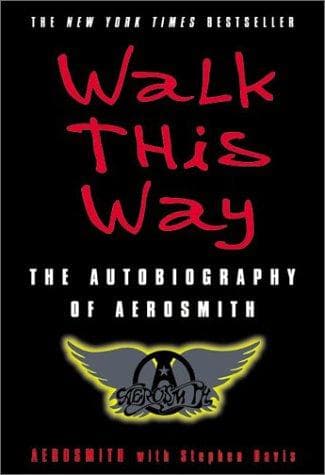
Walk This Way is the band's own history of Aerosmith, assembled with the rock writer Stephen Davis. It follows the group from its early Boston years through its breakout as a hard-rock act, the drug-fueled excess that nearly destroyed it, and the unlikely late-1980s revival that made it stadium-sized again. The story is told by several members rather than one narrator, so the same events often appear from different angles, and the accounts do not always agree.
The structure gives the book a loose, conversational feel, closer to a group of old friends swapping stories than to a tidy life story. Chapters move quickly between tour anecdotes, studio battles, and personal confessions, and the tone swings between self-deprecating humor and blunt admissions of bad behavior. You get a clear sense of how the band's internal partnerships and rivalries drove its decisions.
Reading it feels like sitting in on a long, candid interview with a band that has outlived many of its peers. Expect plenty of rock lore, gear and tour detail, and frank talk about addiction. The book is more interested in people and momentum than in how the songs were written.
Read this if you…
- love rock history and want the inside story of a famous band
- want a frank, multi-voiced account of addiction and recovery in the music world
- enjoy memoirs with humor, rivalries, and a messy, conversational style
Skip it if you…
- want a close analysis of songwriting, production, or musical craft
- prefer a single, carefully edited narrator with a polished literary voice
Key Ideas
- 1
A band built on two strong personalities
Much of the story turns on the working relationship between the band's two most visible figures. Their creative push and pull produced the group's best work, but their rivalry and shared excess also repeatedly threatened to end it. The book is strongest when it shows how that tension worked day to day.
- 2
Addiction told from the inside
The drug years are not presented as a cautionary sermon. The members describe what the highs felt like, how the habits crept into work, and how the band's momentum masked the damage for longer than anyone should have allowed. The lack of moralizing makes the consequences land harder.
- 3
Collective memory and competing versions
Because several members narrate, the book keeps reminding you that memory is unreliable and self-serving. Readers have to weigh contradictory accounts of the same fights and decisions. This makes the book more honest than a single-voice memoir, but it can also feel frustrating when no version is clearly the final one.
- 4
Reinvention as a survival strategy
The comeback of the 1980s is the book's central redemption arc. The members explain how they got back on their feet, what it took to rebuild trust and discipline, and how a return to the road restored something that had been lost. It is a story about endurance more than talent.
Limitations
The book is told from the band's perspective, so it is naturally self-protective and light on the viewpoints of managers, collaborators, and others who saw events differently. Its conversational, sometimes rambling structure can make chronology hard to follow, and the late-career years get less attention than the peak and crisis periods. Readers looking for critical distance or a detailed account of the music itself will need to look elsewhere. As a document of its era, it reflects the rock-memoir conventions of the late 1990s.
Questions Readers Ask
- Is Walk This Way worth reading if I'm not a die-hard Aerosmith fan?
- Yes, if you enjoy rock history and personal drama. The book works as a story about ambition, addiction, and survival rather than only as a fan's catalogue. You don't need to know every album to follow it, though familiarity with the band's big hits will add some payoff.
- How does it compare to other rock memoirs?
- It is less polished and less reflective than memoirs by single authors who write alone, but it is more frank about group dynamics. The multiple-voice format makes it feel more like an oral history, which some readers will find more lively and others more scattered.
- Published
- 1997
- ISBN
- 9780380795314
- Difficulty
- beginner
- Category
- Biographies
Book details and cover from Google Books.
Ready to read Walk this way?
Get your copy on Amazon, or listen to it on Audible. We earn a commission if you buy through these links.