
We earn a commission if you buy through these links. Learn more
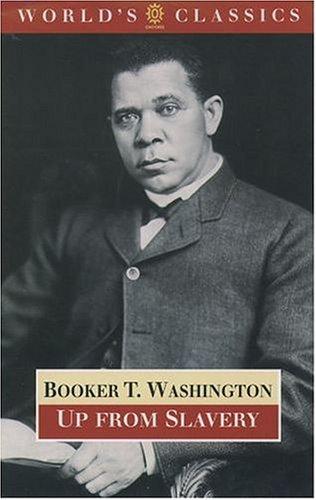
Up from Slavery
A short, plain account of how a boy born enslaved in Virginia built a school in Alabama, and a clear window into the self-help philosophy that shaped American debates about race and education.
What It's About
Up from Slavery is Booker T. Washington's autobiography, first published in 1901. It begins with his childhood under slavery in Virginia and follows his family through emancipation, their move to West Virginia, and his early years working in salt furnaces and coal mines. The narrative then turns to his hunger for schooling, which led him to the Hampton Normal and Agricultural Institute, and eventually to his leadership in founding Tuskegee Normal and Industrial Institute in Alabama.
The style is direct, measured, and anecdotal rather than analytical. Washington organizes his life into episodes such as jobs, hardships, a memorable teacher, and the practical problems of building a school from nothing, and he usually reads each one as a lesson. You get the feeling of hearing a carefully composed life story from a man who was deliberately choosing his words for a wide audience, both Black and white, and who wanted to explain why he believed as he did.
The book is short and easy to finish in a few sittings. Its emotional center is less about grievance than about steady self-improvement, and readers should expect optimism, an emphasis on work, thrift, and character, and a few passages that feel dated in their assumptions. It rewards reading as both a personal story and a historical document of its moment.
Read this if you…
- want a firsthand account of Reconstruction-era life in the South from someone who lived it as a child
- are interested in the history of Black education and the founding of Tuskegee
- want a short, accessible classic that you can read in a few sittings
Skip it if you…
- expect a rigorous, critical analysis of racism and its economic causes
- want a book that centers protest, politics, or the fight for civil rights in its own terms
Key Ideas
- 1
Education as a route to self-reliance
Washington presents schooling as the practical foundation for economic independence. His own path shows how much he valued learning that could be turned directly into skills, farming, trades, and household competence, rather than purely classical study. Readers will see how he connected personal discipline to the wider goal of building a community that could support itself.
- 2
The dignity of manual labor
A recurring argument is that honest physical work is not a humiliation but a source of character and standing. Washington treats the trades and agriculture as dignified paths, and he judges people partly by their willingness to work hard and learn well. This is the book's most distinctive and most debated theme.
- 3
Patience and accommodation toward white power
Washington advises Black Americans to pursue economic progress and gain goodwill before pressing for full political and social equality. He frames this as realism given the conditions of his time. Many readers find it persuasive as a strategy and others find it a painful concession, so it is worth reading with a critical eye.
- 4
Character built through small disciplines
Much of the book focuses on cleanliness, punctuality, thrift, and careful habits. Washington tells these stories as evidence that reputation is built gradually, through everyday conduct. The approach can feel moralistic, but it also gives a concrete picture of how he understood advancement from the bottom up.
Limitations
Washington's accommodationist stance has drawn sharp criticism, most famously from W. E. B. Du Bois, who argued that it asked too little of white society and too much patience from Black Americans. The book is also shaped by its moment of publication and by Washington's own public image, so it tends to smooth over conflict and his more complicated political dealings. Some of its assumptions about class, work, and character read as dated, and its treatment of the wider political struggle is thin.
Questions Readers Ask
- Is Up from Slavery still worth reading today?
- Yes, especially as a primary source. It shows how a influential Black educator understood race, work, and opportunity in the early twentieth century. Read it alongside critics of his approach, such as Du Bois, to get a fuller picture of the debate he was part of.
- How does it compare to Frederick Douglass's autobiography?
- Douglass's narrative is more urgent and focused on slavery and escape, and it carries a fierce political argument. Washington's book is calmer and more concerned with building institutions and personal discipline after emancipation. Many readers pair the two to see contrasting visions of freedom.
- Published
- 1900
- ISBN
- 9781986098694
- Difficulty
- beginner
- Category
- Biographies
Book details and cover from Google Books.
Ready to read Up from Slavery?
Get your copy on Amazon, or listen to it on Audible. We earn a commission if you buy through these links.