
We earn a commission if you buy through these links. Learn more
Unwind
Guide by the Books of the Day editors · Updated · How we write our guides
Neal Shusterman's Unwind imagines a America where teens between 13 and 18 can be legally dismantled for their body parts, and asks how far a society will go to avoid calling it murder.
What Creators Say About Unwind
2 creators reviewed Unwind on YouTube in 2016, with 17.5K views between them. Their opinions are their own; we picked these reviews, we didn't write them.
What It's About
Unwind is set in a United States that has survived a second civil war through a compromise: a child's life cannot be ended between the ages of 13 and 18, but that child can be "unwound," meaning every usable part of the body is harvested and transplanted into other people. The book follows three teenagers whose paths are pushed toward this fate for very different reasons. Connor is a defiant kid whose parents have had him signed away. Risa is a ward of the state whose orphanage is being shut down to save money. Lev is a boy raised from birth to be given to the church as a tithe. Their stories alternate, and the reader watches them move toward a shared crisis.
Shusterman writes in a brisk, plot-first style with short chapters, frequent cliffhangers, and dialogue that gets to the point. He is not subtle about the moral stakes, and he does not let the reader look away from the procedure itself, which is described in blunt, uncomfortable detail. The experience is closer to a page-turning thriller than a slow literary dystopia, but the questions underneath are serious: who owns a body, what makes a person a person, and how institutions justify harm with paperwork.
This is the first book in a series, and it ends with its central conflict still very much in motion. Readers who finish it will likely want to continue, so it works best as the opening volume of a longer story rather than a self-contained novel.
Read this if you…
- you enjoy fast, plot-driven dystopias that put a hard moral question at the center
- you want a teen novel that treats its readers as capable of wrestling with serious ethics
- you liked the social critique in books like The Hunger Games but want something darker and more graphic
Skip it if you…
- you want gentle, hopeful fiction or prefer to avoid graphic violence
- you'd rather a novel leave its moral questions open and unspoken rather than pressing them on you
Key Ideas
- 1
A loophole that lets a society avoid guilt
The unwinding law is built on a technicality: no one is killed, only dismantled. The book shows how a compromise designed to end a war becomes a way for people to do terrible things while insisting they haven't. Shusterman keeps returning to the gap between what a law says and what it does, and that gap is where much of the book's anger lives.
- 2
Where a person lives in the body
Because the unwound are divided into parts that go on living in other people, the story keeps asking whether identity survives that division. Characters wrestle with whether a heart or a pair of hands carries something of the original person. The question is raised without a neat answer, which makes it more useful as a discussion starter than a lecture.
- 3
Parents deciding children's futures
Connor's case is the sharpest look at how adults can treat a child as a problem to be solved. The book examines family obligation, resentment, and the ways a parent can believe they are acting out of love while doing something irreversible. Teen readers in particular will recognize the power imbalance even when the stakes are extreme.
- 4
Faith used to justify the unthinkable
Lev's background gives the book a religious dimension, showing how a sincere belief system can make a sacrifice feel holy and unquestionable. Shusterman does not mock faith, but he presses on the uncomfortable point that devotion can be used to excuse cruelty, and that the people being sacrificed rarely get a say.
- 5
Strangers pulled together by a shared system
Three lives that seem unconnected gradually converge, and the book becomes as much about solidarity as about horror. The structure rewards patience and attention, since each thread sheds light on the others. The emotional payoff comes from seeing how people with little in common can still choose to protect one another.
Limitations
The violence is graphic, and the procedures are described in unflinching detail, which some readers will find hard to take. The world is sketched broadly; the book spends more energy on its chases and confrontations than on explaining how the country arrived at this law. Several supporting characters function more as types than as fully realized people. Its arguments are sometimes stated outright, and readers who prefer subtlety may find the book heavy-handed. Because it is the first volume of a series, the larger conflict is not resolved here.
Questions Readers Ask
- Is Unwind appropriate for younger readers?
- It is generally shelved as young adult fiction and is most often recommended for teens, roughly 13 and up. The premise and descriptions of the unwinding procedure are graphic and disturbing, and the themes around death and parental betrayal are heavy. Parents should consider whether a particular younger reader can handle that intensity.
- How does Unwind compare to The Hunger Games?
- Both are teen dystopias about a state that uses young people in brutal ways, but Unwind is more tightly focused on one ethical premise. Its violence is more clinical and body-focused, and it leans less on romance and spectacle. Readers who like Katniss's story may find Unwind more uncomfortable and more openly argumentative.
- Do I need to read the sequels?
- The first book has a complete arc for its main characters, but it leaves the wider conflict unresolved and several questions open. Many readers find they want to continue, and the later books expand the world considerably. You can stop after this one, but the story is designed to be read as part of a larger whole.
- Published
- 2007
- ISBN
- 9781416912057
- Difficulty
- beginner
- Category
- Children's Books
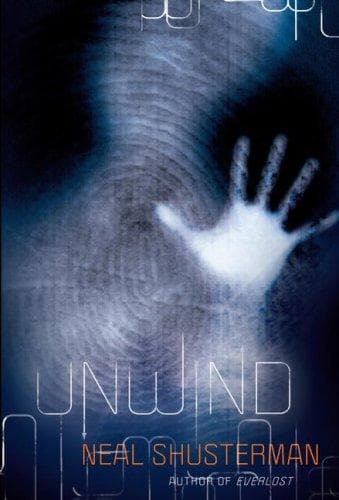
Book details and cover from Google Books.
Ready to read Unwind?
Get your copy on Amazon, or listen to it on Audible. We earn a commission if you buy through these links.