
We earn a commission if you buy through these links. Learn more
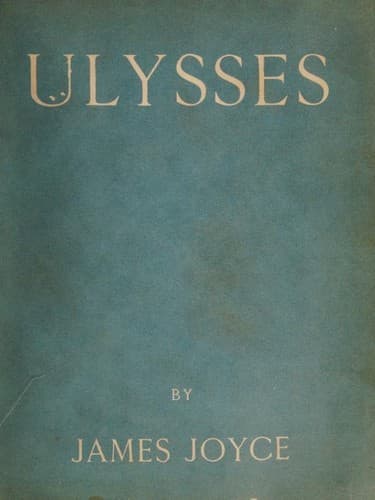
Ulysses
by James Joyce
A single ordinary Dublin day, told in shifting prose styles, makes this famously hard modernist novel also one of the funniest and most humane books you will read.
What It's About
Ulysses follows two men through Dublin on 16 June 1904: Leopold Bloom, a advertising canvasser with a restless home life, and Stephen Dedalus, a young teacher wrestling with grief, art, and his own sense of himself. Their paths cross only briefly, but Joyce links them to Homer's Odyssey, with each of the eighteen episodes echoing a figure, a bodily organ, or an art. You do not need that scaffolding to enjoy the book, though knowing it helps you see how carefully the chapters are built.
The real experiment is in the prose. Each episode changes voice: one reads like a sequence of newspaper headlines, another parodies the styles of English writing across the centuries, and a late chapter becomes a hallucinatory playscript. Across the book, the narration slides into characters' thoughts through stream of consciousness, so that memory, sensation, and passing remarks blur together. The first hundred pages can feel disorienting, but the rules become clearer as you go, and the wordplay keeps rewarding attention.
Reading Ulysses is slow, funny, and sometimes frustrating work. It is a book about bodies, appetites, grief, and the small rhythms of city life, from pub talk and funeral arrangements to a quiet walk on a beach. Many readers find that reading passages aloud, or keeping an annotated guide nearby, makes the experience far more pleasurable.
Read this if you…
- enjoy wordplay and want a novel that rewards slow, repeated reading
- are curious about modernism and willing to work to understand it
- want a vivid portrait of a city and its people through one ordinary day
Skip it if you…
- need a clear plot, a steady pace, or a story that moves forward quickly
- want a short book you can finish in a week
Key Ideas
- 1
An ordinary day made epic
Joyce takes the most mundane events of one day, such as errands, meals, and conversations, and treats them with the seriousness of a classical epic. Bloom's wanderings through Dublin echo Odysseus's journey home, and the comedy comes from the gap between grand structure and everyday detail. The result suggests that a single unremarkable life can carry as much weight as any hero's.
- 2
Style itself is the subject
Each episode tests a different way of writing, from catechism-like question and answer to parody of older English prose. The form is not decoration; it changes how you experience the same events and people. Joyce shows that the way a story is told shapes what it means, and that language is always partly a performance.
- 3
Inner life rendered from the inside
Through stream of consciousness, the novel moves freely between what characters perceive, remember, and half-think. Bloom's mind drifts from a butcher's shop to a dead son to a sexual fantasy within a few lines. This technique makes the characters feel intimate and unpredictable, and it shows how thought moves through time rather than in neat sequences.
- 4
Compassion amid crudeness
Bloom, in particular, is treated with a mix of mockery and tenderness. The book is frank about the body, bodily functions, and sex, and its characters can be coarse, prejudiced, or petty, including in their treatment of Bloom as a Jewish outsider in Dublin. Yet Joyce keeps returning to kindness, curiosity, and the dignity of ordinary people, which is why the book often feels warmer than its reputation suggests.
Limitations
The book is dense, allusive, and full of references to Dublin street life, Irish politics, Catholic liturgy, and literary history that many readers will not recognise without notes. Some episodes are sexually explicit and were banned in several countries for years. Its characters use antisemitic language and stereotypes, and while the book's attitude toward Bloom is sympathetic, these elements can be hard to read. Women, especially Molly Bloom, are seen largely through male perspectives, which many modern readers find limiting.
Questions Readers Ask
- Do I need to read Homer's Odyssey first?
- No. The Odyssey parallels add a layer of structure and comedy, but the novel stands on its own. Knowing the basic outline of the Odyssey will help you notice the echoes, and a good annotated edition will point them out as you go. Many readers simply enjoy the story of a single Dublin day without tracking every correspondence.
- How does Ulysses compare with Mrs Dalloway?
- Both novels follow a single day in a city through the consciousness of their characters, but Woolf's book is shorter, more lyrical, and more restrained in tone. Ulysses is broader, funnier, and far more experimental in its styles. If you enjoy Woolf, Joyce's book is a bigger, looser challenge that rewards patience with humour and variety.
- Published
- 1914
- ISBN
- 9798810090632
- Difficulty
- advanced
- Category
- Fiction
Book details and cover from Google Books.
Ready to read Ulysses?
Get your copy on Amazon, or listen to it on Audible. We earn a commission if you buy through these links.