
We earn a commission if you buy through these links. Learn more
Truth & Beauty
by Ann Patchett
A candid, unsentimental memoir of a complicated friendship between two young writers, shaped by illness, ambition and the limits of loving someone you cannot save.
What It's About
Truth & Beauty is a memoir, not a novel, despite the Fiction label on some retail sites. Ann Patchett wrote it about her friendship with the poet Lucy Grealy, whom she met as an undergraduate at Sarah Lawrence College in the late 1980s. Grealy had survived childhood cancer that cost her much of her lower jaw, and she had already written about that experience in her own memoir, Autobiography of a Face. Patchett's book looks at what it was like to be close to someone whose life was so visibly shaped by pain, surgery and the question of how she was seen.
The approach is candid and restrained. Patchett writes in plain sentences and is willing to examine her own part in the friendship, including jealousy, loyalty and the moments she fell short. Rather than building a tidy portrait, she circles back, revisits memories and admits what she could not understand at the time. The result feels less like a biography than like someone trying to be honest about a relationship that never fit a neat story.
Reading it is emotionally heavy but unhurried. It works as a portrait of two young writers, of literary ambition and of addiction's slow grip, and it lingers on what friendship asks when you cannot fix the person you love. Expect a book that moves between tenderness and frustration, and that trusts the reader to sit with discomfort rather than resolve it.
Read this if you…
- want a candid memoir about friendship rather than a self-help book on the subject
- are drawn to honest writing about illness, body image or addiction
- want to see Ann Patchett's own voice without the distance that fiction provides
Skip it if you…
- want a light, uplifting read, since this one stays with grief and hard choices
- are looking for a full biography of Lucy Grealy, because this is one friend's account filtered through Patchett's eyes
Key Ideas
- 1
Friendship as a subject worth serious attention
Patchett treats a friendship with the scrutiny usually reserved for romance or family. She looks at the give and take between two people who were close, competitive and sometimes unfair to each other, and asks what loyalty actually requires. The book is less interested in declaring who was right than in showing how intimacy can be both sustaining and exhausting.
- 2
Appearance, identity and being looked at
Grealy's face, changed by cancer and repeated surgery, sits at the center of the story. Patchett explores how much of a person's life can be organized around how others see them, and how the question of beauty can distort both friendship and self-image. The theme connects to Grealy's own earlier writing, which many readers find illuminating alongside this book.
- 3
Addiction and the limits of rescue
The book follows Grealy's long struggle with drug dependence and the efforts of friends to help. Patchett is honest about how hard it is to love someone who is hurting themselves, and about the temptation to believe that enough care might be enough. It offers a clear-eyed account of how little control a friend often has, and how that powerlessness shapes what remains.
- 4
Writing about someone who cannot answer back
Grealy had died before the book was written, so Patchett has to rebuild her from memory and from her own point of view. The memoir's honesty comes partly from admitting where her account is shaped by guilt, grief or self-justification. That makes the book a study of memory and narrative as much as a portrait of one person.
Limitations
The book is necessarily one side of the friendship, told by the person who survived it, and some readers find Patchett's self-examination overshadowing Grealy herself. Others find the narrative circular in places, as the author returns to the same questions. Because it is a memoir of a particular literary circle and era, some of its references and assumptions may feel dated to readers who did not live through them. Readers who want a fuller picture should pair it with Grealy's own writing.
Questions Readers Ask
- Is Truth & Beauty a novel?
- No. Despite the Fiction category on some sites, Truth & Beauty is a memoir about Ann Patchett's real friendship with the poet Lucy Grealy. Patchett writes in the first person, and the people, events and feelings are presented as her own recollection. Readers expecting invented characters or a conventional plot should know the book is built around memory and reflection instead.
- Should I read Autobiography of a Face first?
- It is not required, but it helps. Grealy's memoir covers her childhood illness and surgeries in her own voice, which gives useful context for the face at the center of Patchett's book. Patchett's memoir works on its own, though, and many readers come to Grealy's book afterward, wanting to hear the subject directly.
- Is it still worth reading today?
- Yes, especially for its honesty about friendship, illness and the pressures on women in the arts. Its treatment of addiction and caregiving still feels current. Some of the literary-world detail reflects its era, but the emotional questions the book asks are not tied to a particular decade.
- Published
- 2004
- ISBN
- 9781417675975
- Difficulty
- beginner
- Category
- Fiction
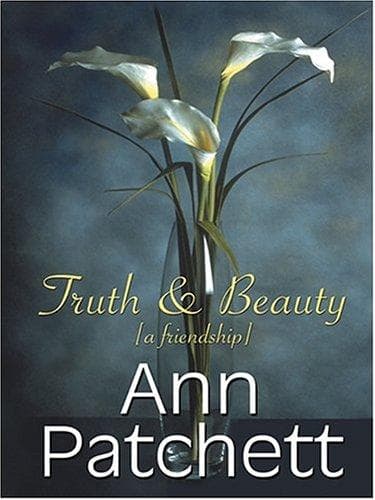
Book details and cover from Google Books.
Ready to read Truth & Beauty?
Get your copy on Amazon, or listen to it on Audible. We earn a commission if you buy through these links.